
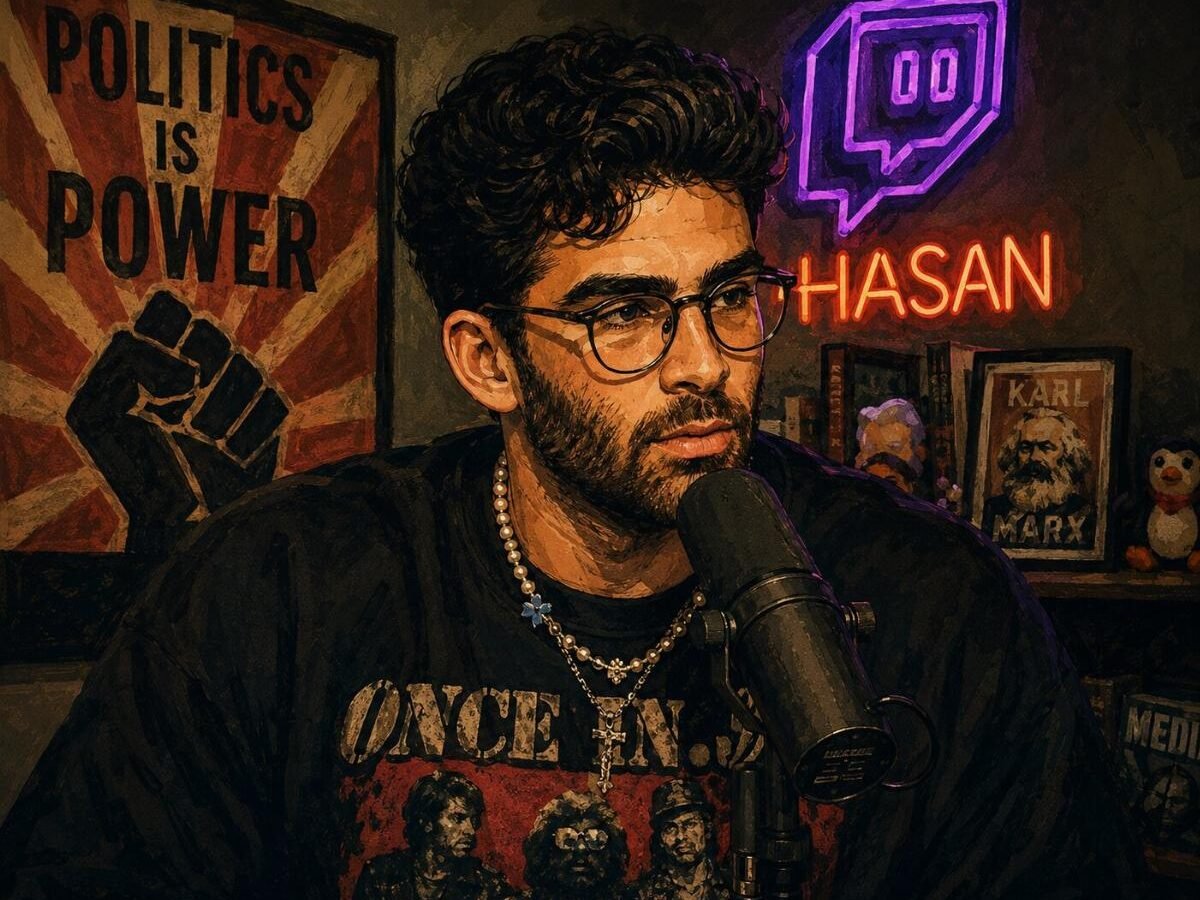
A heated intra-Democratic dispute has erupted over the University of Washington’s cancellation of a speaking event featuring left-wing streamer Hasan Piker, with two prominent House Democrats staking out opposing positions on free speech and the limits of campus discourse.
The feud began when Rep. Pramila Jayapal (D-WA) publicly criticized the university’s decision to cancel Piker’s talk, which Piker alleges was driven by his harsh criticisms of Israel. Jayapal, a member of the House Judiciary Committee, said she had expressed her concerns directly to the university and emphasized that free speech is a constitutional right that must be protected.
But Rep. Dan Goldman (D-NY), who is openly pro-Israel and Jewish, praised the university’s decision, arguing that federally funded institutions have obligations under Title VI to prevent sanctioned events from creating a hostile environment for Jewish students.
The clash has drawn attention for revealing a rare split among Democrats on issues related to Israel and the First Amendment, with each lawmaker accusing the other of misinterpreting the fundamental principles at stake.
Jayapal’s Defense of Piker
Jayapal’s intervention on Piker’s behalf came after the Seattle Times reported on the controversy. The congresswoman took to social media to state that she has “been absolutely clear that free speech is a Constitutional right that we must all stand up and protect,” and that she has “been communicating my concerns about the cancellation of the Hasan Piker event directly to the University.”

The university reportedly assured Jayapal that the cancellation would “never happen again,” but critics point out that a genuine commitment to free expression would involve re-inviting Piker to deliver his talk. Anything short of that, they argue, is mere lip service.
Piker, a popular progressive streamer known for his unvarnished opinions, has been a lightning rod for controversy, particularly over his views on Israel, which many have condemned as antisemitic and noxious. Jayapal’s defense of his right to speak has been met with skepticism from some quarters, who see her advocacy as a way to use Piker as a vehicle for her own anti-Israel sentiments.
Goldman’s Title VI Argument
Goldman, in contrast, defended the university’s move, citing federal law that requires schools receiving federal funds to maintain a non-hostile environment for all students, including Jewish students. He wrote on social media that “a university has obligations under Title VI to ensure that its own sanctioned events do not create a hostile environment for any student, including Jewish students.”
Goldman’s position reflects growing concerns about the surge of antisemitism on college campuses, which he described as “raging” and “violent” and demanded be condemned “in the harshest possible terms.” He suggests that the university’s cancellation was a necessary step to protect Jewish students from a speaker whose rhetoric could contribute to a hostile environment.
However, critics of Goldman’s stance argue that his reliance on Title VI is a misapplication of the law and a threat to the First Amendment. They point out that federally funded institutions do not lose their constitutional obligations to protect free speech simply because they receive government money. The First Amendment, they argue, exists precisely to protect offensive and controversial speech, and allowing the government to suppress it would undermine the very purpose of the amendment.

Free Speech Absolutism vs. Campus Safety
The dispute highlights a fundamental ideological rift between those who advocate for free speech absolutism and those who prioritize creating a safe and inclusive environment on campus. Jayapal, in her comments, has positioned herself as a defender of unfettered expression, arguing that Piker should be allowed to speak even if his views are objectionable. She has rejected the notion that the First Amendment rights to speak anywhere anytime, noting that there are rules and norms in a civil society.
But her critics, including some on the right, accuse her of hypocrisy, pointing out that she has taken opposite positions on free speech in the past and is now using Piker as a proxy to advance her own anti-Israel agenda. They argue that her defense of Piker is not about principle but about political convenience.
On the other side, Goldman’s invocation of Title VI has been met with warnings that it could set a dangerous precedent for government oversight of university programming. If the federal government can dictate what speakers are allowed on campus, they argue, then the First Amendment becomes meaningless.
A Call to Let Him Speak
Some commentators, including the author of the American Thinker piece, urge a middle path: let Piker speak, but counter his ideas with more speech. The argument is that Piker’s views are indefensible and would be exposed to ridicule if subjected to scrutiny. By canceling his talk, the university only adds fuel to his narrative of persecution and prevents students from engaging with his ideas in a forum where they could be challenged.
This free speech absolutist perspective holds that the best antidote to bad speech is good speech, and that banning speakers only creates martyrs. The author cites the late Charlie Kirk’s Turning Point USA and other right-wing groups as supporters of this approach.
As the controversy continues to unfold, it underscores the complexities of navigating free speech, campus safety, and the Israel-Palestine conflict in an increasingly polarized political climate. The blue-on-blue fight is unlikely to be resolved anytime soon, as both sides dig in on their interpretations of the law and the Constitution.
Source: www.americanthinker.com — https://www.americanthinker.com/articles/2026/08/blue-on-blue-fight-over-first-amendment/