
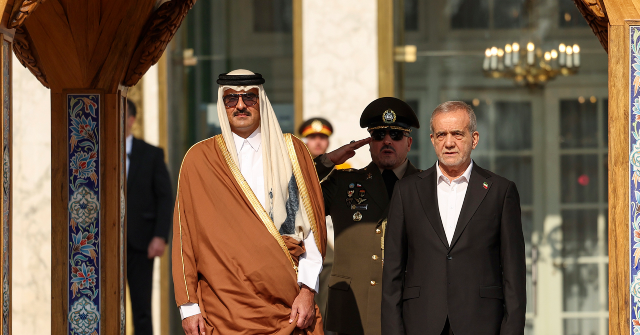
A high-level Qatari delegation touched down in Tehran on Friday morning, marking another attempt to broker a resolution between Iran and the United States despite Iranian officials having rejected Qatar’s previous peace overture less than a week ago.
According to Reuters, the delegation was led by a senior adviser to Qatari Prime Minister Sheikh Mohammed bin Abdulrahman bin Jassim al-Thani. While public statements framed the visit as focused on “strengthening Iran-Qatar relations,” an official briefed on the discussions confirmed to the outlet that Doha’s mediators are still working to “reach a deal between the U.S. and Iran.”
Nuclear Enrichment Remains the Sticking Point
The urgency of Qatar’s renewed diplomatic push comes against the backdrop of a failed proposal just days earlier. An official with knowledge of the talks told Reuters that Iranian leadership turned down the previous Qatari-brokered framework because it demanded concessions on nuclear weapons development that Tehran refuses to consider.
Iranian officials have drawn a hard line on the sequencing of any potential agreement. According to the source, Tehran insists it will not discuss sensitive subjects like uranium enrichment levels until Washington takes unilateral action by ending its blockade of Iranian ports and lifting sanctions on Iranian oil exports.
Despite the impasse, Iran appears willing to keep diplomatic channels open. An unnamed Iranian official told The National on Friday that Tehran “welcomes any efforts aimed at negotiations, talks, or collective consultation.”
Vice President Vance Opens Direct Back Channel
The Qatari mediation effort isn’t the only diplomatic track in motion. The Washington Post reported Thursday that Vice President JD Vance has initiated direct contact with Iranian Supreme National Security Council Secretary Mohsen Rezaei, bypassing traditional intermediaries like Qatar entirely.
Rezaei, who previously headed Iran’s Islamic Revolutionary Guard Corps — designated a terrorist organization by the United States — now serves as a key national security official in Tehran’s government structure.
According to a U.S. official familiar with the negotiations who spoke to the Post, Vance’s letter to Rezaei laid out Washington’s core concern: “ensuring that Iran does not obtain a nuclear weapon.” In what appeared to be an appeal to Iranian interests, the vice president suggested Tehran’s priorities should center on “rebuilding its war- and sanctions-ravaged economy” and “preserving its national sovereignty.”
The outreach included a specific request. Vance told the Iranian official that meaningful progress could be achieved if Iran would “provide representatives who are empowered to discuss the nuclear issues” — suggesting previous Iranian negotiators may have lacked the authority to make substantive commitments on Tehran’s most sensitive security matters.
Possible Meeting Venues and Electoral Deadline
The U.S. official who discussed Vance’s letter with the Washington Post floated two potential locations for face-to-face talks between American and Iranian representatives: Doha, Qatar and Istanbul, Turkey. Both cities have served as neutral ground for sensitive Middle Eastern negotiations in the past.
The timing of these parallel diplomatic efforts may not be coincidental. According to the Post’s reporting, such a meeting could represent Iran’s final chance to reach an agreement before the potential resumption of U.S.-Israeli military action following the upcoming U.S. midterm elections.
That timeline adds pressure to negotiations that have already proven difficult. Iran’s insistence on receiving sanctions relief before addressing nuclear concerns stands in direct opposition to the Western negotiating position, which has consistently demanded verifiable limits on Iran’s nuclear program as a prerequisite for any easing of economic pressure.
The Broader Context
The renewed diplomatic push comes as Iran’s nuclear program continues to advance. International inspectors have reported that Iran has accumulated significant quantities of highly enriched uranium, though assessments differ on how close the country may be to weapons capability.
Meanwhile, the economic toll on Iran from years of sanctions has been substantial. The country’s oil exports have been severely constrained, its currency has depreciated dramatically, and its population has faced inflation and shortages of various goods.
The dual-track approach — with Qatar continuing its mediation role while the U.S. simultaneously pursues direct contact — suggests both sides recognize the potential costs of failed diplomacy, even as they remain far apart on the fundamental terms of any agreement.
Whether Friday’s talks in Tehran will produce more flexibility from Iranian officials than the previous round remains to be seen. For now, the willingness of both sides to continue talking, through multiple channels, offers at least a glimmer of hope that a diplomatic solution remains possible before political or military developments foreclose that option.
Source: www.breitbart.com — https://www.breitbart.com/middle-east/2026/10/30/iran-welcomes-qatari-mediators-to-allegedly-find-resolution-to-conflict/