
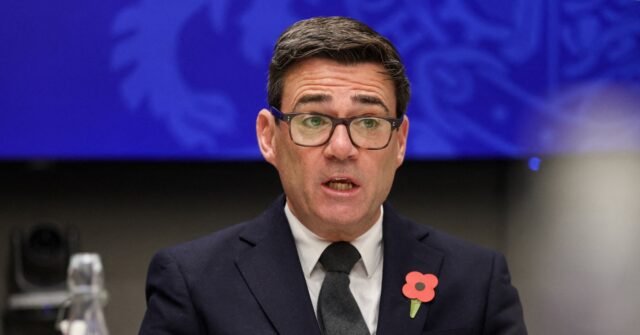
British Prime Minister Andy Burnham announced Saturday that he is “open” to the United Kingdom issuing a formal apology for its role in the transatlantic slave trade, though he drew a firm line against providing financial reparations to former colonies.
Writing in The Guardian just days before attending a Commonwealth leaders summit in the Caribbean, Burnham argued that “we need to face up to the past” while simultaneously insisting that reparations are not “the right answer.”
The statement comes as London faces mounting pressure from Caribbean nations to both formally apologize for its central role in the slave trade and provide compensation for the lasting damage inflicted. Burnham’s position attempts to thread a narrow needle, acknowledging historical wrongs while protecting British taxpayers from what could amount to substantial financial obligations.
No Liability for Historical Wrongs, PM Argues
In his op-ed, Burnham expressed personal remorse while making clear his view that modern Britons cannot be held financially responsible for actions taken centuries ago.
“I do not think that British people today can be held liable for historical wrongs, however heinous, that happened in a different age under different laws and in which they played no personal part,” the prime minister wrote.
Despite this position, Burnham did express empathy for descendants of enslaved people. He said he wanted to “express my sorrow and regret for the pain and suffering of so many millions and to recognise the way it still shapes our world today.”
The prime minister characterized the transatlantic slave trade as a “brutal and barbaric violation” of enslaved people’s rights and proposed a “structured dialogue with those affected” as a path forward.
Formal Apology on the Table
While ruling out reparations, Burnham did leave the door open to a formal state apology, which would represent a significant shift in British policy.
“Listening to calls for a formal apology on behalf of the British state will form an important part of this process and I am open to them,” he wrote in the Guardian piece.
Britain has never formally apologized for slavery or agreed to pay reparations, despite profiting for centuries from colonialism and the forced labor system that sustained it. The country has long pointed to its role in abolishing the slave trade as evidence of moral progress, noting that Parliament passed legislation ending slavery in most of the British Empire in 1833.
Commonwealth Summit Looms
The timing of Burnham’s statement is no accident. The issue of slavery and reparations has emerged as a central tension point at the Commonwealth heads of government summit taking place in St John’s, the capital of Antigua and Barbuda, from Sunday through Wednesday.
Burnham pledged to have “difficult conversations to safeguard the Commonwealth for the future” at the gathering, suggesting he anticipates pointed discussions with leaders from Caribbean nations who have been increasingly vocal about demanding accountability.
The 56-member Commonwealth, which is mainly composed of former British colonies, has long grappled with the legacy of colonialism and slavery. King Charles III, who heads the organization at 77 years old, is currently on a nine-day visit to three Caribbean countries and will address the summit during his tour.
Royal Tour Highlights Tensions
King Charles has himself faced questions about Britain’s historical role during his Caribbean visit. While in the Bahamas on Tuesday, the monarch acknowledged “the great suffering of the past” during the first leg of his journey, though he stopped short of issuing an apology.
The royal tour and the Commonwealth summit have provided Caribbean nations with a high-profile platform to press their case for reparations and a formal acknowledgment of wrongdoing from the British government.
Activists Call Statement ‘Disappointing’
Burnham’s carefully calibrated position has already drawn criticism from reparations advocates who view anything short of financial compensation as insufficient.
Denis O’Brien, founder of The Repair Campaign, which advocates for reparations for Caribbean nations affected by slavery, called the prime minister’s op-ed “disappointing” and predicted it would not “quell the demand for an apology.”
“This would be a significant and symbolic first step towards reparatory justice,” O’Brien said, referring to a formal apology. He added that the UK government “must stop obfuscating and give a full and formal apology now.”
The activist’s response suggests that even if Burnham does move forward with a formal apology, it may only increase pressure for financial reparations rather than serving as a substitute for them.
A Legacy That Still Shapes Today
The transatlantic slave trade forcibly transported millions of Africans to the Americas and the Caribbean, where they and their descendants labored under brutal conditions to enrich European colonial powers. Britain played a central role in this system for centuries before eventually leading efforts to abolish it.
The economic benefits Britain derived from slavery and colonialism helped fund its industrial revolution and establish it as a global power. Caribbean nations argue that this wealth was built on systematic exploitation that has left lasting economic and social damage in formerly colonized territories.
As Burnham himself acknowledged, slavery’s legacy “still shapes our world today,” with descendants of enslaved people in the Caribbean continuing to experience economic disadvantages that some trace directly to historical injustices.
Whether the prime minister’s offer of dialogue and potential apology will be enough to satisfy Commonwealth nations seeking concrete redress remains to be seen. The summit beginning Sunday will likely provide the first test of how this position is received by the leaders most directly affected by Britain’s historical actions.
Source: www.breitbart.com — https://www.breitbart.com/europe/2026/10/31/british-pm-burnham-open-to-formal-apology-for-slavery-but-not-to-reparations/