
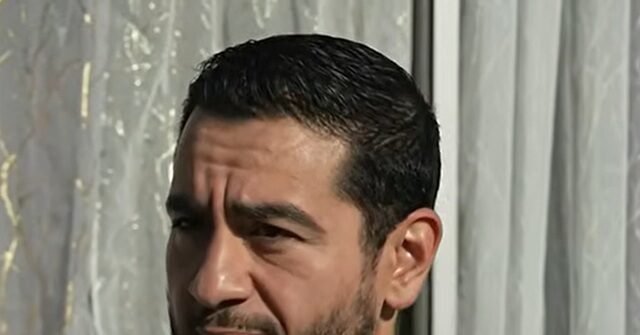
HBO host Bill Maher drew a hard line Friday night against Democratic Michigan U.S. Senate nominee Abdul El-Sayed, declaring the candidate will never receive his support after El-Sayed declined to distinguish between the threat levels posed by Iran and Israel.
During his “Real Time” broadcast, Maher addressed El-Sayed’s recent controversy over comments comparing the two Middle Eastern nations, framing the issue as a litmus test for understanding basic differences between democratic and authoritarian governments.
“You’re never going to get my vote if you don’t understand that fundamental difference,” Maher stated emphatically during the Friday episode.
The Core of the Controversy
The dispute centers on El-Sayed being asked to identify which country—Iran or Israel—poses a greater threat to the United States. His reluctance to make that distinction has now drawn sharp criticism from the prominent political commentator.
Maher laid out what he sees as an obvious contrast between the two nations. “Israel just had an election. You may not like the outcome, but it was a real election,” he explained. “Iran doesn’t have those. They shoot protesters in the street.”
For Maher, the comparison isn’t about policy preferences or regional alliances—it’s about recognizing the difference between a functioning democracy and a repressive regime that violently suppresses dissent.
Broader Commentary on Islam and American Politics
The HBO host didn’t limit his commentary to El-Sayed alone. He offered a broader critique of how both sides of the political spectrum approach Muslim candidates in American politics.
“I think, as far as this issue goes, about Islam in America and candidates who are Muslim, the left is naive, and the right is hysterical, hysterical,” Maher said, attempting to stake out middle ground between what he characterized as two extreme positions.
His comments suggest frustration with both liberal unwillingness to ask tough questions of Muslim candidates and conservative overreaction that paints all Muslim politicians with the same brush.
Finding Balance in the Discussion
Axios co-founder and CEO Jim VandeHei, who appeared on the program, pushed back gently on the premise, drawing a distinction between legitimate criticism and unfounded conspiracy theories.
“Right, but there’s a big difference between being anti-Israel and then saying that someone is a member of the Muslim Brotherhood or that they’re going to take away your Christmas because they’re a terrorist in sheep’s clothing or whatever,” VandeHei countered.
Maher agreed with VandeHei’s point, acknowledging that there’s legitimate space between refusing to make basic distinctions about democratic versus authoritarian regimes and engaging in baseless fearmongering about Muslim candidates.
Implications for El-Sayed’s Campaign
The exchange highlights a challenge facing El-Sayed as he seeks higher office in Michigan. While the state has a significant Arab American population and has seen growing political activism around Middle East policy, candidates still face scrutiny over their positions on Israel and Iran.
El-Sayed’s apparent hesitation to definitively label Iran as a bigger threat than Israel may resonate with some progressive voters who are critical of Israeli government policies, particularly regarding the Palestinians. However, as Maher’s comments demonstrate, it could also alienate mainstream voters who view Iran’s theocratic government and regional activities as clearly more threatening to American interests.
The controversy raises questions about how candidates navigate foreign policy questions that touch on identity politics, regional conflicts, and competing definitions of national security threats.
The Democracy Distinction
At the heart of Maher’s critique is the argument that refusing to acknowledge the difference between Israel’s democratic system and Iran’s authoritarian structure represents either ignorance or willful blindness to fundamental political realities.
Israel, despite its flaws and controversial policies, maintains regular elections, a free press, an independent judiciary, and peaceful transfers of power. Iran, by contrast, operates under a theocratic system where ultimate authority rests with an unelected Supreme Leader, political opposition is crushed, and protests are often met with lethal force.
For Maher, a candidate’s inability or unwillingness to make this distinction disqualifies them from earning his support, regardless of other policy positions they might hold.
The incident also reflects ongoing tensions within the Democratic Party over Middle East policy, with progressive activists increasingly critical of Israel while establishment figures maintain traditional support for the U.S.-Israel alliance and view Iran as a destabilizing force in the region.
As the Michigan Senate race continues, El-Sayed will likely face continued pressure to clarify his foreign policy positions and explain how he would approach questions of regional security and American alliances if elected to the Senate.
Source: www.breitbart.com — https://www.breitbart.com/clips/2026/10/31/maher-el-sayed-will-never-get-my-vote-if-he-cant-differentiate-between-israel-iran/