
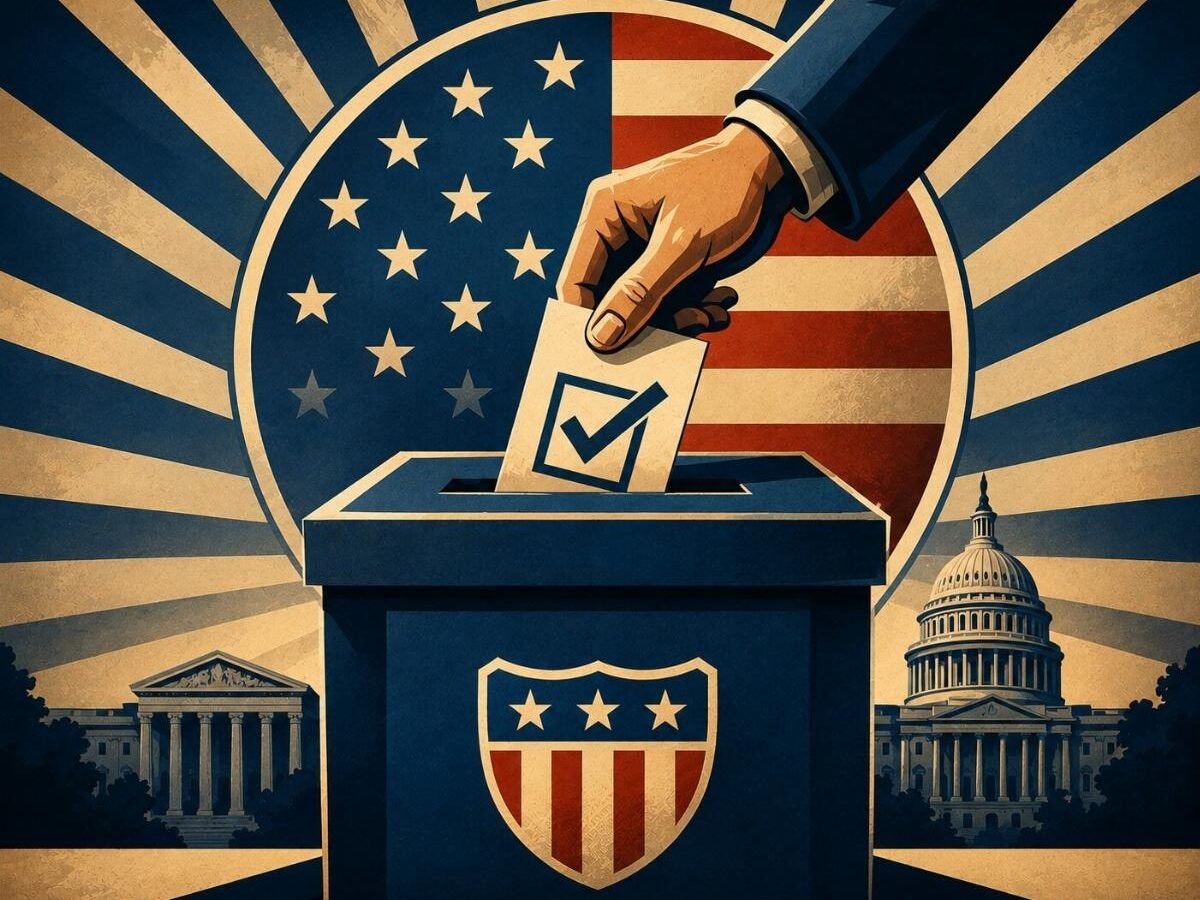
A simmering battle between the federal government and a majority of states over voter roll access is coming to a head, fueled by a recent New Jersey revelation that thousands of non-citizens were registered to vote in the Garden State.
In a recent appearance on Fox News Sunday, Virginia Democratic Senator Tim Kaine was pressed by host Shannon Bream on the question of whether states should share their voter rolls with federal officials — a discussion amplified by a letter from Department of Homeland Security Secretary Kristi Noem to New Jersey Governor Mikie Sherrill. The letter, citing a preliminary review, suggested as many as 35,000 non-citizens might be registered to vote in New Jersey — a figure far exceeding the roughly 6,600 admissions made by the governor’s office. Of that admitted number, fewer than 400 of those individuals actually cast ballots in the last election, according to the exchange on Fox News.
Despite the discrepancy, Governor Sherrill has insisted she will not turn over the state’s voter rolls to federal officials. And she is not alone. As of mid-2026, at least 30 states — mostly blue states, according to the analysis — plus Washington, D.C., have refused to provide the federal government with full, unredacted voter registration lists, citing state privacy laws and constitutional authority over elections. So far, judges have largely sided with those states. In the most recent case out of D.C., the presiding judge opined that if the Department of Justice wanted the voter information, “it needs to lodge that objection with Congress.”
A question of “weaponization”
Senator Kaine’s response to Bream’s questioning was telling, according to the commentary. While he acknowledged that “sharing of information was important,” he quickly pivoted to warn that “weaponization of [voter] information is a real challenge.” The host, however, did not press him to explain how the information would be weaponized, by whom, or to what ends — nor did she ask whether he had ever sat down with federal officials to understand how state voter information would actually be used.
Kaine went on to cite his home state of Virginia’s opposition to federal requests for voter information, arguing it was “very unclear” how the data would be used. The piece notes that rather than stopping at “unclear,” Virginia could theoretically cooperate with federal officials to establish clear parameters for the data’s use — a move that would satisfy state concerns while allowing federal scrutiny of potential unlawful registrations.
The administration has offered some broad guidelines on how it intends to use the data. In his letter, DHS Secretary Kristi Noem wrote that “the most efficient way to ensure the accuracy of our findings is to work collaboratively on identity verification.” DHS has said it is prepared to provide immigration records under federal law to help states determine whether individuals are eligible to remain on voter rolls. The department also said it would use Social Security numbers as an additional identifier to compare state voter registration records with federal immigration records.
A cautionary tale of automatic registration
New Jersey’s situation may be particularly instructive because the state has used automatic voter registration since 2018. That system, which automatically registers eligible citizens when they interact with certain state agencies, appears to have swept in a significant number of non-citizens. The actual number could be even higher than the recognized figure, the piece argues, given the automatic nature of the registration process.
The commentary argues that federal officials should not be faulted for seeking to determine whether other states’ voter rolls — particularly those with similar automatic registration systems — contain non-citizens in numbers requiring scrutiny or correction. “Ensuring that U.S. citizens’ votes are not illegally diluted [cancelled] by noncitizens’ votes is of paramount importance,” wrote Harmeet Dhillon, Assistant Attorney General for Civil Rights, in a letter to Governor Sherrill, as cited in the piece.
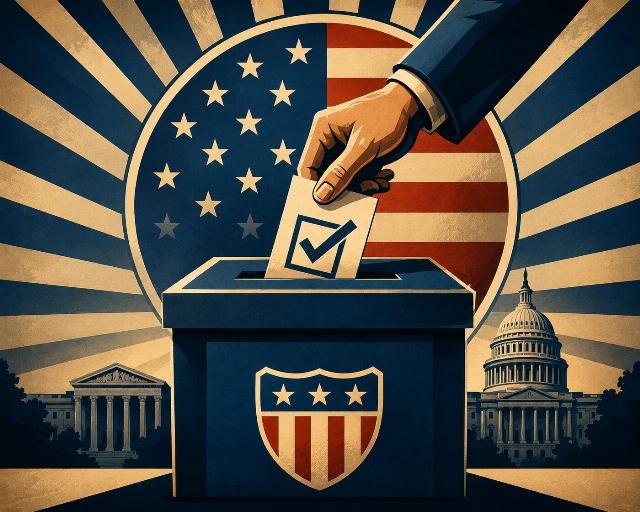
Balancing innocence and election integrity
At the heart of the debate is a fundamental tension in the American legal tradition. The piece invokes “Blackstone’s ratio,” quoting British jurist William Blackstone: “Better that ten guilty persons escape, than one innocent suffer.” While that principle has long guided American criminal law, the piece argues that for elections, the inverse logic should apply: protecting the integrity of every legitimate citizen’s vote is paramount.
If an unlawful vote is cast and counted, the piece argues, an American citizen who followed the law has effectively been disenfranchised — their lawful vote canceled out by an ineligible one. “Any unlawful vote cast translates to an American citizen who is disenfranchised,” the piece states.
The commentary concludes by urging state and federal officials to come together and audit records to ensure the accuracy and currency of voter rolls, with the hope that New Jersey’s discovery proves to be “the exception and not the rule.”
The piece was written by Colonel Chris J. Krisinger, USAF (Ret.), a graduate of the United States Air Force Academy who served in policy advisory positions at the Pentagon and twice at the Department of State.
Source: www.americanthinker.com — https://www.americanthinker.com/blog/2026/08/americans-deserve-accurate-voter-rolls/