
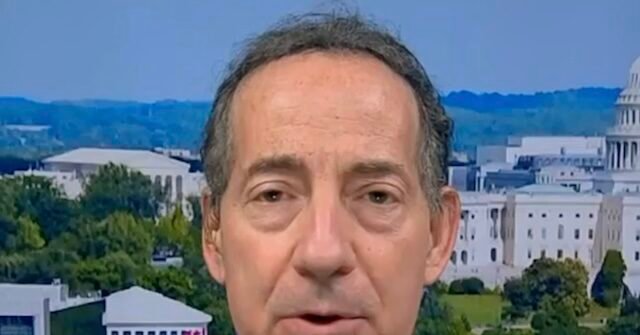
Rep. Jamie Raskin (D-MD) issued a sharp rebuke of President Donald Trump’s involvement in state election administration during a Sunday appearance on NBC’s “Meet the Press,” arguing that the president has no constitutional authority to interfere with how states conduct their elections.
The Maryland Democrat’s remarks came after a federal judge issued a Friday ruling ordering the Trump administration not to threaten or intimidate state or local election officials ahead of the upcoming midterm elections. The Justice Department has become embroiled in an expanding wave of election litigation, including efforts to restrict certain mail-in ballots and challenge voter registration rolls across multiple states.
When asked by host Kristen Welker about his confidence in the fairness and accuracy of the midterm elections, Raskin drew a clear line between federal and state authority over electoral processes.
“If the federal government stays out of it and lets the state government authorities actually run the elections the way that we always have, we will have free and fair elections,” Raskin stated. “The problem is this judge found in a very important ruling that the Trump administration keeps trying to stick its nose into state electoral administration when it has no constitutional role there.”
Federal Judge Blocks Administration Intimidation
The recent federal court ruling represents the latest legal clash between the Trump administration and those seeking to preserve traditional state control over election administration. The judge’s order specifically prohibits threatening or intimidating state and local election officials, a move that civil rights advocates have called necessary to protect the integrity of the electoral process.
Raskin emphasized that presidential involvement in state election administration is constitutionally inappropriate. “The president’s got nothing to do with it,” he declared bluntly. “So he should go off to Mar-A-Lago and let us have a democratic election.”
The congressman went further, alluding to controversial statements from Trump about potentially suspending elections. “You know, he was talking about suspending elections, not having elections,” Raskin said, before invoking historical precedents to underscore the importance of maintaining the electoral calendar.
Historical Context on Wartime Elections
Raskin reminded viewers that the United States has maintained its election schedule even during the nation’s most challenging periods. “We had elections in the middle of the Civil War. We had elections in the middle of World War II,” he noted. “Why should we not have elections just because Donald Trump is going to get his feelings hurt when there’s a landslide against him in 2026?”
The reference to 1864 and the 1940s elections serves as a powerful reminder of American democratic resilience. Abraham Lincoln faced reelection during the Civil War, and Franklin D. Roosevelt ran for unprecedented third and fourth terms while the nation was engaged in World War II. In both cases, elections proceeded despite unprecedented national crises.
Growing DOJ Election Litigation
The Justice Department’s expanding involvement in election-related litigation has raised concerns among voting rights advocates and Democratic lawmakers. The litigation encompasses multiple fronts, including challenges to mail-in ballot procedures that were expanded during the COVID-19 pandemic and efforts to scrutinize voter registration rolls for potential irregularities.
Critics argue that these actions represent an unprecedented federal intrusion into state election administration, an area traditionally reserved for state and local governments under the Constitution. Supporters of the administration’s actions contend they are necessary to ensure election integrity and prevent fraud.
The tension between federal oversight and state sovereignty over elections has been a recurring theme in American politics, but the current level of federal litigation in advance of midterm elections appears unusually high. States have historically maintained primary responsibility for conducting elections, including federal elections, with the federal government playing a more limited role focused on enforcing voting rights laws.
Implications for Midterm Elections
As the midterm elections approach, the debate over federal versus state control of election administration has taken on heightened significance. Democrats like Raskin have expressed confidence that elections will be fair if conducted according to established state procedures without federal interference.
The federal court’s decision to block potential threats or intimidation of election officials suggests that at least some members of the judiciary are concerned about maintaining the traditional balance of power between federal and state authorities in this area.
With control of Congress potentially at stake in the midterms, both parties are watching closely how election administration disputes play out in the courts. The outcome of these legal battles could have significant implications not only for the 2026 midterms but for future elections as well.
Raskin’s forceful statements on “Meet the Press” reflect the Democratic Party’s broader strategy of framing Republican election-related litigation as an attack on democratic norms and state sovereignty. The congressman’s invocation of Civil War and World War II precedents suggests Democrats will continue emphasizing the importance of maintaining scheduled elections regardless of political circumstances.
Source: www.breitbart.com — https://www.breitbart.com/clips/2026/11/01/raskin-trump-has-no-constitutional-role-in-state-electoral-administration/