
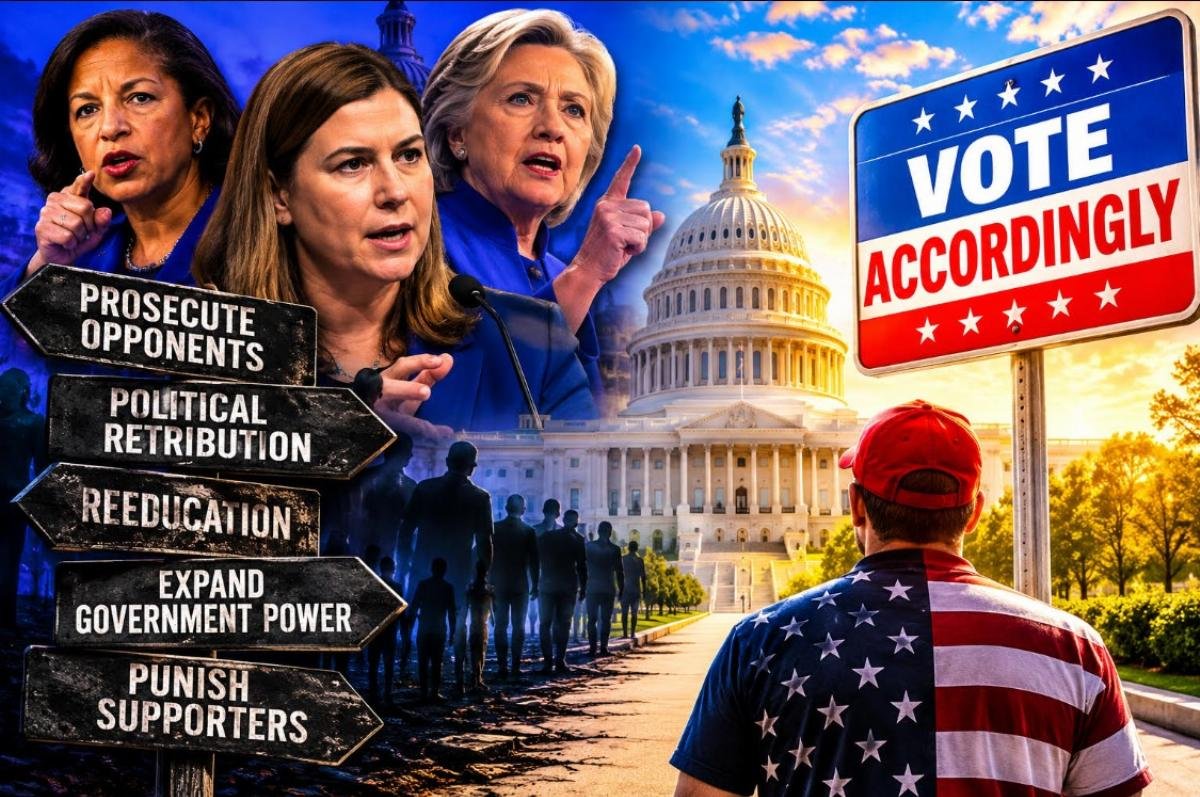
Should working for a presidential administration you support come with a warning label about future consequences? That’s the uncomfortable question facing young Americans considering public service, according to recent statements from prominent Democratic lawmakers.
Senator Elissa Slotkin, a Michigan Democrat and former CIA analyst, recently appeared on a podcast where she made clear her intent regarding prospective Trump administration employees. Her message was direct: she wants potential staffers to think twice before accepting positions, worrying they might be “buying myself a ton of problems that I don’t want.”
The implications are striking. Slotkin isn’t suggesting these young Americans would face consequences for breaking laws or violating ethical standards. Rather, the concern stems purely from their choice to associate with an administration opposed by Democrats.
When confronted with criticism, Slotkin doubled down on her position, dismissing objections as “pearl-clutching” from Republican members of Congress and “online MAGA grifters.” She defended her stance by pointing to what she characterized as President Trump’s own weaponization of government against political opponents.
A Pattern of Concerning Rhetoric
Slotkin isn’t alone in raising eyebrows with statements about future political accountability. Susan Rice, who held senior positions in both the Obama and Biden administrations, delivered her own warning about what awaits Trump supporters when Democrats return to power.

According to Rice, those who cooperate with the Trump administration “are going to be held accountable by those who come in opposition to Trump and win at the ballot box.” Her warning extended beyond government officials to law firms, universities, media entities, corporations, and big tech companies, urging them to “play a long game, not this short game.”
The critical question becomes: accountability for what exactly? Breaking laws and committing fraud deserve consequences under any administration. But Rice’s comments suggest something different—retribution for the political sin of supporting the wrong party.
There’s a fundamental distinction between holding people accountable for actual misconduct and threatening punishment for political association. The former represents the rule of law. The latter resembles the playbook of authoritarian regimes where loyalty to the incoming government matters more than adherence to legal principles.
The Jack Smith Investigation Revelations
These concerns aren’t merely theoretical. Recent congressional disclosures about former special counsel Jack Smith’s investigations revealed the collection of personal and financial information from hundreds of thousands of Trump-supporting Americans. The data sweep included campaign donations and even purchases of MAGA merchandise, with some individuals having contributed as little as one dollar.
Consider the scenario: an American makes a small political donation or buys a campaign hat as a gift. Years later, that perfectly legal political activity gets vacuumed into a federal investigation. What safeguards exist to prevent such information from being misused by subsequent administrations?

The potential for abuse becomes particularly troubling when paired with the government’s extensive power over citizens’ lives. Tax audits, banking access, security clearance reviews, placement on government watch lists—all represent tools that could theoretically be weaponized against political opponents if the wrong precedents are established.
Reeducation and Deprogramming
Perhaps more alarming than warnings about future accountability are statements from Democratic figures suggesting Trump supporters require fundamental psychological intervention. Paula Collins, a Democratic congressional candidate in New York, spoke about the need for post-Trump “reeducating,” with language that evoked “reeducation camps.”
Hillary Clinton offered similar sentiments, comparing Trump supporters to a “cult” and suggesting “maybe there needs to be a formal deprogramming of cult members.”
Such terminology carries dark historical echoes. Reeducation camps are associated with authoritarian regimes, from Nazi Germany to Pol Pot’s Cambodia to contemporary China’s treatment of Uyghurs. These aren’t words typically heard in free societies where citizens possess the right to disagree with their government without fear of state-sponsored thought control.
George Orwell’s dystopian novel “1984” imagined a government seeking not merely obedience but control over citizens’ thoughts. Winston Smith’s crime wasn’t simply disobeying the state—it was thinking independently. America was founded on the opposite principle: that citizens possess the inherent right to their own beliefs and political associations.

The Double Standard Question
Critics note a conspicuous asymmetry in how such rhetoric is received. When Republican officials make controversial statements, media outlets parse every word for authoritarian implications. Yet comparable scrutiny rarely materializes when Democrats employ threatening language about political opponents.
The thought experiment is instructive: imagine Republican lawmakers suggesting the need to deprogram Democratic voters or reeducate Biden supporters. The outcry would be deafening, with accusations about threats to democracy and possible impeachment proceedings. Yet when Democrats employ similar rhetoric, the response is notably muted.
Slotkin herself participated in a controversial video alongside fellow Democratic lawmakers reminding military personnel they must refuse illegal orders—a message the Trump administration labeled as “seditious behavior,” though a federal grand jury declined to indict the lawmakers involved.
Where Does Political Opposition End?
The practical questions multiply quickly. If political accountability becomes the standard when power changes hands, where do the boundaries lie? Would consequences apply only to senior administration officials, or might they extend to political appointees, advisory committee members, interns, contractors, and ordinary citizens whose main offense was supporting the wrong presidential candidate?
Americans have spent recent years watching politicized investigations unfold—from the Russia probe to the Hunter Biden laptop controversy, from the Mar-a-Lago raid to various prosecutions. Each episode feeds concerns about government power being wielded as a partisan weapon rather than an impartial instrument of justice.
The upcoming midterm elections represent more than typical policy disagreements over taxes, spending, or immigration. They also concern fundamental questions about the proper limits of government power and whether Americans can participate in politics without fearing retribution from future administrations that happen to hold different views.
When political figures openly discuss punishing citizens for their associations and beliefs, the conversation extends beyond normal partisan competition into territory that should concern Americans regardless of party affiliation. The power of government over individual citizens remains vast—a power that should never be transformed into an instrument of partisan revenge.
Source: www.americanthinker.com — https://www.americanthinker.com/articles/2026/11/when-democrats-tell-you-what-they-ll-do-believe-them/