
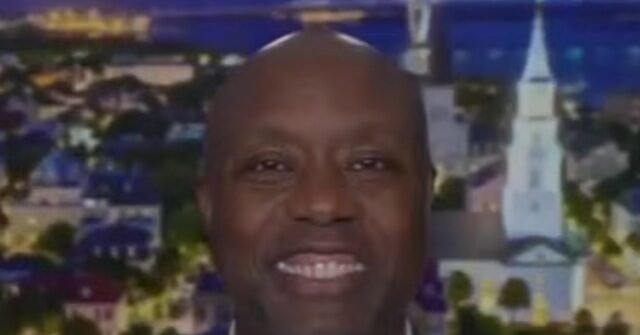
Senator Tim Scott of South Carolina delivered a blistering assessment of the Democratic Party during a Sunday evening appearance on Fox News, characterizing its members as “radical,” “dangerous,” and “weird” while urging voters to reject what he called deceptive campaign tactics.
The Republican lawmaker, who serves as chairman of the National Republican Senatorial Committee, made his comments during an interview on “Sunday Night in America” as the final days of campaign season wind down. His remarks focused heavily on warning voters about the consequences of shifting Senate control to Democrats.
Warning About Committee Leadership
When host Trey Gowdy pressed Scott on the potential implications of losing his seat to a Democrat, the senator painted a stark picture of what Democratic control would mean for key Senate committees. According to Scott, the prospect of senators like Bernie Sanders chairing the Budget Committee or Elizabeth Warren leading the Banking Committee would be detrimental not just to South Carolina, but to the entire nation.
“I don’t think it helps any issue we face to have Bernie Sanders running the Budget Committee or Elizabeth Warren running the Banking Committee,” Scott said, characterizing such an outcome as “insane.”
The senator’s comments reflected a broader Republican strategy of spotlighting progressive Democratic figures to energize conservative voters and raise concerns about the direction of Senate policy-making under Democratic leadership.
Allegations of Campaign Deception
Scott reserved particularly sharp criticism for what he described as a pattern of Democratic candidates presenting themselves as moderates while holding what he considers extreme policy positions. The senator suggested that Democrats across the country are running campaigns that misrepresent their true ideological leanings.
“They can’t run as themselves,” Scott declared, arguing that Democratic candidates are deliberately obscuring their positions to appeal to moderate voters.
The National Republican Senatorial Committee chairman singled out Annie Andrews, a Democrat running for office in South Carolina, as an example of this alleged disconnect between campaign messaging and actual policy stances. Scott claimed that while Andrews positions herself as a moderate, her record tells a different story.
Specific Policy Criticisms
In his critique of Andrews specifically, Scott rattled off a list of policy positions he attributed to her, including support for what he termed “amnesty” and open borders, advocacy for defunding police departments, restrictions on Second Amendment rights, and allowing transgender athletes to compete in women’s sports.
The senator pointed viewers to a website — AnniesChart.com — which he said documents Andrews’ positions on these issues in her own words. He urged voters not to simply take his characterization at face value but to review the information themselves.
“This is a radical position,” Scott emphasized, repeating his assertion that Andrews and other Democrats represent dangerous policy directions despite moderate campaign rhetoric.
Broader Electoral Context
Scott’s appearance came as Republicans work to maintain and potentially expand their presence in the Senate. As chairman of the National Republican Senatorial Committee, Scott plays a central role in coordinating Republican Senate campaigns across the country and shaping the party’s closing message to voters.
His focus on committee leadership reflects a strategic Republican emphasis on the concrete implications of Senate control, moving beyond abstract partisan differences to highlight specific policy outcomes tied to which party holds the gavels in powerful committees.
The senator’s rhetoric also mirrors a broader Republican messaging approach that seeks to tie all Democratic candidates to the most progressive members of the party, regardless of individual candidates’ actual positions or voting records.
Election Day Approaches
With Election Day looming, Scott’s comments represent part of the final push by both parties to mobilize their respective bases and persuade undecided voters. The sharp language deployed by the South Carolina senator underscores the high stakes both parties see in the Senate races that will determine control of the chamber.
Republicans have increasingly emphasized law and order issues, border security, and what they characterize as Democratic extremism on cultural issues as central themes in their closing arguments to voters. Scott’s comments Sunday evening hit all of these notes in rapid succession.
Meanwhile, Democrats have countered that Republicans are distorting their records and positions while offering their own criticisms of Republican policy proposals on issues ranging from abortion rights to Social Security and Medicare.
The contrast in campaign styles that Scott highlighted — with Democrats he claims cannot “run as themselves” — speaks to the ongoing debate about how candidates in competitive races navigate the tension between appealing to primary voters and positioning for general elections in politically divided states.
As voters prepare to cast ballots, Scott’s message to South Carolinians and Americans more broadly was unambiguous: a Democratic Senate majority would empower what he views as the party’s most radical elements to implement policies he considers harmful to the country’s interests.
Source: www.breitbart.com — https://www.breitbart.com/clips/2026/11/02/theyre-weird-and-theyre-deceiving-the-public-tim-scott-warns-about-radical-dangerous-dems/