
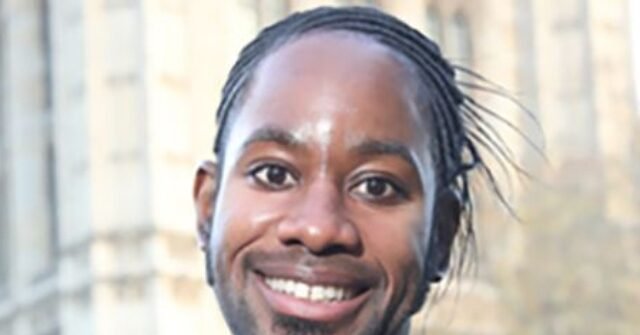
Senior figures at the University of Cambridge are facing accusations of deflecting blame after calling for an investigation into media coverage of the late Professor Jason Arday, who died last week just days after resigning amid plagiarism allegations. Critics argue the university itself ignored red flags for years and helped elevate Arday, and that the new narrative blaming the press for his death distracts from institutional failings.
Arday, formerly a Professor of Sociology of Education at Cambridge, was found dead in a London flat on August 10, 2026, according to reports. No cause of death has been announced. His resignation came days earlier, following public allegations that his thesis was largely identical to another student’s work and that he fabricated elements of his life story, including claims about his childhood autism and extraordinary athletic feats.
Allegations Emerge After Years of Silence
The plagiarism accusations were first made public last month by Nathan Cofnas, a philosopher at the University of Ghent, who was dismissed from Cambridge’s Emmanuel College in 2024 after arguing that meritocratic admissions would reduce black student numbers at elite universities. Cofnas’s analysis suggested Arday’s thesis was largely copied from another student’s paper, and that Arday had also fabricated significant portions of his autobiography, including an assertion that he was unable to speak until age 11 and could not read or write until 18 — yet earned a doctorate by 30.
According to reports, Cambridge officials were made aware of the allegations as early as 2023 but took no action until the claims became public in July. Even then, the university announced an investigation only after the story broke, and Arday resigned before any conclusion was reached.
Sir James Cleverly, Britain’s first black home secretary, said the tragedy could have been avoided if universities had done proper due diligence before appointing Arday. “It could and should have never come this far,” Cleverly said, according to the source. “If people within the university establishment — not just Cambridge — had done the robust due diligence and checking that should happen with any senior academic appointment.”
Cleverly also criticized the way Arday was celebrated, suggesting institutions used him as a “bragging right.” He said, “The glee with which they said ‘we’ve got the youngest-ever black professor,’ talking about his age and his ethnicity rather than his talent, I think was part of the reason he was lifted so high so quickly.”
Blaming the Media
Over the weekend, prominent left-wing figures in Britain — including some at Cambridge — began arguing that media scrutiny contributed to Arday’s death and that racism played a role. Lord Woolley, principal of Cambridge’s Homerton College, demanded an investigation into what he called a “vicious media onslaught” against Arday, according to The Telegraph.
Woolley, a crossbench peer who previously chaired the UK government’s Race Disparity Unit and founded the Operation Black Vote campaign group, said other academics facing plagiarism findings have not been subjected to the same degree of treatment as Arday. He also suggested the scrutiny implicated the entire black academic community. “You also have to understand the whole of the black community and black academics are being brought into this debate as though we don’t belong in these positions because we are, collectively, the diversity, equity and inclusion hires,” he said.
Woolley, who met with Arday alongside Labour MP Diane Abbott and activist Misan Harriman days before Arday’s death, quoted Arday as saying: “He said he felt hounded to death, his words. And he couldn’t see a way out.”
Woolley has also signed an open letter organized by the Good Law Project, which calls for a “immediate public inquiry into how to ensure a responsible press.” The letter is backed by prominent left-wing politicians.
Cambridge’s Chancellor, Lord Chris Smith of Finsbury, has similarly suggested racism played a part in Arday’s death, while insisting he believes in academic integrity. “I do believe it is possible to hold to two principles at the same time: to believe in the importance of academic integrity, and where criticisms of plagiarism arise, about any academic, whoever they are, ensure that they are rigorously investigated. And also to refuse to join in a racist feeding frenzy over a particular academic,” Smith said.
A Debate Over DEI and Standards
The episode has reignited debate over the impact of Diversity, Equity, and Inclusion (DEI) policies in academia. Some commentators have pointed to Arday’s rise as an example of sliding standards in the name of diversity, while others insist the focus should remain on the press and on racism.
Cleverly’s comments reflect a middle-ground view, acknowledging that Arday may have been a talented individual but that institutional failures — rather than the media — were primarily responsible for the situation. He suggested that the rush to celebrate Arday’s youth and ethnicity rather than his scholarly work left him vulnerable when the allegations surfaced.
The university has not yet responded to requests for comment on the investigation calls or the broader criticism. Arday’s death remains under investigation, with authorities yet to release a cause.
Source: www.breitbart.com — https://www.breitbart.com/europe/2026/08/17/cambridge-college-head-calls-for-investigation-into-media-onslaught-against-alleged-plagiarist-professor/