
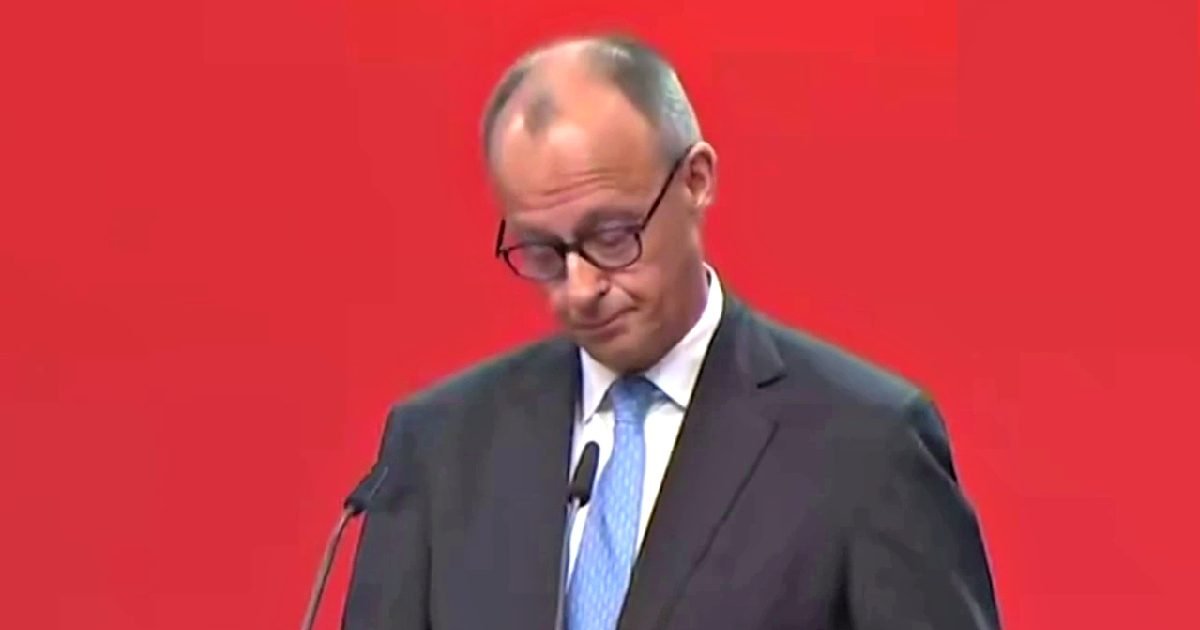
Germany has long been criticized for a law that shields its political class from online insults—a statute that has landed ordinary citizens in legal trouble for calling Chancellor Friedrich Merz names like ‘Lying Fritz’ or ‘Pinocchio.’ But now, in a rare moment of cross-party consensus, lawmakers from across the political spectrum are converging on one point: the law needs to change.
The controversy centers on a provision that criminalizes insults deemed to ‘impede the politicians’ work,’ carrying penalties of up to three years in prison. Critics argue the law has created a de facto special privilege for politicians, shielding them from the rough-and-tumble of public discourse in ways that ordinary citizens are not protected.
According to a POLITICO survey of lawmakers responsible for the issue from each party represented in the Bundestag, while there is broad agreement that the law is problematic, there is no consensus on how to fix it—or when.
Rare Bipartisan Agreement—With Sharp Divisions
The divide runs between the establishment parties and the more radical flank. The Left Party and the right-wing Alternative for Germany (AfD) want to abolish the law entirely. In contrast, the center-right Christian Democratic Union (CDU), the Greens, and the Social Democratic Party (SPD) are pushing for a revision rather than a full repeal.
Susanne Hierl, a lawmaker from Merz’s CDU, acknowledged the law’s problematic reputation. ‘We take seriously the criticism that, in practice, it may have created the impression of a special legal privilege for politicians,’ she said. ‘Such preferential treatment was never the intention of the legislature.’
Hierl’s comments reflect a defensive tone from the center-right, which has seen its own chancellor become a lightning rod for public anger—and the target of mockery that, under current law, could be treated as a criminal offense.
‘Politicians Insult Ordinary People Every Day’
Left Party lawmaker Luke Hoss seized on that irony, pointing out that politicians themselves are not shy about lobbing insults at the public. ‘Politicians like Friedrich Merz insult ordinary people in this country every day by calling them lazy or malingerers,’ Hoss said, referring to the chancellor’s remarks that Germans should work more to boost economic growth. ‘The provision creates a special criminal offense that applies only to politicians and should be abolished.’

Hoss’s comments underscore a broader frustration: that the law has been used to target citizens for speech that, in any other context, would be protected—or at least not criminalized. The chancellor’s own words, critics note, have been far from civil, yet no one has faced legal consequences for them.
AfD: Politicians Must Tolerate Harsher Criticism
The AfD’s Tobias Peterka echoed that sentiment from the opposite end of the political spectrum, arguing that public office carries with it an expectation of thicker skin. ‘Anyone who voluntarily enters politics and exercises public authority must—as Germany’s Federal Constitutional Court has repeatedly emphasized—tolerate harsher criticism than private citizens, not less,’ he argued.
Peterka’s reference to the Constitutional Court is pointed: the court has long held that politicians, by virtue of their public role, must accept a higher degree of scrutiny and criticism than private individuals. The law, in his view, inverts that principle, giving politicians more protection rather than less.
The Law in Practice: Fines, Raids, and Jail
The law’s application has sparked outrage beyond political circles. Activists and free-speech advocates have documented cases where citizens were fined, had their homes raided, or even faced jail time for online comments directed at politicians. A social media post from Naomi Seibt, a German activist, highlighted the issue, warning that Germans ‘are not allowed to insult politicians on social media’ and that authorities will ‘raid your home and send you to jail, to make an example out of you.’
While such claims are contested, they reflect a growing perception that the law has been used heavy-handedly, particularly against those who mock or criticize the political establishment. The phrase ‘Lying Fritz’—a jab at Merz’s credibility—has become a rallying cry for those who see the law as a tool to silence dissent.
What’s Next?
The POLITICO survey suggests that while the will to change the law exists, the path forward is unclear. The establishment parties’ preference for revision could result in narrowing the law’s scope, raising the bar for what constitutes a punishable insult, or limiting its application to threats rather than mere mockery. The abolitionists, meanwhile, argue that any special protection for politicians is inherently undemocratic.
For now, the law remains on the books, and the investigations continue. But the rare cross-party acknowledgment that the law has created a ‘special legal privilege’ for politicians marks a significant shift in the political conversation. Whether that acknowledgment translates into meaningful reform—or just another round of legislative dithering—remains to be seen.
As the debate grinds on, one thing is clear: the question of how much criticism politicians must tolerate is no longer a fringe concern. It has moved to the center of German political discourse, and the answer will shape the boundaries of free speech in the country for years to come.
Source: www.thegatewaypundit.com — https://www.thegatewaypundit.com/2026/08/german-parties-converge-change-law-that-makes-it/