
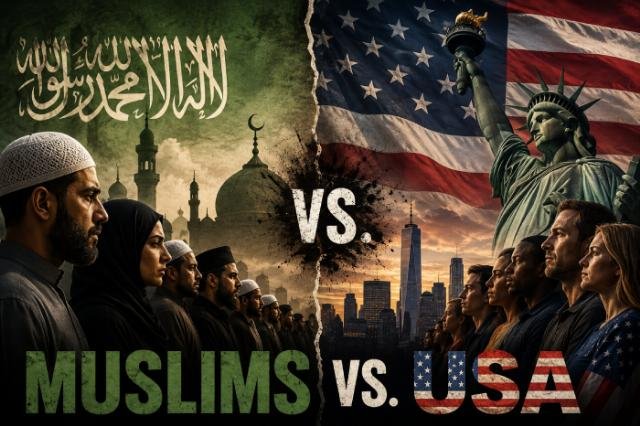
For years, the question has simmered beneath the surface of American public life: why do some Muslims in the United States express such deep dissatisfaction with their new home? A recent opinion piece by Susan Quinn at American Thinker delves into this fraught topic, offering a nuanced look at the explanations offered by both Muslim immigrants and native-born Americans—and the implications for a nation increasingly at odds with itself.
Quinn, who says she has long tried to understand the growing rancor between the Muslim community and the broader American population, notes that the two groups have rarely lived comfortably together. In an era when Muslims are becoming part of the political community, tensions in the Middle East continue to simmer, and conflicts in Muslim-majority countries show no signs of abating, the relationship appears only to be deteriorating.
Muslim Grievances: Policy or Perception?
When Muslims are asked why they feel alienated, many point directly to policies enacted by the Trump administration. Quinn lists several: the 2017 executive order calling for a ‘total and complete ban on Muslims entering the U.S.’; the move of the U.S. Embassy from Tel Aviv to Jerusalem, which many saw as a betrayal of the Palestinian dream; the recognition of the Golan Heights as Israeli territory; the cutoff of all $390 million in annual U.S. aid to Palestinians; the closure of the PLO office in Washington, D.C.; and rhetoric suggesting American Muslims register in a database or have mosques placed under surveillance.
While these actions can be explained—even justified—in terms of national security or ally support, Quinn acknowledges that many in the Muslim community see them as a rejection and a betrayal. For those who view the U.S. as an impartial arbiter, its embrace of Israel is perceived as treachery, deepening a sense of distrust.
Cultural Dislocation and the Immigrant Experience
Quinn argues that many Muslims did not come to America primarily for the benefits they would enjoy. Liberty, freedom of movement, and a staggering array of choices—hallmarks of American life—can be disconcerting and even confusing for those arriving from countries torn by war and political conflict: Syria, Yemen, Pakistan, India, Iran, Lebanon, Sudan, Afghanistan, and Somalia, to name a few.
Most, she suggests, were reluctant migrants, forced from their homes into cultures vastly different from their own. Even those who came willingly may find the task of assimilation overwhelming, particularly for women who face the contradiction of maintaining their family’s ethnic identity while helping relatives navigate American life—all while struggling personally to carve out a place in a society that promised liberation but often brings pain and insecurity.
Poll Data: Pride and Paradox
Quinn points to a poll of 750 Muslim Americans showing that 95% expressed pride in America—yet 47% admitted to stronger ties with their home nations. The data become more troubling when examining foreign relations: 33% side with the Iranian regime in its standoff with the U.S., while only 32% support the United States. Notably, Sunnis backed the ayatollahs more than Shi’a did. Thirty-five percent expressed sadness at the killing of Ali Khamenei.
Sixty-six percent hold a favorable view of the Muslim Brotherhood, some chapters of which have been designated as foreign terrorist organizations. Thirty-five percent support Hamas. Forty-seven percent believe Jews are too frequently portrayed as victims, and 17% admit to unfavorable attitudes toward Jews.
The Role of Leadership and Community Foment
Quinn suggests that community leaders, educators, and religious figures can exacerbate dissension, fomenting hatred rather than fostering understanding. She cites academic work on Muslim women whose experiences challenge the ‘land of the free’ narrative, describing the adjustment as a source of pain, frustration, and insecurity rather than liberation.
The question remains: for those deeply aligned with Islamist ideology, can they ever be happy in America? Quinn references a man who celebrates America but whose father founded Hamas—a warning that the divide may be rooted in fundamental worldview differences.
No Easy Answers
Quinn is careful not to offer simple solutions. She asks whether dramatic calls to expel dissatisfied Muslims would portray to the world a kind of savagery, and whether such an approach is even realistic. What is clear, she contends, is that the ability to speak openly is crucial to the republic—and that the conversation, difficult as it is, must continue.
Source: www.americanthinker.com — https://www.americanthinker.com/articles/2026/08/if-you-hate-america-why-don-t-you-leave/