
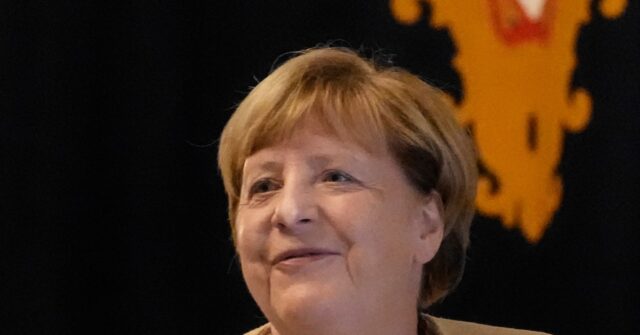
Former German Chancellor Angela Merkel has ignited a fresh debate on national identity by asserting that Syrian migrants and Germans from the former East deserve equal recognition as part of the country’s citizenry. Speaking at the International Mendelssohn Prize ceremony in Leipzig, Merkel waded into the contentious issue of who qualifies as authentically German—a discussion that has defined much of her political legacy.
Merkel’s Blunt Declaration
Merkel, Germany’s first and only female chancellor and its sole leader hailing from the former communist East, doubled down on her integrationist stance. She dismissed divisions between native-born Germans—such as those from former East Germany—and newer arrivals, including those who fled war-torn Syria. “All German citizens are the Volk,” Merkel declared, invoking the politically charged German term for ‘the people.’ She lamented those who attempt to distinguish between long-standing citizens and more recent ones, accusing them of sowing division and “inciting hatred.”
Historical Baggage and Political Minefields
The reference to “Volk” carries historical weight due to its association with Nazi ideology, but Merkel framed it inclusively. Her comments come amid Germany’s ongoing reckoning with immigration policies, particularly after her controversial 2015 decision to welcome over a million migrants, triggering Europe’s migrant crisis. That policy reshaped Germany’s demographics and fueled the rise of right-wing factions like the Alternative for Germany (AfD), which argues for preserving ethnic and cultural identity.
The AfD’s Counterpoint
The AfD, Germany’s leading anti-mass migration party, has taken a different stand. While claiming to reject a system of “first- and second-class citizens,” the party also maintains that safeguarding German ethnicity, language, and tradition is legitimate. AfD leader Alice Weidel has pointed out that the phrase “To the German People”—emblazoned on Berlin’s Reichstag—acknowledges the concept of an ethnic German identity, even if contemporary elites dismiss it.
Parallel Debates in the UK
Similar battles over national identity rage in Britain. Conservative Party figure Kemi Badenoch, born in London to Nigerian parents, insists she is English—though some critics argue her upbringing in Nigeria disqualifies her from being culturally or ethnically English. Meanwhile, former Home Secretary Suella Braverman, of Indian descent, distinguishes between being British (a civic identity) and English (an ethnic one), insisting that acknowledging ethnic distinctions isn’t inherently racist.
Merkel’s latest remarks continue to polarize, reinforcing the divide between those who view national identity as fluid and those who see it as rooted in deeper ethnic and historical ties.
Source: www.breitbart.com — https://www.breitbart.com/europe/2026/11/04/merkel-says-people-from-east-germany-and-syrians-are-equally-german/