
A legal battle unfolding in Texas over a newborn baby named Gabriel is forcing Americans to confront a question as old as parenthood itself: What makes someone a parent—blood, contract, or love?
The case, reported by American Thinker columnist John Green, involves a boy born in Texas on August 22, 2026, after a convoluted surrogacy arrangement that began nearly a year earlier in California. The story has become a national flashpoint, touching on abortion, parental rights, and the limits of contractual obligations when a child’s life hangs in the balance.
The Surrogacy Agreement Gone Wrong
In September 2025, a California couple, Nausheen Gilkar and Omar Ahmed, entered into a surrogacy contract with McKenna West, an Alaskan nurse. West agreed to carry their fertilized embryo and give birth to their child. But months into the pregnancy, an ultrasound revealed the baby boy—whom West had already named Gabriel—had a serious but treatable heart defect.
According to Green’s account, Gilkar and Ahmed invoked a clause in their surrogacy contract and directed West to travel to Seattle for a complex late-term abortion. West instead offered to keep the baby herself, but the genetic parents refused. Faced with what she saw as an impossible choice, West made a decision that would alter the course of many lives: she fled to Texas, a state with legal protections for the unborn.

Texas Attorney General Ken Paxton took legal steps to ensure that hospitals in the state understood their obligation to provide lifesaving care to Gabriel—both before and after his birth. Now that Gabriel has been born, the arena has shifted from medicine to the courts.
A Modern-Day Solomon
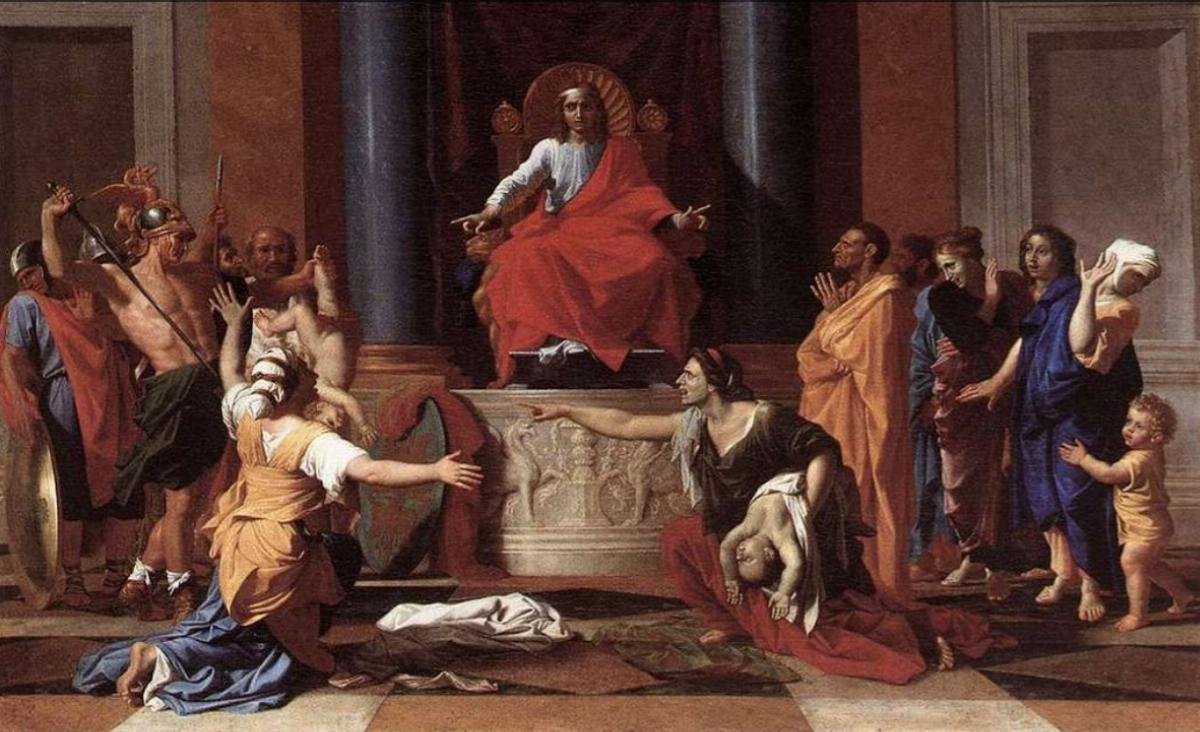
Green draws a pointed parallel between the case of Baby Gabriel and the biblical story of King Solomon, who was asked to adjudicate a custody dispute between two women claiming the same child. In that ancient tale, Solomon threatened to cut the baby in half, and the woman who begged him to spare the child—even at the cost of surrendering her claim—was revealed as the true mother.
“It wasn’t based on bloodline, legal reasoning, or who bore the child,” Green writes. “It was based on who loved the child more than herself—and his decision feels right to us.”
Green, who describes himself as an adopted child, argues that parenthood is defined not by biology or legal paperwork, but by love and sacrifice. “The man and woman who contributed my DNA are nothing but happenstance biological players—the bees that pollinated the fruit tree,” he writes. “Parenthood by love feels right to me.”

That sentiment, however, may not carry the day in court. Legal scholars, Green notes, expect the courts to rule that the genetic parents—Gilkar and Ahmed—are Gabriel’s rightful parents, regardless of their intent to terminate the pregnancy. “That ‘what should be’ doesn’t comport with ‘what will be’ is why the matter of Baby Gabriel has become a national debate,” he observes.
Who Speaks for the Unloved?
Beyond the specific facts of Baby Gabriel’s case, Green raises a broader question: Who advocates for unborn children who have no one fighting for them? He points to Massachusetts, which recently legalized abortion up to the moment of birth, becoming the tenth state to do so. Such procedures, he writes, “divide a baby into pieces, just as savagely as King Solomon’s sword would have.”
For Green, Baby Gabriel’s name carries symbolic weight. The angel Gabriel appears four times in the Bible, each time as a messenger from God. “Is God’s messenger visiting us again—this time in the body of a frail newborn baby?” he asks. “Is Gabriel’s message that all children are gifts to be cherished, regardless of the infirmities they bear, or the inconveniences they cause?”
The case, as Green presents it, is not merely a legal dispute but a moral test—one that asks Americans to decide whether the law should prioritize contracts or compassion, genetic claims or genuine care.
The courts will eventually render a decision, but the debate over Baby Gabriel is unlikely to end with a ruling. It has already become a rallying point for those who see the case as proof that the pro-life movement’s principles—and the rights of the unborn—are under siege. And it has raised uncomfortable questions about the commodification of reproduction in an era of advanced surrogacy arrangements.
As Green puts it, the story of Baby Gabriel forces us to grapple with who speaks for the unloved—the countless children who may never have a McKenna West or a Ken Paxton standing in their corner. “That is not a rhetorical question,” he writes.
Source: www.americanthinker.com — https://www.americanthinker.com/articles/2026/08/gabriel-delivers-a-message/