
California has told the public it cannot say how many noncitizens have been removed from its voter rolls and has no formal policy for investigating reports of illegal voting, according to records obtained by the American Center for Law and Justice (ACLJ). The admissions, made in response to California Public Records Act requests submitted earlier this summer, highlight what critics call a transparency failure in the state’s election administration.
The ACLJ filed two requests in late July — one with the California Secretary of State’s Office and one with Attorney General Rob Bonta’s office — seeking documentation on how the state maintains voter roll accuracy and handles allegations of noncitizen voting. The Secretary of State’s Office responded first, but its answer was stark: the statewide voter registration system simply does not include a cancellation reason for non-citizenship.
In a written response, the office said the system “does not contain a voter status reason for cancellation due to non-citizenship,” meaning the state cannot provide a count of how many noncitizens have ever been purged from its rolls. The state also declined to produce records on programs used to keep voter rolls current, pointing instead to training manuals that describe checks against death records, felony records, and DMV change-of-address data — but not citizenship status, aside from a self-attested checkbox on registration forms.

No records of complaints or outcomes
When the ACLJ asked for records on how the state handles complaints submitted through its Election Voter Complaint form, California treated the request as a question rather than a records demand, provided no documents, and said only that complaints are forwarded to Elections Division staff for review or investigation. The state also said it “does not maintain” statistics on the outcomes of illegal-voting investigations.
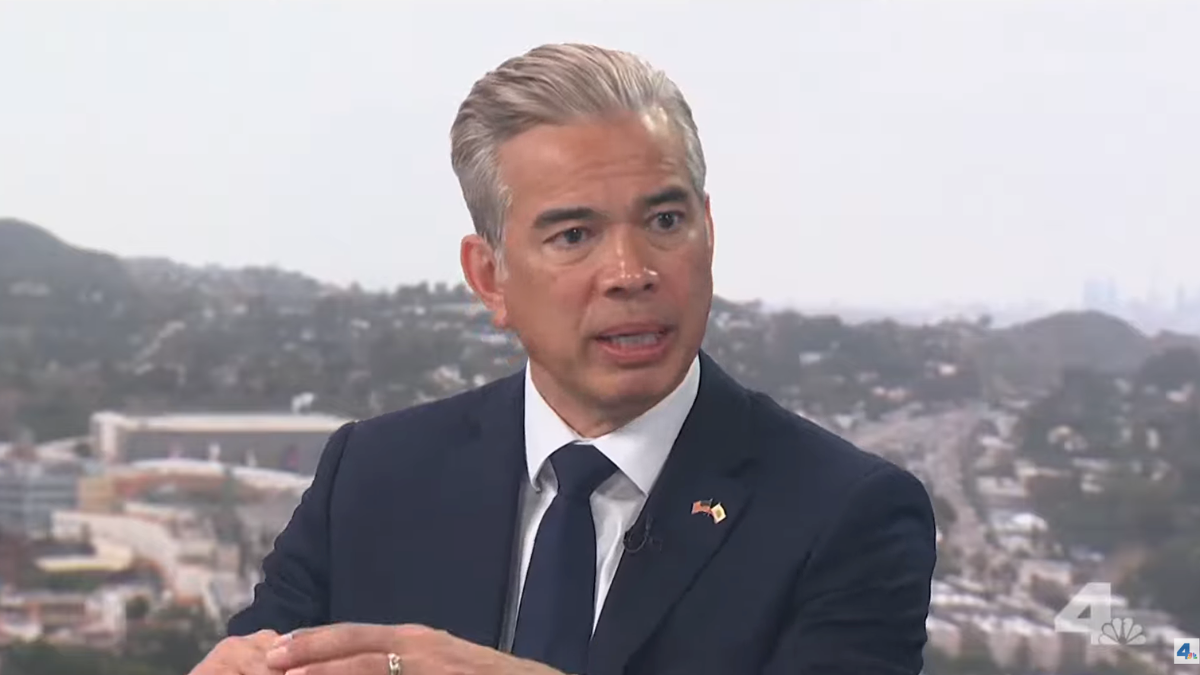
The Attorney General’s Office, which took an extension before responding on Aug. 10, was equally noncommittal. The ACLJ asked for records on programs to protect voter rolls, policies for handling investigative referrals of illegal voting, and outcomes of such referrals. The DOJ’s response was blunt: it has no records “containing or addressing ‘policies’ that are specific to handling ‘investigative referrals for illegal voting.'”
In other words, California’s own Department of Justice — the agency responsible for enforcing election laws — has no written procedure for what happens when someone reports illegal voting. Not redacted, not withheld, but nonexistent, the ACLJ noted.
The state did say it found potentially responsive records on the other two requests but needs more time to review them for redactions and exemptions. That response is now expected on or about Aug. 27.
A federal law requirement
The issue is not just a matter of bureaucratic bookkeeping. The National Voter Registration Act (NVRA), codified at 52 U.S.C. § 20507, requires each state to retain for at least two years — and make available for public inspection — records showing how it works to keep its official voter rolls accurate and current. California’s admission that it keeps no such records regarding noncitizen removals appears to put it in direct violation of that federal statute.
Notably, California’s system does track cancellations for other reasons — death, moving out of state, felony convictions — each with its own documented category. The lone missing category is citizenship. As the ACLJ put it, that’s not an oversight; it’s a choice.

The state tried to reassure by noting that voters must attest under penalty of perjury that they meet all eligibility requirements, including citizenship, and that state law bars noncitizens from registering. But the ACLJ argues that reassurance is hollow: if the state isn’t tracking when that law is violated, and if the attorney general’s office isn’t keeping records of investigative referrals, there is no way to verify that any safeguard is actually working.
The ACLJ also pointed to California’s AB 60 driver’s license program, which allows noncitizens to obtain licenses without proof of lawful presence — the same kind of pathway that triggered New Jersey’s noncitizen voter roll problems. Driver’s licenses are commonly used to establish identity for voter registration, the group noted.
The ACLJ says it plans to press for the records the DOJ is still reviewing, and depending on what that response contains — or what it lacks — the group is prepared to pursue further legal demands or even litigation for noncompliance with state and federal recordkeeping laws.
Source: thefederalist.com — https://thefederalist.com/2026/08/17/california-admits-it-doesnt-track-noncitizens-on-voter-rolls-as-federal-law-requires/