
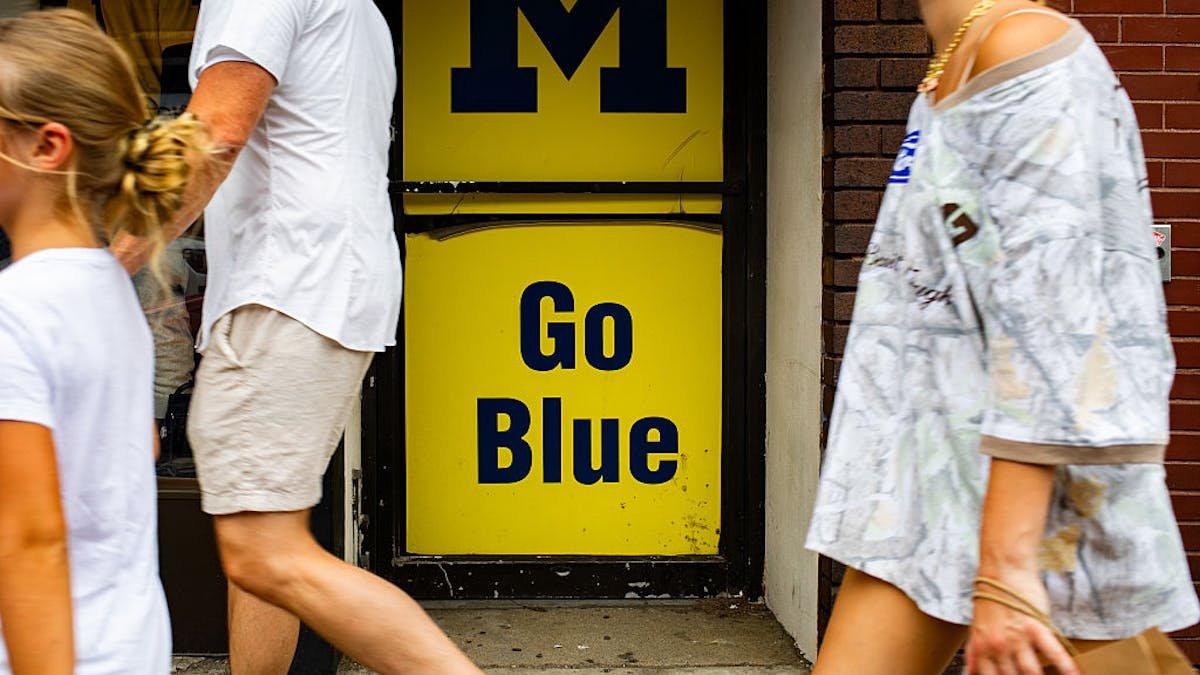
The University of Michigan is set to implement a controversial grading policy that will exclude first-semester grades from overall GPAs for first-year students in its College of Literature, Science, and the Arts, starting in fall 2027. The university frames the move as a response to a “mental health crisis,” but critics argue it may be a way to soften academic expectations in the face of changing admissions standards.
According to a report from the Manhattan Institute’s City Journal, published in collaboration with Daily Wire, the policy is part of a broader “Student Success Initiative” designed to build “early momentum” for incoming students. University documents suggest that the initiative is part of a larger effort to reshape the university around the students it admits, rather than expecting those students to adapt to a demanding academic environment.
The Rationale Behind Grade Covering
At a 2024 seminar on the future of undergraduate education, Angela Dillard, vice provost for undergraduate education, provocatively asked, “Why don’t we blow up the transcript?” Two years later, the university is moving in that direction. The policy, which the university declined to explain in detail to the Wall Street Journal, is intended to address what administrators see as a mental health crisis among students.
The university’s own data shows that “DFW” rates—courses with D’s, F’s, or withdrawals—are highest in foundational courses taken early in a student’s career, and that these rates reflect “intersectional patterns of inequity.” Wealthy, white, continuing-generation students are substantially more likely to pass these courses than their peers. The university’s rationale appears to be that if some students arrive with a cushion—such as AP credits that allow lighter course loads—then covering grades for the first semester would provide a similar cushion for everyone else.
Dillard has claimed that the initiative is not about “blaming students for being unprepared” but about placing “blame on institutional systems.” The university’s analytics group, known as ASSET (Analytics for Student Success and Equity Transformation), has identified “credit gaps” among students before they even enroll, with white and Asian students more likely to have precollegiate credits than Hispanic and Black students.
Evidence of Declining Standards?
Critics, including the Manhattan Institute, argue that the policy is less about helping students succeed and more about accommodating the consequences of U-M’s own admissions decisions. The university has been test-optional since the pandemic, and enrollment data shows a 13% decline in white students between 2016 and 2025, while Hispanic enrollment has doubled to nearly 11% over the last decade. Black enrollment has also grown markedly since fall 2022.

The university’s graduation rates remain strong overall—81% for four years and 94% for six years—but when broken down by race and ethnicity, Black and Hispanic students fall 10 to 20% below the overall four-year rate. The grade-covering policy, according to the Manhattan Institute, is a way to “soften academic expectations” and give all students a level playing field, but it may simply be lowering standards.
The policy is not without precedent. MIT has had a grade-covering policy since 1968, and a handful of other universities have similar policies for first-year students. But the Manhattan Institute warns that what works at one institution may not work at another. A Johns Hopkins University student wrote in 2016 about the costs of such policies, noting that “it demands a certain level of unexpected maturity to be able to bounce back into the scheme of things, into how life at college actually works.”
Johns Hopkins itself rescinded its 45-year-old grade-covering policy after professors found that it “delay[ed] development of study skills and adaptation to college-level work,” “negatively impact[ed] students who perform well,” and was “not well-received by graduate schools and potential employers.”

A Cushion or a Crutch?
The Manhattan Institute’s analysis concludes that U-M’s primary motivation for adopting grade covering is not to give high achievers a boost but to accommodate the consequences of its own admissions decisions. By excluding first-semester grades, the university may be shielding students from the consequences of failing early courses, but it may also be failing to prepare them for the rigors of college and the workforce.
The university’s decision comes as it has moved away from standardized testing requirements, and its enrollment shifts suggest a deliberate effort to increase diversity. While the policy is framed as an equity measure, critics contend that it could stigmatize students by implying they cannot handle the standard curriculum.
The University of Michigan has not provided detailed evidence on how it decided to launch the pilot program, and it declined to answer questions from the Wall Street Journal. The university’s own 2023 report noted that students who succeed early are likely to have higher graduation rates, but the grade-covering policy may actually delay the development of essential study skills.
As the Manhattan Institute notes, “The evidence suggests that the University of Michigan’s main motivation for adopting a grade-covering policy isn’t giving high achievers a boost but instead softening academic expectations to accommodate the consequences of the university’s own admissions decisions.”
The policy is set to take effect in fall 2027, and it remains to be seen whether it will achieve its stated goal of improving student success or simply become a cushion for academic decline.
Source: www.dailywire.com — https://www.dailywire.com/news/michigans-grade-covering-policy-is-a-cushion-for-academic-decline