
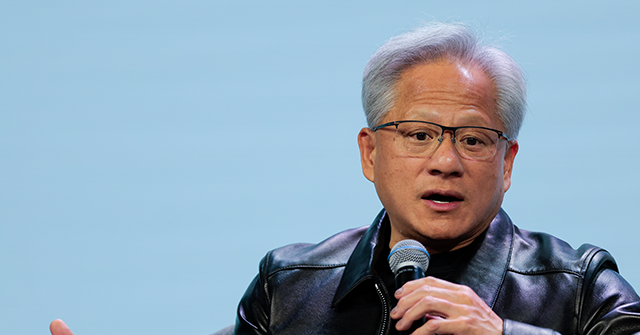
Jensen Huang’s sudden exit from Nvidia isn’t just a leadership shakeup for the chip giant—it’s a potential disaster for China’s artificial intelligence ambitions. The longtime CEO served as an unlikely but effective lobbyist for maintaining U.S. semiconductor exports to Beijing, a position that now leaves Chinese tech firms scrambling as homegrown alternatives struggle to meet demand.
The China Conundrum
Huang spent years convincing Washington that selling advanced chips to China was paradoxically in America’s strategic interest. His argument: feeding Beijing’s AI industry with Nvidia hardware would keep it dependent on U.S. technology rather than accelerating domestic chip development. Critics called the logic flawed, comparing it to ‘selling communists the rope to hang us’—a point now gaining traction as China’s military-civil fusion strategy becomes undeniable.
Beijing’s Awkward Reality
While Chinese leadership trumpets technological self-sufficiency, Huawei recently admitted it can’t produce enough high-end chips to replace Nvidia’s offerings. Analysts estimate direct China sales account for 7% of Nvidia’s revenue, but the true exposure may be triple that when accounting for third-party shipments. Huang’s departure comes precisely as Chinese chipmakers face production bottlenecks, with Huawei’s Ascend processors still years behind Nvidia’s latest architectures.
Washington’s Growing Skepticism
Huang’s replacement inherits a fundamentally changed political landscape. Biden administration export controls have tightened since the CEO’s early advocacy, and Congressional China hawks increasingly view semiconductor exports through a national security lens. Where Huang framed chip sales as keeping China ‘on the hook,’ skeptics now see them as financing Beijing’s bid for AI supremacy—both militarily and economically.
The Ripple Effects
Beyond China, Huang’s exit may slow America’s own AI boom. The charismatic founder personally orchestrated financing deals to help startups buy Nvidia systems, fueling rapid industry expansion. His successor—likely more risk-averse—could dampen that growth engine. Ironically, some analysts suggest a moderated pace might prevent an AI investment bubble while still maintaining U.S. leadership.
For Beijing, the timing couldn’t be worse. Losing their most persuasive Silicon Valley ally coincides with China’s most acute chip vulnerability in years—proving Huang’s original warning about pushing China toward self-reliance may have been prescient after all.
Source: www.breitbart.com — https://www.breitbart.com/economy/2026/11/12/breibart-busiess-digest-its-a-huang-derful-life/