
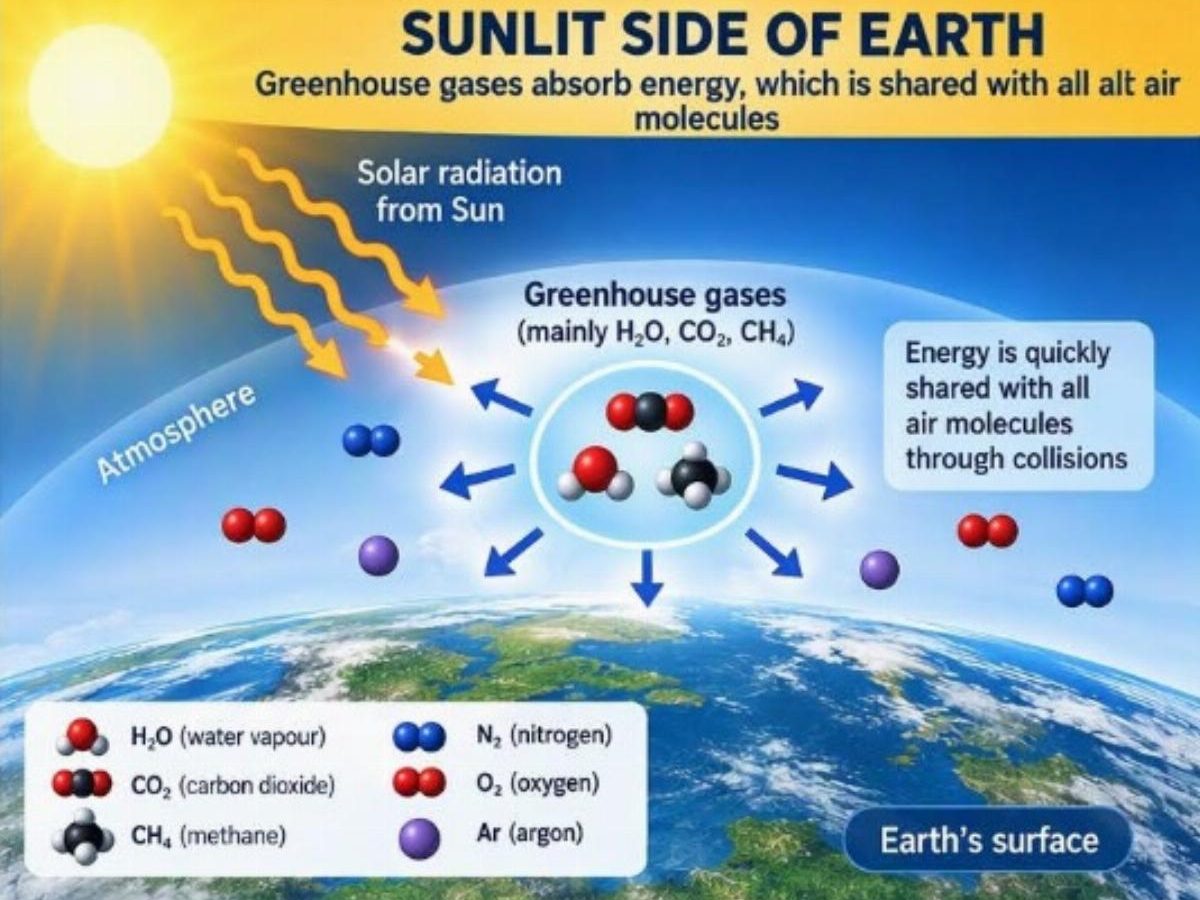
The widely accepted explanation that greenhouse gases “trap heat” in Earth’s atmosphere is facing renewed scrutiny from physicists who argue the claim doesn’t align with fundamental atmospheric behavior. According to Douglas J. Cotton in an American Thinker op-ed, the narrative ignores key principles of gas kinetics, energy redistribution, and the role of non-greenhouse gases.
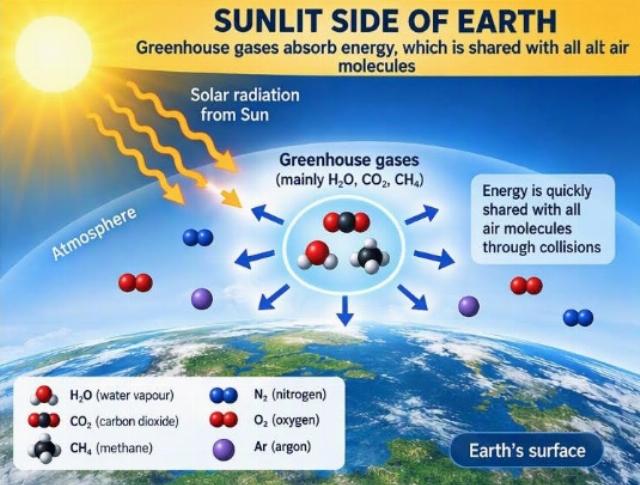
1. Kinetic Energy Doesn’t Stay Put
Cotton argues that greenhouse gases can’t retain excess heat because constant molecular collisions distribute energy evenly. “Any temporary imbalance is rapidly neutralized,” he writes, comparing it to a hot coffee cup cooling in a room—a process driven by collisions, not greenhouse effects.
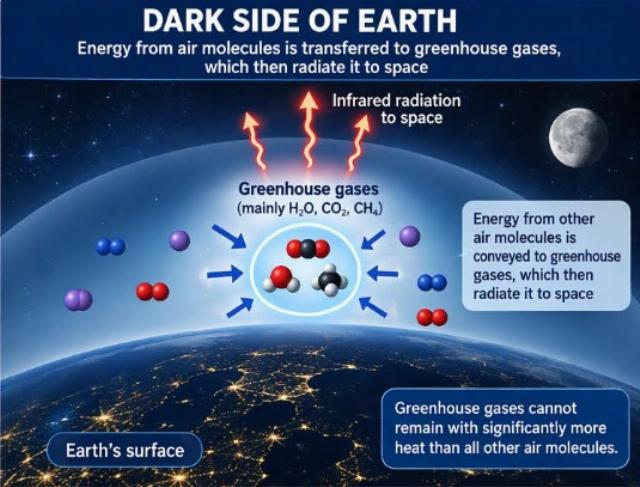
2. Nighttime Radiation Gets Ignored
While greenhouse gases absorb solar radiation during daylight, they release energy on Earth’s dark side via collisions with nitrogen and oxygen. “Calling them ‘heat trappers’ only tells half the story,” Cotton asserts, noting that consistent warming would require proving net energy accumulation, not just absorption.
3. The Overlooked 99%
Nitrogen, oxygen, and argon make up 99% of the atmosphere—and thus hold nearly all its thermal energy. “Focusing narrowly on trace gases like CO2 is like analyzing a lake by studying only the food coloring dumped into it,” Cotton quips. He questions how trace molecules could disproportionately influence temperatures when collisions constantly equalize energy.
4. Absorption ≠ Warming
Simply proving greenhouse gases absorb radiation, Cotton says, doesn’t confirm atmospheric warming. “A warehouse isn’t growing fuller just because packages arrive, if an equal number leave,” he analogizes. Without evidence of net heat retention, the warming claim remains speculative.
5. A Call for Open Debate
Cotton’s critique underscores a broader plea: climate science should welcome challenges to dominant models. “Simplified slogans don’t replace rigorous physics,” he concludes, urging scrutiny of how collisions, radiation, and atmospheric composition interact—without “appeals to consensus.”
Source: www.americanthinker.com — https://www.americanthinker.com/articles/2026/11/five-problems-with-the-greenhouse-gas-trapping-heat-narrative/
Background and context
The latest developments around Scientist Challenges the ‘Greenhouse Gases Trap Heat’ Claim — Here’s Why come amid a broader debate over opinion, institutional accountability, and the policy choices that shape everyday life. Understanding the immediate facts is only the first step; the wider impact depends on how officials, institutions, and the public respond in the days and weeks ahead.
FedFront’s coverage focuses on verifiable details, identifiable sources, and the practical consequences of political decisions. Readers should review official statements, primary documents, and court or agency records before drawing final conclusions about any disputed claims.
Why it matters
Stories like this can influence legislation, regulatory enforcement, public trust, and the balance of power between government institutions. Even when the immediate headline fades, the underlying policy, legal, or political questions often continue to shape future decisions.
What to watch next
- Official responses, statements, or policy changes
- Legislative, regulatory, or court action
- Follow-up reporting and independent verification
- Public reaction and broader political fallout
FedFront will continue monitoring this story and update coverage as new information becomes available.
Source: www.americanthinker.com
Related coverage
- Title IX’s One-Word Shift: How ‘Sex’ Became a Political Battleground, According to American Thinker
- Trump Wants ‘SI,’ Newsom Says No: The Naming War Over AI Gets Absurd
- American Thinker Pushes Back on Musk’s Plan to Give Every US Child a SpaceX Share
- Abdul El-Sayed’s Half-Sister’s Old Posts Reportedly Detail Family Ties to Muslim Brotherhood