
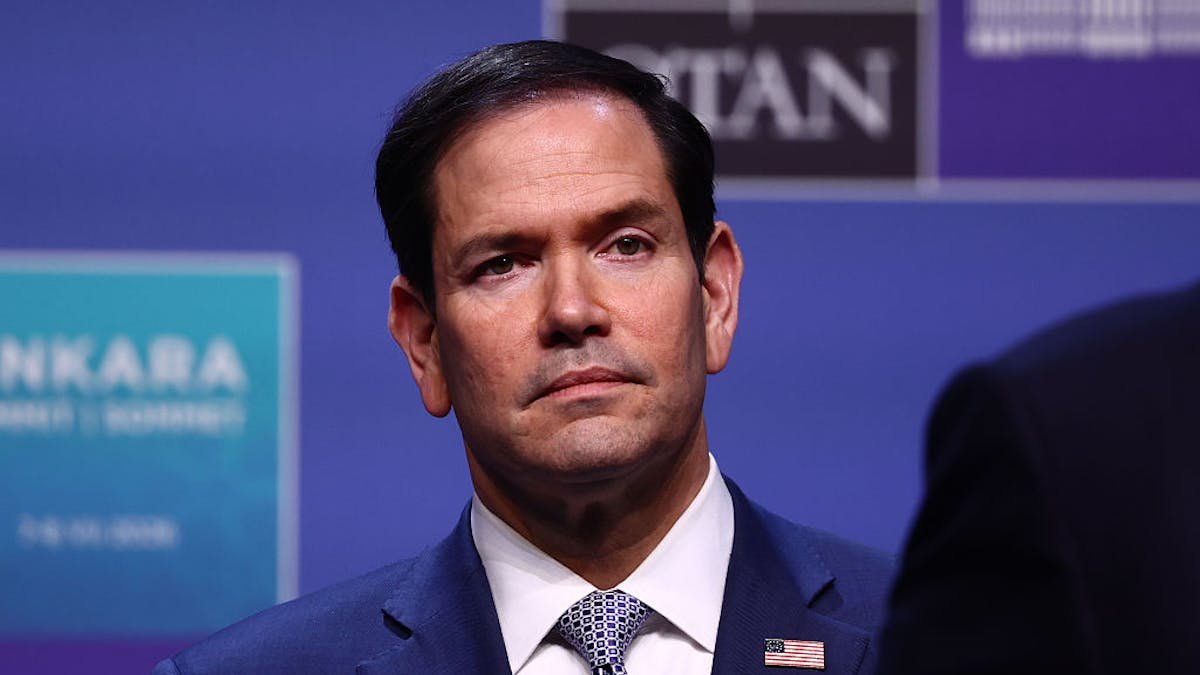
The Trump administration has announced sanctions against two senior officials of the International Criminal Court (ICC), intensifying a campaign that Secretary of State Marco Rubio says aims to dismantle the institution he describes as “corrupt and fatally politicized.”
The sanctions target ICC President Tomoko Akane of Japan and the court’s senior trial lawyer, Abdoulaye Seye of Senegal. The move follows Rubio’s declaration last month that the United States would use “all the tools at our government’s disposal” to dismantle the ICC “brick by brick,” and his call for other nations to join the effort.
Rubio has accused the court of “waging a war against our country, not with bullets or missiles,” but with “the force of so-called international law.” His remarks, reported by the Daily Wire, frame the administration’s actions as a defensive response to what it views as the ICC’s politicized and illegitimate targeting of the United States and its allies.
Background: A Long-Standing Dispute
The administration’s hostility toward the ICC predates the current conflict, dating back to President Trump’s first term, when the court sought to investigate alleged war crimes committed by U.S. forces in Afghanistan. The second Trump administration has since imposed a series of sanctions on ICC officials for their attempts to investigate both the United States and Israel—neither of which is a member of the ICC.
The immediate trigger for the latest round of punitive measures is the ICC’s issuance of arrest warrants against Israeli Prime Minister Benjamin Netanyahu and Defense Minister Yoav Gallant. In an apparent effort to appear evenhanded, the court also issued warrants for Hamas leaders Yahya Sinwar, Mohammed Deif, and Ismail Haniyeh—though these were issued after the leaders’ deaths, a move that critics say underscores the absurdity of equating the perpetrators of the October 7 massacre with those who responded to it.
Karim Khan’s Departure and Allegations
The arrest warrant requests were initiated by ICC Chief Prosecutor Karim Khan, who has since been forced to leave office following multiple allegations of sexual misconduct. According to some sources, the warrants were motivated, at least in part, to divert attention from these allegations.

Khan is not the only ICC prosecutor to face serious allegations of impropriety. His predecessor, Fatou Bensouda, held top posts in the Gambian judiciary under the brutal military dictatorship that ruled from 1994 to 2017. Bensouda has claimed she had no knowledge of the regime’s human rights abuses—a claim that, given her seniority and long association with the regime, raises questions about whether she was oblivious, ill-informed, or deceitful.
Before Bensouda, the ICC’s first prosecutor, Luis Moreno Ocampo, also came under a cloud of suspicion. Ocampo was accused of sexual misconduct in South Africa by an ICC whistleblower. Although his colleagues dismissed the charges, the whistleblower was dismissed by Ocampo himself, despite the ICC’s internal Disciplinary Advisory Board calling for the dismissal to be rescinded. The whistleblower appealed to the Administrative Tribunal of the International Labour Organization (ILO), which ruled in his favor and awarded substantial monetary compensation, casting further doubts on the ICC’s integrity.
After leaving the ICC in 2012, Ocampo faced additional allegations concerning his financial and professional activities, including abuse of his position, shady financial dealings, and severe conflicts of interest. These allegations stemmed primarily from a 2017 investigation by the European Investigative Collaborations, titled “Secrets of the Court.” While the allegations did not lead to judicial convictions, the ethical issues raised tarnished his reputation and, by association, the ICC’s judicial practices.

Rubio’s Initiative and Implications for Israel
For Israel, Rubio’s initiative is a welcome development. It serves to undermine the legitimacy of the ICC’s measures against senior Israeli personnel and exposes the hypocrisy-ridden nature of the court, which has strayed from its founding principles and noble aims, according to the Daily Wire.
For Khan and his associates, the administration’s actions may reflect the biblical maxim in Numbers 24:9: “Whoever blesses Israel will be blessed. And whoever curses Israel will be cursed.”
The sanctions against Akane and Seye are the latest step in a broader strategy that Rubio has outlined to rally international support against the ICC. Whether other nations will join remains to be seen, but the administration has made clear it intends to press its case against what it views as a corrupt and politically motivated institution.
Source: www.dailywire.com — https://www.dailywire.com/news/rubio-hits-back-at-communist-islamist-international-criminal-court-corruption