
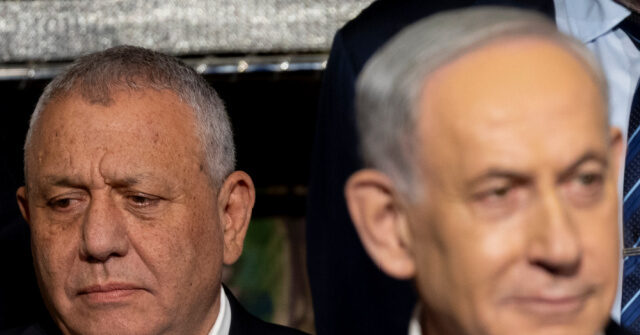
In a significant political maneuver, Israeli Prime Minister Benjamin Netanyahu has extended an offer to his chief rival, Gadi Eisenkot, to serve first as Prime Minister within a national unity government. This dramatic concession comes as both political factions struggle to establish a majority following the recent parliamentary elections.
The Stakes of Coalition Politics
Netanyahu’s warning of an “existential danger” underscores the urgency of the situation, particularly with the rising possibility of a government that may depend on the parliamentary support of Arab lawmakers, including those from Islamist parties. Such a coalition could fundamentally alter the political landscape, prompting Netanyahu to act decisively in proposing an unprecedented partnership with Eisenkot.
The context behind Netanyahu’s concession involves the turbulent aftermath of the October elections, which resulted in a fragmented Knesset where neither of the dominant blocs can claim a governing majority. With Netanyahu’s Likud party winning 27 seats and Eisenkot’s Yashar party garnering 21, both remain short of the 61 seats required for an outright majority, leading to tense negotiations over the path forward.
Negotiation Dynamics and Tensions
Netanyahu and Eisenkot are scheduled to meet in Herzliya, following Eisenkot’s request for Netanyahu to demonstrate the seriousness of his proposal within 24 hours. Netanyahu has stated that, although he believes his party should lead due to its electoral performance, the potential threats to Israel’s stability compel him to prioritize unity.
On his part, Eisenkot has voiced concerns over Netanyahu’s previous failure to engage meaningfully in coalition talks. He indicated a willingness to assess Likud’s commitment to unity if a genuine response is received in the coming hours.
Potential Coalition Complications
Eisenkot, appointed by President Isaac Herzog to form a new government, has reportedly until December 6 for this task, with the possibility of a two-week extension further complicating the timeline. His coalition-building efforts involve negotiations with several parties, including the secular nationalist Yisrael Beytenu, led by former Defense Minister Avigdor Liberman, and the left-wing Democrats, both of which have recently indicated a readiness to work together.
However, the prospect of forming a government with support from Arab parties has already raised eyebrows and faced resistance. For example, lawmaker Sharon Sharabi, a member of Yisrael Beytenu, has publicly rejected the notion of a coalition relying on Ra’am. His personal losses associated with Hamas have crystallized his stance against collaboration with those perceived as compromising on security issues.
Challenges Ahead
Amid these negotiations, the demand for political concessions from potential coalition partners like Ra’am, which is led by Mansour Abbas, is also becoming clear. Abbas has articulated that his party’s support would come at a price, including demands for ministerial roles and investment plans for Arab communities, amid ongoing tensions surrounding their role in the Knesset’s future dynamics.
Divisions among former partners are also becoming apparent. Leaders like Naftali Bennett have lauded Netanyahu’s outreach, while Yair Lapid remains skeptical, advocating for an Eisenkot-led government free from Likud’s involvement before any serious negotiations could commence.
The Iranian Threat and Military Implications
As discussions proceed, the specter of regional threats looms large, particularly in relation to Iran’s influence. Media reports indicate a division in perceptions of the Iranian threat, with Netanyahu seeking to exert pressure aimed at potential military action before any transfer of power to Eisenkot. This aspect of the negotiations reveals the underlying tensions that could affect the stability of any forthcoming coalition government.
In conclusion, Netanyahu’s offer marks both a desperate attempt to secure stability within the Israeli government and a reflection of the delicate balance of power among the nation’s political factions. The outcome of these negotiations will not only determine the immediate future of leadership in Israel but will also have lasting implications on the country’s political and security landscape.
Source: www.breitbart.com — https://www.breitbart.com/politics/2026/11/28/netanyahu-offers-rival-first-turn-as-pm-to-avert-existential-danger/
Source: www.breitbart.com
Related coverage
- Burnham Says He Could Go ‘All the Way’ on Reversing Brexit — Despite No Mandate
- Trump Shouts Down Reporters in Oval Office: “Quiet! What’s Wrong With You? Are You a Sick Person?”
- Miami Resident Fatally Shoots Man ‘Believed to Be an Intruder’ at 5 a.m., Police Say
- Charlie Kirk Murder Trial Set for 2028 — Trump Blasts ‘Mockery’ of Justice System