
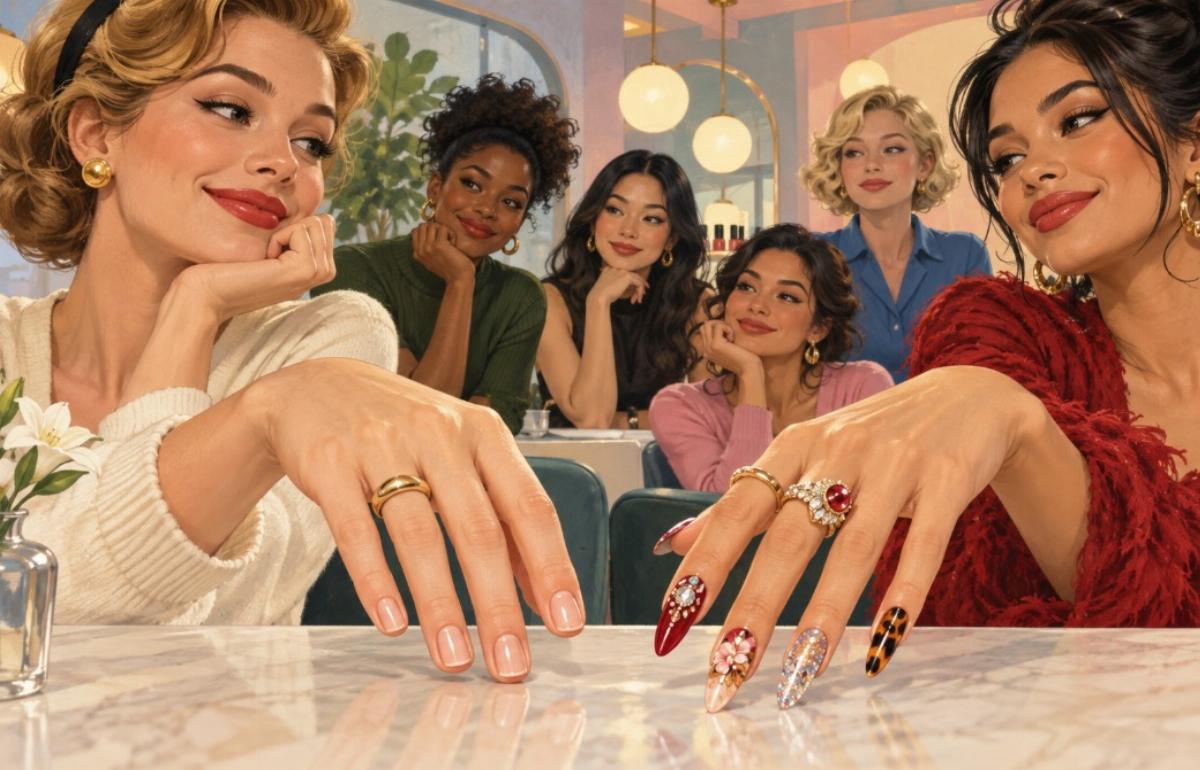
LONDON — The BBC has drawn fire from the American right over a feature that examines the viral trend of bare, unpainted nails through the lens of race and class, with one critic arguing the network has drifted from its reputation for measured reporting into what she calls “abject, race-based idiocy.”
Writing in American Thinker, Andrea Widburg takes aim at a BBC piece titled “How the bare nails trend became a class issue,” produced by reporters Tiffanie Turnbull and Simran Sohal. The article, she notes, runs roughly 1,300 words and sets out to explain how a fashion shift toward natural-looking manicures intersects with questions of status, culture and identity.
The BBC feature opens with a London salon owner, Paloma Buddemeier of Wumman Spa, describing a stream of clients who arrive wanting to look “as if they’d never been there at all.” Customers still get their nails filed, buffed and trimmed, she explains — “you just put no polish on.” The trend, the piece says, has spread across social media, runways and red carpets, and some observers describe it as the latest expression of “quiet luxury.”
The controversy at the center of the piece
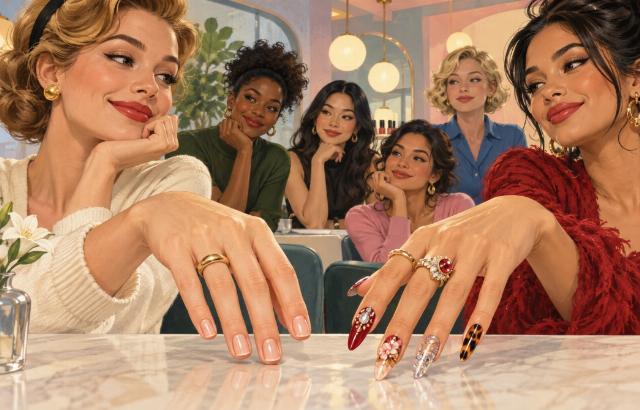
Where the BBC article draws Widburg’s ire is its inclusion of critics who argue the bare-nails aesthetic carries a racial subtext. According to the BBC, the historical and creative roots of nail art are tied to Black, Latino and Asian communities, and suggestions that bare nails now signal high status could stigmatize bold manicures.
“That trend really promotes blankness and this kind of sameness and erasure of culture and identity that is so important to black and brown communities,” beauty journalist Kristina Rodulfo tells the BBC.
Rodulfo goes further, telling the outlet that descriptions like “elegant” and “tasteful” are “often usually euphemisms that perpetuate white supremacist standards of beauty.”
Widburg concedes the BBC article acknowledges that sometimes going polish-free is simply a matter of convenience. She notes the feature highlights Angela Scanlon, an Irish television figure, who reportedly grew tired of the upkeep her nails required. The piece also distinguishes between genuinely bare nails and salon-produced “natural” looks that can themselves amount to an elaborate, unnatural production.
Still, Widburg argues, the race angle keeps resurfacing. The BBC piece, she writes, devotes extensive discussion to the class dimensions of long nails — noting that women who labored in fields couldn’t maintain them, and that starting with the Victorians, well-groomed short nails became a class marker in their own right.
The feature also cites historians who say women of color were central to making manicures an accessible and fashionable form of self-expression, and credits Vietnamese immigrants working in nail salons with bringing elaborate manicures within reach of ordinary women.
A broader argument about the BBC
Widburg’s critique is not confined to the nails story. She frames it as the latest example of a larger transformation at the broadcaster, which British television viewers are legally required to fund through the license fee. The BBC she remembers, she writes, carried a “delicate communist tint” in its news coverage but remained fundamentally straight in its reporting, with a certain patriotism lingering “like the scent of a faded rose” — and, of course, those celebrated historical dramas drawn from Britain’s literature and past.
That institution, in her telling, is gone. The modern BBC, she argues, is not merely left-leaning but radicalized, with much of that radicalism centered on race.
To support the claim, she points to demographic change in Britain. Before the postwar immigration boom, she writes, Britain was overwhelmingly white; as recently as 1991, 94.1% of the population of England and Wales identified as white. By the 2021 census, that figure had fallen to 81.7%, with only 74.4% identifying specifically as White British. In the large urban areas where the BBC operates, she says the ratios are more pronounced: London was 53.8% white in 2021, while Birmingham and Leicester were majority nonwhite, with white residents at 48.6% and 40.9% respectively.
Against that backdrop, Widburg contends, the BBC has turned its leftism toward racial themes — both in its treatment of history and in its cultural commentary.
In the arts, she accuses the broadcaster of recasting Britain’s past as a “wildly multiracial society,” whether in fact or in fiction. She cites the 2018 adaptation of Agatha Christie’s The ABC Murders, arguing that a straightforward murder mystery was rewritten to emphasize xenophobia and fascist nationalism, implying Britain is worse today. She describes such casting and storytelling choices as part of an “obsessive race-swapping” pattern, though she does not enumerate further examples in this piece.
Her deeper complaint is that the BBC’s racial framing functions as an accusation aimed at white Britons — a shrinking demographic, in her account — who are repeatedly reminded of their supposed racism. The bare-nails story, she writes, is simply the newest entry in that ledger.
The personal, the political, and a note of skepticism
Widburg, who says she has skipped nail polish for decades because she dislikes the feel of it, jokes that she now feels unexpectedly fashion-forward — or, alternatively, that she has spent all those years quietly reveling in racial superiority. She treats the latter proposition as self-evidently implausible, yet argues it is plausible enough for the BBC to give it serious airing.
She also flags the BBC article’s nod to feminist questions about the beauty industry, including unrealistic standards, alongside its observation that the largely female-run nail sector feels empowering to many women. In her reading, the piece’s underlying message is that if you’re white, whatever you’re thinking is probably racist.
The dispute is a familiar one in the ongoing argument over how legacy broadcasters frame culture and identity. Supporters of such coverage argue that examining who sets beauty standards — and whose traditions get coded as “classy” — is a legitimate exercise in cultural criticism. Critics, like Widburg, see it as evidence that a publicly funded institution has abandoned neutrality for activism, and that no subject, however minor, escapes the racial lens.
For its part, the BBC feature does not claim that wearing or skipping nail polish makes anyone racist. It quotes critics who argue that language like “tasteful” can carry unexamined assumptions, and it acknowledges simpler explanations for the trend. But in Widburg’s account, that nuance is beside the point. What matters, she suggests, is that a story about fingernails became, at the BBC, a story about race — and that, she concludes, tells you everything about where the broadcaster now stands.
Source: www.americanthinker.com — https://www.americanthinker.com/blog/2026/09/the-bbc-has-gone-from-highbrow-leftism-to-abject-race-based-idiocy/