
Democratic Georgia gubernatorial nominee Keisha Lance Bottoms said during a Monday appearance on CBS’s “The Takeout” that crime spikes in Atlanta during her tenure as mayor should be attributed to the broader upheaval of 2020, including social justice protests and high-profile killings of Black Americans that dominated the national conversation that year.
Bottoms, who served as Atlanta’s mayor from 2018 to 2022, was responding to a question from host and CBS News Chief Washington Correspondent Major Garrett about what she would do differently as governor and how she addresses her Republican opponent’s attacks on her public safety record.
The 2020 Context
According to Breitbart’s account of the interview, Bottoms pushed back on the characterization that crime simply rose under her watch, arguing that Atlanta had been on a positive trajectory before the pandemic hit.
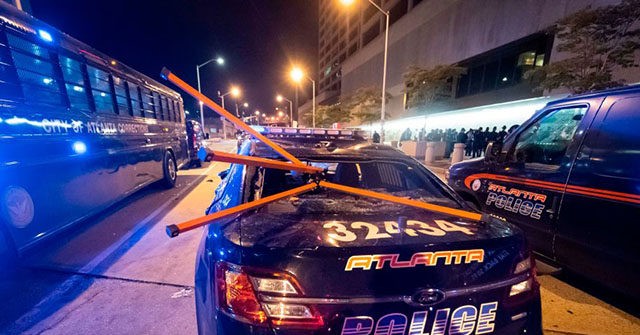
“Prior to COVID, I was being called a public safety mayor, because I had given our police and firefighters the largest pay increases they had ever received in the history of the city,” Bottoms said. “I was very supportive of law enforcement. And then 2020 came, and Atlanta, like so many other cities across the country and across Georgia, experienced spikes that we can only attribute to what was happening in 2020, between the social justice protests, between watching George Floyd be murdered before our eyes, in Georgia, watching Ahmaud Arbery be killed in the middle of the street, Breonna Taylor.”
She described the period as “thing after thing after thing,” a reference to a string of incidents that fueled protests nationwide. The deaths of George Floyd in Minneapolis, Ahmaud Arbery in coastal Georgia, and Breonna Taylor in Louisville became catalysts for demonstrations that rocked cities across the country, including Atlanta, throughout 2020 and into 2021.
Bottoms also recalled reviewing a draft of a State of the City address she had planned to deliver in early March 2020 — an address that was ultimately canceled because of the pandemic. In that draft, she said, she had cited declining crime numbers and positive trends for the city. “And then there was 2020, summer of 2020,” she said.
A Record Under Fire
Garrett pressed Bottoms on how she would answer Georgia sheriffs and voters who see public safety as a core responsibility of the governor’s office. He noted that her Republican opponent, Rick Jackson, has hammered her over crime in Atlanta, and that crime rose both in the city and in many urban areas nationwide.
Bottoms did not dispute that crime rose, but contextualized it as part of a national phenomenon and tied any uptick to the unique pressures of the pandemic year.
She also pointed to her efforts as mayor to secure additional federal funding for public safety. During her first meeting in the Oval Office with President Biden — a session focused on vaccine distribution that included governors, Republican leaders, and mayors — Bottoms said she used the opportunity to advocate for more federal dollars directed toward law enforcement and community safety needs.
“I knew that people were emerging from the pandemic in a way that we didn’t go into the pandemic,” she said, describing the social and economic dislocations that accompanied the reopening of cities.
Looking Back, Looking Forward
Earlier in the interview, Garrett asked Bottoms whether she could name specific mistakes she made during her time as mayor, framing the pandemic era as a leadership test. “When you look back at that, as you ask for a promotion to be governor of Georgia, what would you want the voters of Georgia to know you would do better, do differently?” he asked.
Bottoms responded by invoking Theodore Roosevelt’s famous “man in the arena” imagery, saying she was the person making difficult decisions when there was no playbook. She acknowledged that any leader worth their salt looks back and wonders whether they could have done things differently.
When Garrett followed up by asking whether she had identified an answer to that question, Bottoms said there were “a lot of things” she has reflected on, big and small. “Hindsight gives us this great lens that we don’t always have in the moment,” she said. “But what I will say is that every decision that I made was based on what I truly believed to be the best decision in that moment.”
She then rattled off a list of accomplishments from her tenure, including four years of balanced budgets, no layoffs of city employees, no property tax increases, the creation of a child savings account program for public school kindergarteners, and the closing of what she described as the largest public-private partnership currently underway in the southeastern United States — a real estate transaction that yielded an affordable housing trust fund and 7,000 units of affordable housing.
“So, there [was] a long list of accomplishments, even in the midst of all of the uncertainty that was happening in the world,” Bottoms said. “But you don’t grow as a leader without doing your own self-assessment and considering how you can be better and stronger.”
The Political Stakes
Bottoms is running to succeed Republican Gov. Brian Kemp, who is term-limited. Her comments come as crime and public safety remain central issues in races across the country, with Republicans frequently pointing to spikes in urban crime during the pandemic and Democrats arguing that the causes were complex and national in scope rather than the product of local leadership failures.
Bottoms’ Republican opponent, Rick Jackson, has made her stewardship of Atlanta a focal point of his campaign, and Monday’s interview offered a preview of how she intends to respond: by acknowledging the surge while pointing to the unprecedented circumstances that coincided with her time in office, and by arguing that her record overall was one of fiscal discipline and investment in public safety.
Whether that argument resonates in a state that has grown increasingly competitive will be tested at the ballot box. For now, Bottoms is staking out a position that blends accountability with context, acknowledging the difficulty of the moment while defending the decisions she made within it.
The exchange on “The Takeout” also underscored how the 2020 protest movement and its aftermath continue to shape political debates years later. Bottoms did not shy away from naming the protests as a factor in the crime spike, a potentially notable acknowledgment from a Democratic candidate in a state where law-and-order messaging has proved potent for Republicans.
For voters, the question may come down to whether they view the events of 2020 as an extraordinary crisis that warrants grace for leaders who navigated it, or as a test of judgment that revealed priorities they disagree with. Bottoms is betting on the former, offering voters a version of her tenure that foregrounds resilience and achievement amid chaos.
The interview, which aired Monday on CBS, is part of a broader media push by Bottoms as she seeks to introduce herself to voters statewide beyond Atlanta, where her record is both widely known and hotly debated. How she navigates the crime issue — and the legacy of 2020 — could determine whether she can build a coalition broad enough to win in November.
Source: www.breitbart.com — https://www.breitbart.com/clips/2026/09/28/bottoms-we-had-crime-spike-in-atlanta-when-i-was-mayor-in-2020-due-to-things-like-social-justice-protests/