
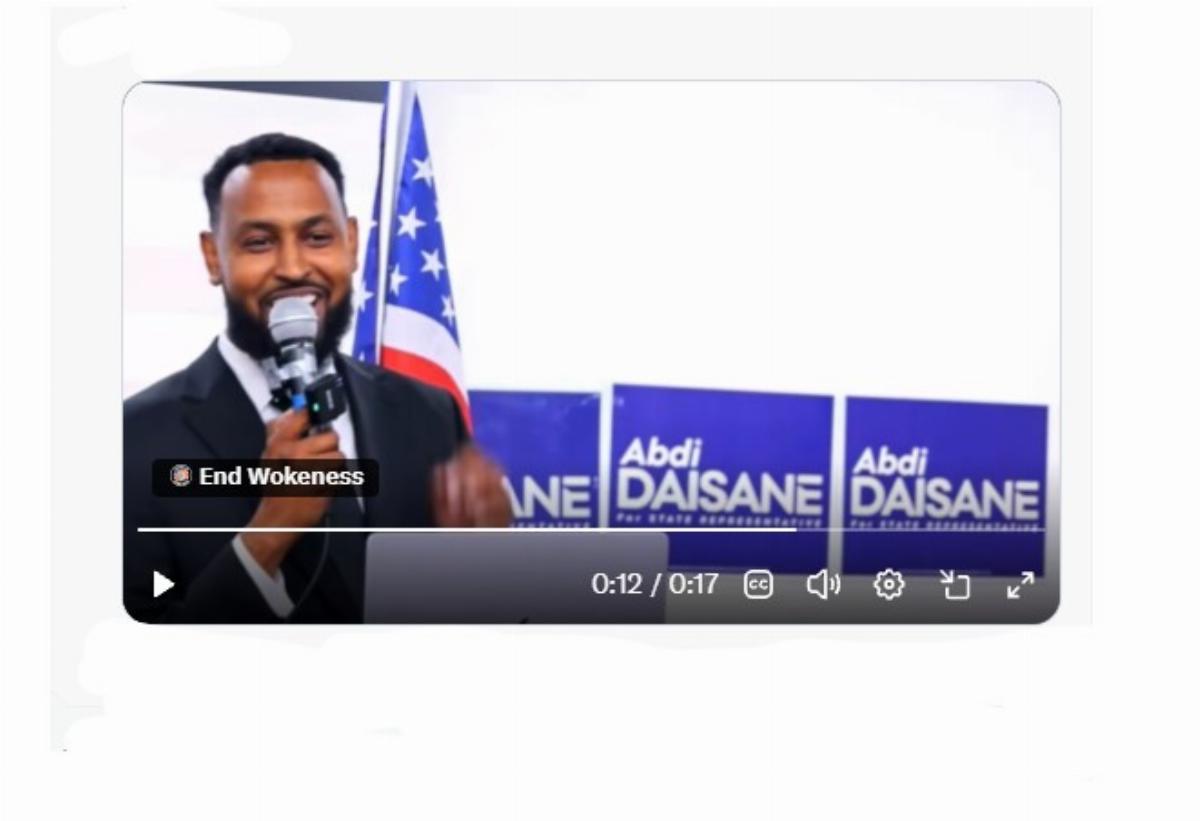
Minnesota now counts 10 Somali-American elected officials in state and local offices, a milestone that has drawn both celebration and sharp criticism from conservative commentators. The latest addition is Abdi Daisane, who recently won a Minnesota House seat previously held by a Republican, delivering his victory speech entirely in Somali. The moment—captured in viral social media clips—has become a flashpoint in the debate over immigration and political representation.
Taxpayer Dollars and Political Training
Critics are zeroing in on Ayada Leads, a Minnesota-based nonprofit that trains Somali candidates in campaign strategy, fundraising, and endorsements. The organization, which describes itself as nonpartisan, has received funding through state grants administered by the Minnesota Department of Employment and Economic Development (MDEED). According to its website, Ayada Leads played a key role in recruiting Congresswoman Ilhan Omar early in her political career and has since helped elect multiple Somali officials, including state legislators and a mayor.
The organization’s work has drawn scrutiny from conservative voices like the American Thinker, which questions whether taxpayer money should support what it frames as a political pipeline for a specific immigrant group. The outlet also raises concerns about whether Ayada Leads—a 501(c)(3) nonprofit—violates IRS rules barring such groups from direct political campaigning, though Ayada has not been publicly accused of such violations by tax authorities.
A Shifting Political Landscape
The growing Somali political presence in Minnesota reflects broader demographic trends. The state is home to one of the largest Somali diaspora communities in the U.S., many of whom settled as refugees over the past three decades. As younger generations come of age, civic participation has surged, with Somali-Americans increasingly running—and winning—in local elections.
Proponents argue this is a success story for immigrant integration, while critics frame it as evidence of systemic overreach. The American Thinker’s polemic extends beyond Ayada Leads, casting the rise of Somali politicians as part of a larger, existential threat to American values—a narrative that has drawn backlash from advocates who see it as racially charged fearmongering.
The Bigger Picture
At its core, the debate underscores tensions over who foots the bill for political training programs and whether such initiatives cross ethical lines. While Ayada Leads is far from the only nonprofit offering campaign training—similar programs exist for women, veterans, and other groups—its singular focus on Somali candidates has made it a lightning rod.
Whether this scrutiny leads to policy changes remains to be seen. For now, Minnesota’s Somali political class shows no signs of slowing down—and neither does the controversy surrounding their rise.
Source: www.americanthinker.com — https://www.americanthinker.com/blog/2026/11/paying-for-our-own-destruction-now-it-s-10-somali-migrants-elected-to-office-in-minnesota/