
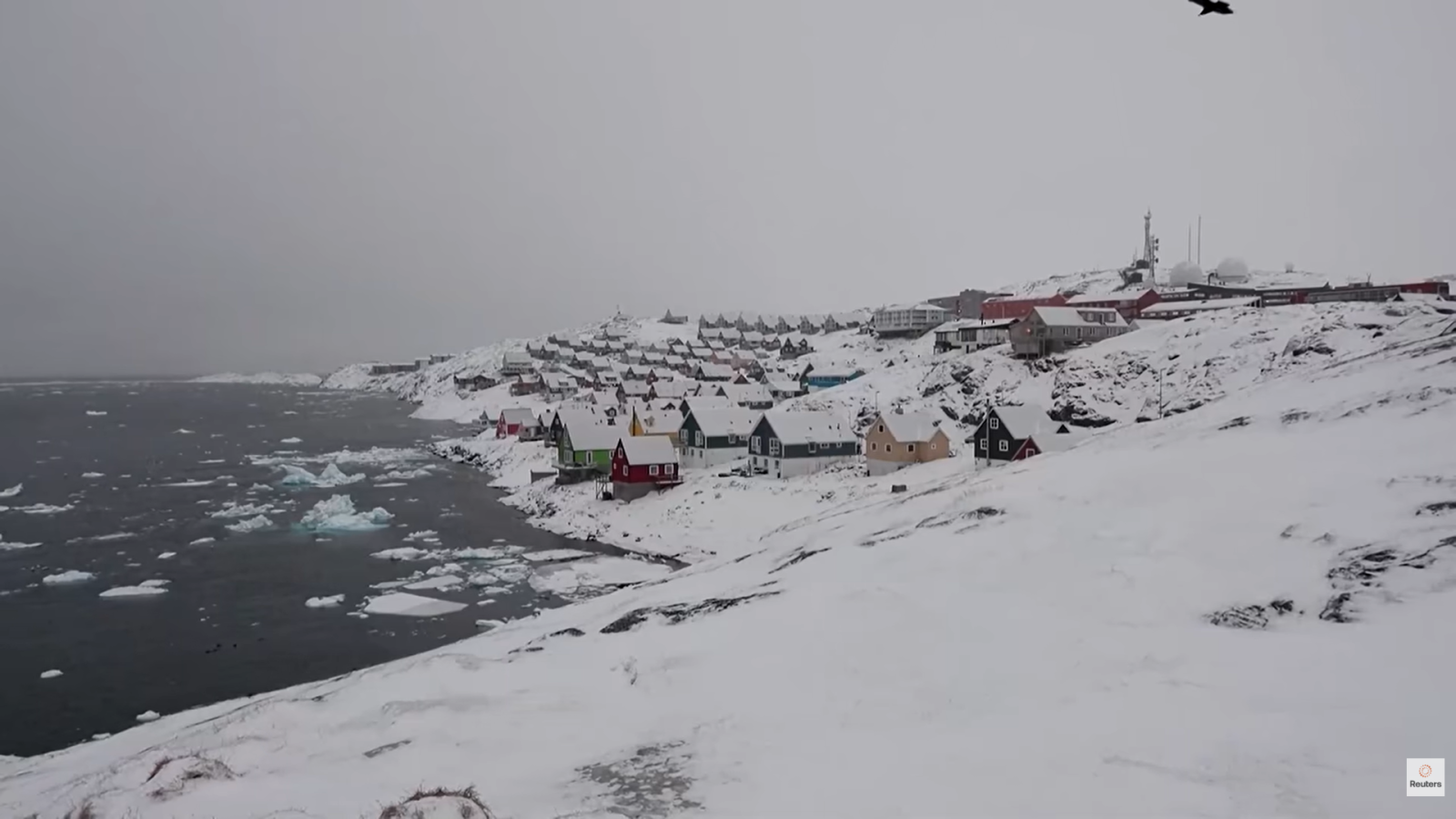
The Trump administration has announced a security agreement with Denmark concerning Greenland, and the early reaction from Copenhagen and Nuuk is anything but the catastrophe that foreign policy commentators spent January predicting. According to The Federalist, the deal expands an existing 1951 executive agreement rather than taking the form of a treaty, a structure that would let the White House avoid a Senate ratification fight.
The formal text has not been released. The parties are expected to sign the agreement next week at the United Nations General Assembly, with legislative ratification anticipated in Denmark and Greenland. Greenland is a territory of Denmark but governs itself under home rule.
Top officials on both sides are already using warm language. Danish Prime Minister Mette Frederiksen said the agreement “strengthens our common security in the Arctic and the North Atlantic Area and therefore is great for NATO and Europe as well.” Greenland Premier Jens-Frederik Nielsen praised the deal for strengthening the security of Greenland, saying, “It is to the benefit of us all.”
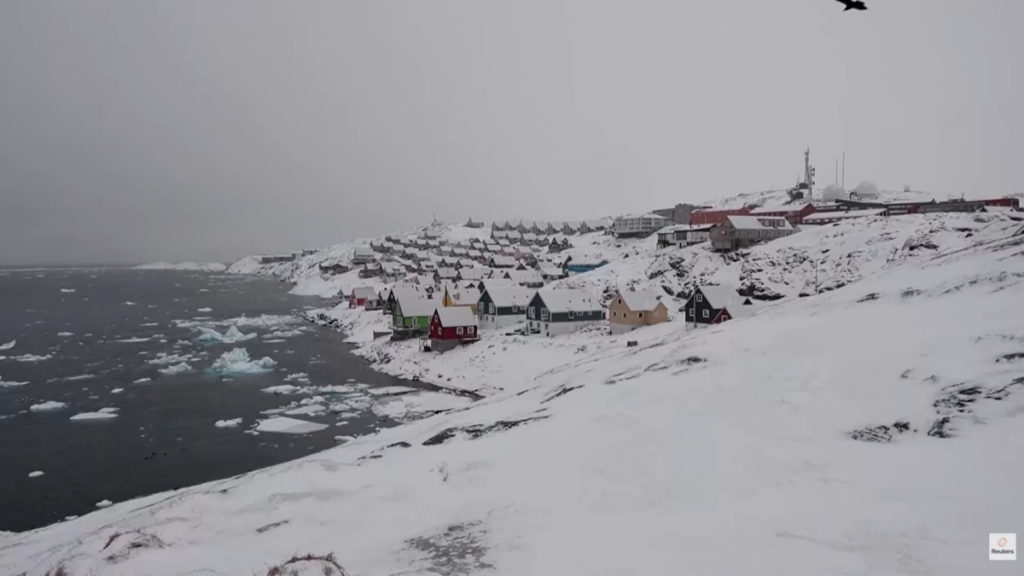
What the Agreement Reportedly Contains
Secretary of State Marco Rubio, in a statement on X, framed the deal as a permanent security guarantee that bars non-NATO countries from the territory: “Greenland will forever be part of the strategic defense area of North America and exclude any adversary from it and the surrounding area.”
President Trump described the agreement in posts on X and Truth Social as carrying a significant economic component, forbidding “sensitive investments” in Greenland from American adversaries. A guaranteed, and potentially expanded, American military presence there would give the United States direct oversight of the GIUK Gap — the naval chokepoint between Greenland, Iceland, and the United Kingdom that has long been central to North Atlantic planning.
NPR reported on September 19 that the agreement came after officials from the United States, Greenland, and Denmark negotiated quietly for months behind the scenes — a detail that stands in sharp contrast to the public rhetorical fireworks earlier in the year.

From “Darkest Hour” to a Deal
The Federalist, in its account of the agreement, argues that the gap between the January coverage and the September outcome is the story. At the start of the year, as Trump pressed his interest in Greenland, much of the legacy press and the think-tank commentariat treated the episode as the prelude to a broader assault on Europe.
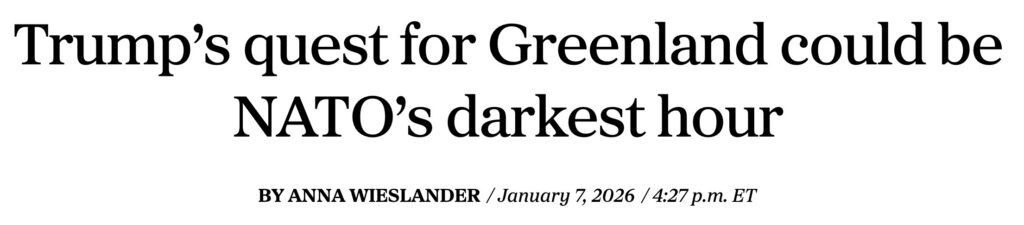
Among the examples cited: The New York Times ran a headline invoking Nazi Germany’s historical designs on Greenland, while a prominent Democratic newsletter cast Trump’s posture as a signal of violent intent and a claim to unlimited power everywhere. NPR warned that Greenlanders were hurt, angry, and confused by Trump’s threatening rhetoric. Cable panels and op-ed pages cycled through variations on the theme — an attack on NATO, the destruction of NATO, NATO’s darkest hour, the end of NATO.
Then came an agreement that Frederiksen herself called great for NATO.
NPR’s September reporting — that the deal was the product of months of quiet negotiation among U.S., Danish, and Greenlandic officials — undercuts the notion that the public saber-rattling was ever the whole picture. The Federalist frames this as a recurring pattern: loud public clamor that masks calm private bargaining, which the article suggests is more the norm than the exception in Trump-era diplomacy.
The Federalist also invokes Salena Zito’s much-quoted formulation that Trump should be taken seriously but not literally. In that reading, the author of “The Art of the Deal” uses inflated language to bring counterparts to the table, and the press’s willingness to sell panic as a product — rather than recognize the tactic — has cost it credibility with readers who notice when the predicted apocalypse does not arrive.
Avoiding a Senate Fight
Because the administration is characterizing the agreement as an expansion of an existing 1951 executive agreement rather than a new treaty, it appears the deal will not be submitted to the Senate for ratification. The Federalist notes, with a rhetorical jab, that this denies Republican Senators John Cornyn and Thom Tillis a chance to grandstand on the floor. Legislative approval is still expected in Denmark and Greenland.
Only the broad outlines are public so far. A permanent bar on non-NATO adversaries operating in or around Greenland, restrictions on sensitive foreign investment there, and a durable American military footprint would each mark a meaningful shift in the strategic balance of the North Atlantic — and would do so without the formal treaty machinery that would ordinarily accompany a change of that magnitude.
Whether that structure ultimately draws scrutiny from lawmakers on either side of the aisle remains to be seen. For now, the deal’s loudest opponents are not in Copenhagen or Nuuk. They are the same commentators who spent the winter warning that NATO was finished — a turn the Federalist, in its telling, treats as an object lesson in how to read the next round of coverage.
Source: thefederalist.com — https://thefederalist.com/2026/09/21/trumps-greenland-deal-makes-the-world-more-secure-and-makes-the-media-less-relevant-than-ever/