
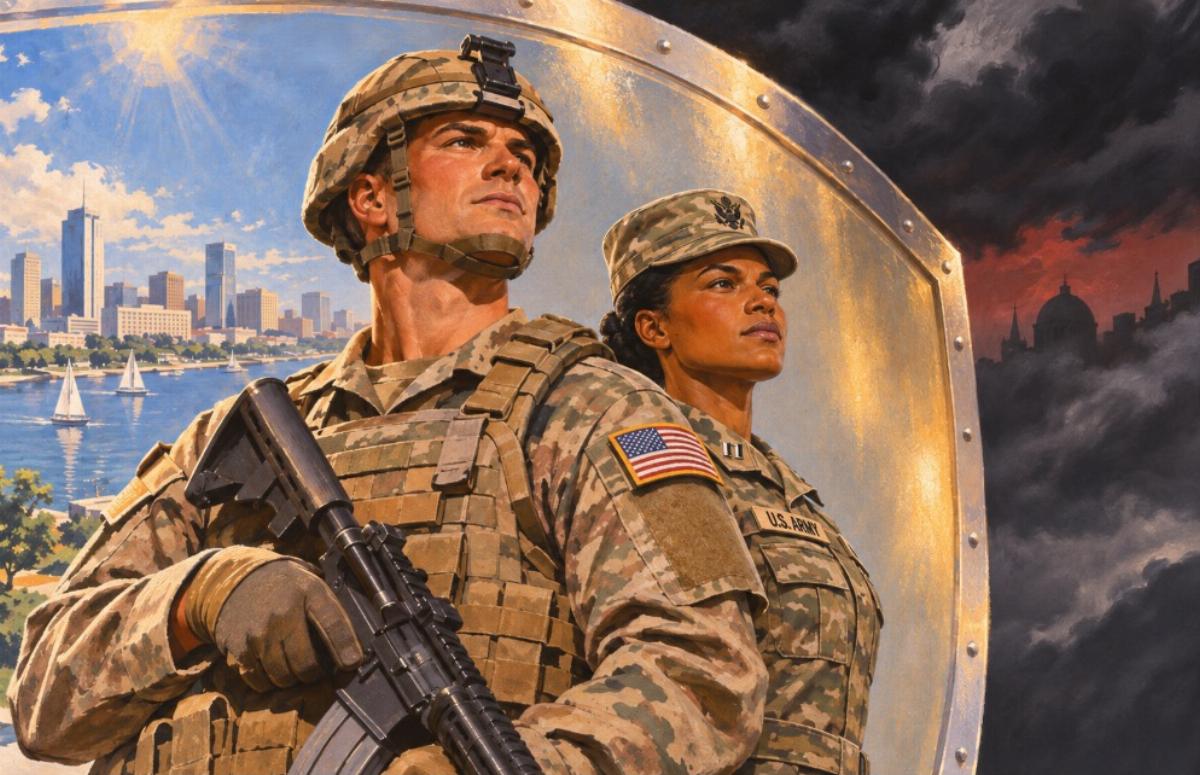
The rebranding of the Pentagon as the ‘War Department’ under the Trump-Hegseth administration wasn’t just bureaucratic nostalgia—it was a statement. Critics called it a throwback to militarism, but supporters saw it as a long-overdue acknowledgment: peace isn’t passive, and liberty isn’t free. In a fiery American Thinker op-ed, strategist Allan J. Feifer makes the case that America’s so-called ‘warhawks’ are often its most effective peacekeepers.
The Myth of the ‘Forever War’
The essay pushes back against what Feifer calls a dangerous false binary: the idea that America must choose between endless quagmires and total retreat. Reflexive opposition to military force, he argues, ignores history’s lesson—that credible deterrence often prevents the very wars critics claim to fear. From NATO’s containment of Russia to the naval blockade that defused the Cuban Missile Crisis, Feifer contends that strength, not wishful thinking, has kept the postwar world from boiling over.
The Numbers Behind the Argument
Since Vietnam, American combat deaths have plummeted to a fraction of 20th-century averages—just 7,000 in Iraq and Afghanistan combined, compared to 95,000 in Korea and Vietnam. Feifer attributes this to a paradox: by maintaining overwhelming military superiority and clear red lines, the U.S. made large-scale conflicts against it unthinkable for adversaries. ‘The UN couldn’t stop Soviet expansion,’ he writes. ‘American alliances did.’
The Iran Test Case
With Tehran’s nuclear ambitions still unchecked after 2025-26 strikes, Feifer warns that hesitation now risks catastrophe later. ‘If Iran believes we lack the will to enforce consequences,’ he argues, ‘the next crisis won’t be a proxy war—it’ll be a mushroom cloud over Tel Aviv.’ The piece doesn’t advocate endless intervention but insists that selective, credible threats of force are cheaper than the wars they prevent.
Not every historical intervention was justified, Feifer concedes, but the alternative—retreat—has often proven worse. From the Marshall Plan to NATO expansion, American engagement created a world where great-power war became obsolete, commerce globalized, and the homeland stayed safe. ‘Call me a warhawk if you want,’ he concludes. ‘But what do we call those who mistake the absence of war for lasting peace?’
Source: www.americanthinker.com — https://www.americanthinker.com/articles/2026/11/when-a-warhawk-is-actually-a-peace-monger/