
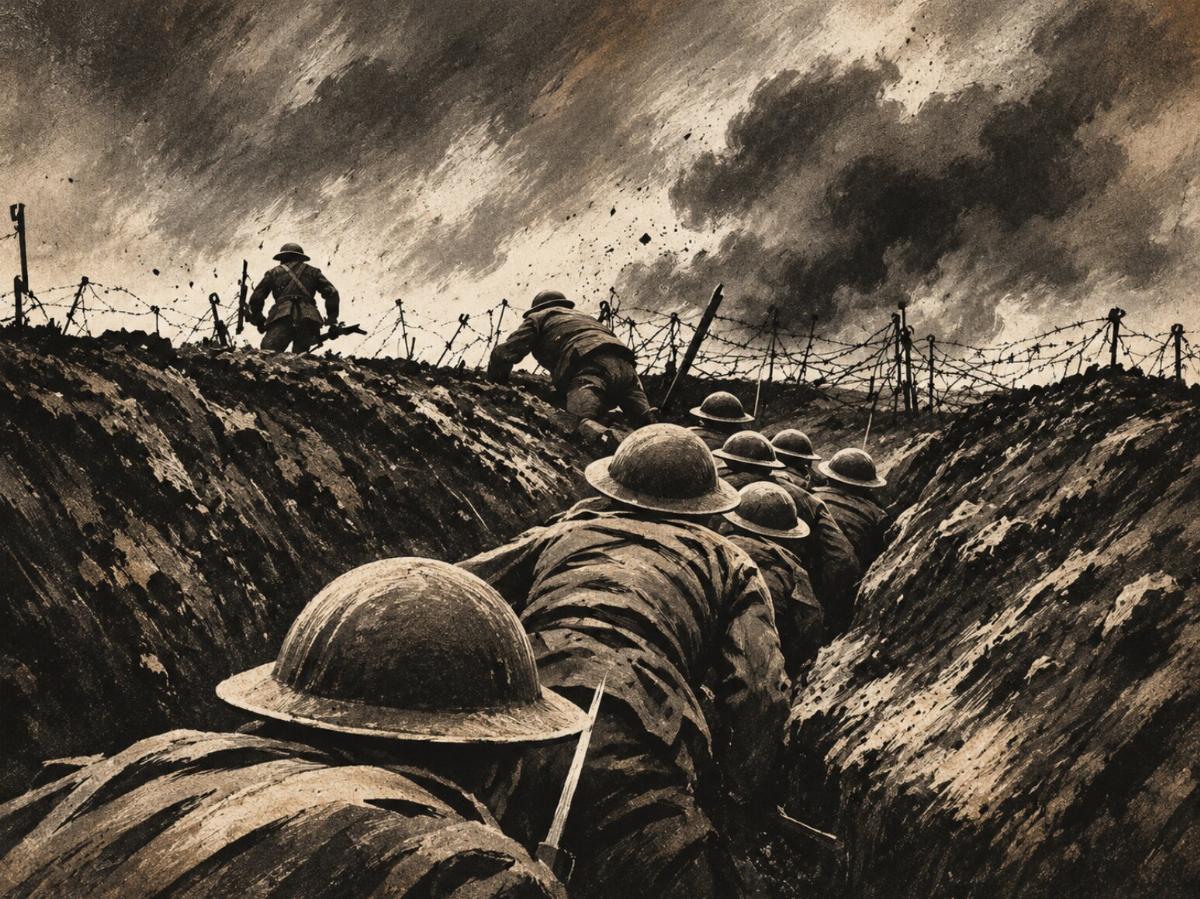
As the world marked the 108th anniversary of the World War I armistice this November 11, an American Thinker commentary reignited a fraught historical debate: Did the United States have compelling reasons to enter the Great War in 1917—or was its intervention driven by murky justifications that dissolve under scrutiny?
The Maritime Freedom Paradox
The article, penned by Bill Ponton, dissects the Wilson administration’s primary rationale for war—defending freedom of the seas against German U-boat attacks. Ponton finds this logic contradictory, noting that the U.S. had enforced its own naval blockade against the Confederacy during the Civil War and expected European compliance. “Our outrage over maritime rights seems selective at best,” he observes.
Democracy or Geopolitics?
Similarly, Ponton challenges the idealistic framing of WWI as a crusade “to make the world safe for democracy,” pointing out that America allied with autocratic Russia against more democratic Germany. He argues that President Woodrow Wilson’s famed Fourteen Points were retroactively constructed after war declarations, suggesting post-hoc moral branding rather than principled strategy.
Britain’s Puzzling Gamble
The analysis extends to Britain’s entanglement, questioning why a traditionally isolationist naval power committed to a devastating land war over what Ponton calls “the almost irrelevant” violation of Belgian neutrality. The piece provocatively frames Britain as “a French puppet” drawn into continental power struggles against its historic interests, with Germany’s economic ambitions—now realized through the EU—posing no existential threat.
While not denying WWI’s tragic human toll, Ponton’s revisionist perspective forces a reckoning: Did millions die for causes that were neither coherent in 1914 nor justified by history’s hindsight?
Source: www.americanthinker.com — https://www.americanthinker.com/blog/2026/11/making-sense-of-the-great-war/