
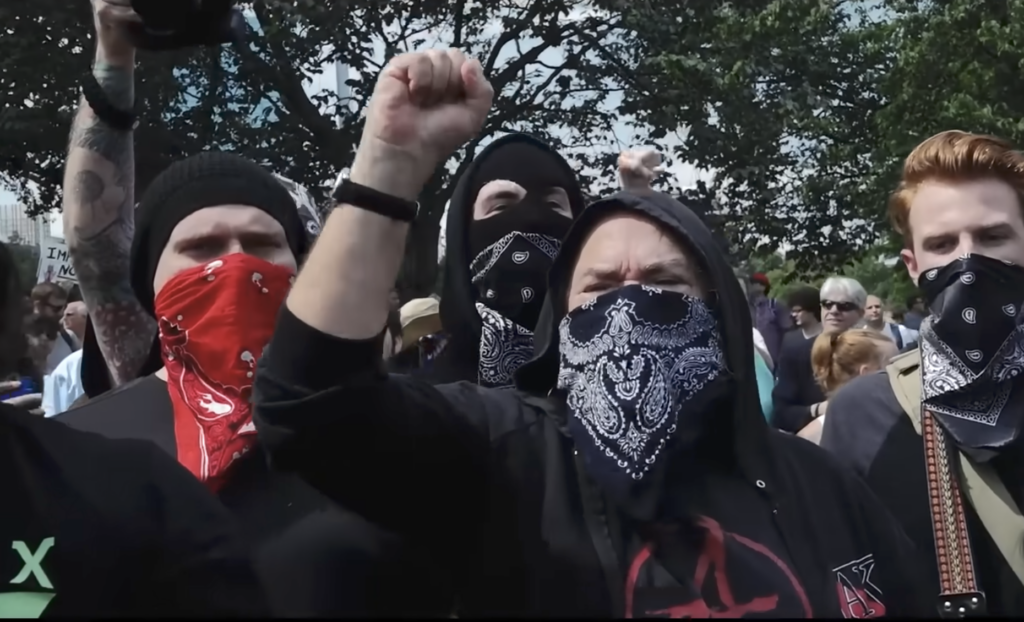
In what could be the most consequential action yet against far-left extremism, the Trump administration has designated the Autistici/Inventati (A/I) Collective — an Italy-based anonymous tech collective — as a Specially Designated Global Terrorist. The move, announced this week by the U.S. State and Treasury Departments, targets the digital backbone of what the administration calls “political terrorism” from the far-left.
According to the State Department’s official announcement, the A/I Collective provides a range of sophisticated tech services to far-left extremist actors, including website hosting, a blogging platform called “No.Blogs,” and mail services. These tools, the State Department said, are used by anarchist and autonomous groups to issue communiques for designated terrorist organizations, call for criminal acts, and claim responsibility for attacks on critical infrastructure and law enforcement in the U.S. and abroad.
The department emphasized that the collective does more than simply host opinions — it distributes “target information, tactical manuals and techniques” for carrying out criminal and terrorist activities.
A long-awaited target
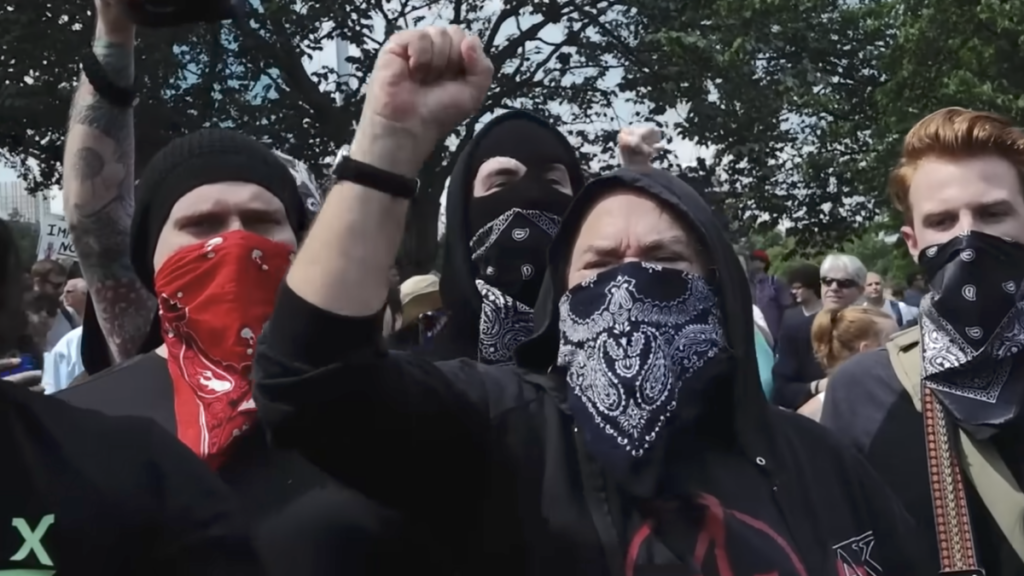
While some online leftists have feigned indignation, the A/I Collective has long anticipated law enforcement scrutiny. Following Italian police actions in the early 2000s, the collective developed a plan called “Plan R*” to create a decentralized server network that would resist physical intrusion and preserve client access even if authorities moved against it. They later published the “Orange Book,” a manual designed to let other groups replicate their network methods.
This approach aligns with anarchist and autonomous methodology, which seeks to widely and deniably distribute responsibility. As one observer put it, it’s a kind of digital black bloc — the more people using the techniques, the harder it is for law enforcement to shut down any single node. While one website or group can be taken down, the material quickly gets redistributed across other servers and groups.
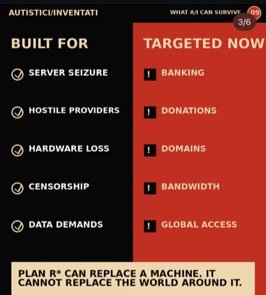
But the recent sanctions appear to have caught these networks off guard. A post circulating widely on Instagram, purportedly from Antifa and anarchist accounts, suggests that Plan R* was never designed to withstand the full force of the U.S. sanctions regime.

Sanctions hit the world around the servers
The sanctions do not directly target the digital infrastructure itself. Instead, they cut off the collective from the broader financial and logistical ecosystem — banking, donations, domain purchases, and bandwidth acquisition. The Instagram post warns U.S.-based supporters against trying to circumvent the sanctions without qualified legal advice, listing “dos and don’ts” that include: “Do Not: Improvise donations, reroute funds, disguise payments, access private data, promise direct services, guess at sanctions law.”
U.S. persons are now prohibited from receiving or providing any services to or from the A/I Collective. That means hundreds of violent far-left actors in the United States may be scrambling to find new digital homes — or face potential criminal investigation and liability.
The reaction from Antifa and anarchist networks suggests genuine surprise that the Trump administration has landed a real blow. For decades, these groups have hidden behind the legal fiction that “Antifa doesn’t exist,” but the prospect of targeting not just individuals but the network apparatus they rely on has evidently shaken them. One account reportedly commented simply, “WTF.”
What comes next
The administration should expect these threat actors to adapt. A likely outcome is a diaspora as groups flee the A/I Collective for other similar entities — and there is no shortage of those.
One possibility is that bad actors might try to move to U.S.-based tech collectives, such as RiseUp.Net, a Seattle-based collective closely aligned with A/I and offering many of the same services to Antifa groups worldwide. In a 2012 oral history of the collective, A/I members noted their closer relationship with Riseup due to comparable scale and user bases. Moving to a U.S.-based entity could create both risks and opportunities for these groups. While it might shield them from some sanctions tools, it would put their data squarely within reach of the U.S. Justice Department and its enforcement mechanisms.
The administration should also anticipate legal challenges. The far-left’s legal support network is likely preparing a test case, carefully forum-shopped to maximize the chances of a sympathetic ruling.
For now, supporters of the administration’s counterterrorism efforts are applauding the State and Treasury Departments for what they see as a job well done. The move represents a whole-of-government approach to addressing the previously ignored threat of Antifa and other far-left terrorism. While much work remains, this designation signals that the U.S. government is starting to understand how to confront the unique challenge of far-left extremism — and to treat it with the same seriousness as other terrorist threats.
Source: thefederalist.com — https://thefederalist.com/2026/08/28/antifa-networks-panic-after-trump-administration-just-sanctioned-their-servers/