
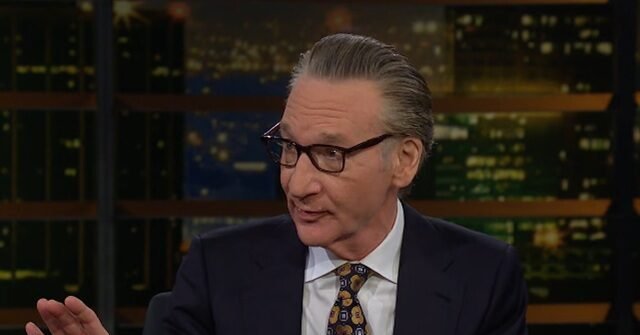
Wesleyan University President Michael Roth has a message for Bill Maher: you can come to campus, but don’t expect a warm embrace.
During Friday’s broadcast of HBO’s “Real Time,” Roth told the show’s host that while Maher would “maybe not” be welcomed at the Connecticut liberal arts school, he would certainly be “given a hearing.”
The exchange began when Maher directly asked Roth, “Do you think I could come on campus and speak and be welcomed?”
Roth’s response was candid: “Welcomed, maybe not. But certainly…given a hearing.”
The comedian-turned-political-commentator pushed back, citing his Democratic bona fides. “Okay, but I shouldn’t be welcomed? Someone who twice gave the Democrats $1,000,000? That’s not enough credentials to come on?”
Roth, a philosopher by training who has led Wesleyan since 2007, deflected with humor, joking that he’d welcome Maher if he showed up on campus with a million dollars in hand.
But the university president then turned to a more serious point, invoking a past conservative campus visit to illustrate his vision for intellectual engagement.
“We had Justice Scalia come to campus, and there were certainly many people, oh my gosh, how could we bring him here?” Roth recalled, referencing the late Supreme Court Justice Antonin Scalia. “He gave a really good talk. He spent the day on campus talking with students, they argued with him, welcomed was probably the wrong word, but they enjoyed the debate. And that’s what we want. We want people to enjoy the debate.”
A Deliberate Provocation
Maher, who has spent recent years criticizing what he sees as excesses of progressive campus culture while maintaining his own liberal credentials, seemed to agree with Roth’s framing of the Scalia visit.
The exchange highlights ongoing tensions in American higher education over free speech, viewpoint diversity, and the reception that controversial speakers — even those with mainstream political views — receive on college campuses.
Maher’s question to Roth was not purely hypothetical. The HBO host has been a frequent critic of what he calls “woke” ideology on campuses, while also defending liberal principles against right-wing attacks. His centrist-liberal positioning has made him a polarizing figure among some student activists, even as he retains broad name recognition among older audiences.
Roth, for his part, has been outspoken on issues of higher education reform and civic discourse. His remarks suggest a pragmatic approach: controversial speakers should be allowed on campus, but their arrival should not be mistaken for endorsement or universal approval.
Debate vs. Welcome
The distinction Roth drew between being “welcomed” and being “given a hearing” is a delicate one, reflecting the careful balancing act university leaders must perform in an era of heightened political sensitivity.
“Welcomed” implies a sense of belonging and approval, Roth seemed to suggest. But a “hearing” is the bare minimum for academic freedom — the chance to make one’s case, be challenged, and engage in the kind of vigorous debate that universities are supposed to foster.
His invocation of Scalia is telling. Scalia, one of the most influential and controversial conservative jurists of his era, was a frequent target of liberal protest during his lifetime. Yet Roth’s account of the visit paints a picture of students who, despite their objections to his jurisprudence, found value in engaging with him directly.
That model — debate over comfort — is one Roth appears to favor, even when it means acknowledging that some speakers will not be greeted with open arms.
The Million-Dollar Caveat
Roth’s joke about the $1 million donation was a lighthearted moment in an otherwise serious exchange, but it underscored a practical reality: universities often weigh financial and logistical considerations alongside principles when deciding who to host.
Maher, who has donated significant sums to Democratic causes and candidates over the years, could plausibly meet that threshold if he were so inclined. Whether he will take Roth up on the offer — genuine, jocular, or somewhere in between — remains to be seen.
For now, the public record shows a university president willing to engage with a provocative question head-on, and a comedian-host who got a clear answer, even it wasn’t the one he might have preferred.
The exchange was reported by Breitbart News, which noted Maher’s agreement with Roth’s characterization of the Scalia visit as a positive example of campus discourse.
Source: www.breitbart.com — https://www.breitbart.com/clips/2026/08/29/wesleyan-president-students-would-maybe-not-welcome-maher-but-would-give-him-hearing/