
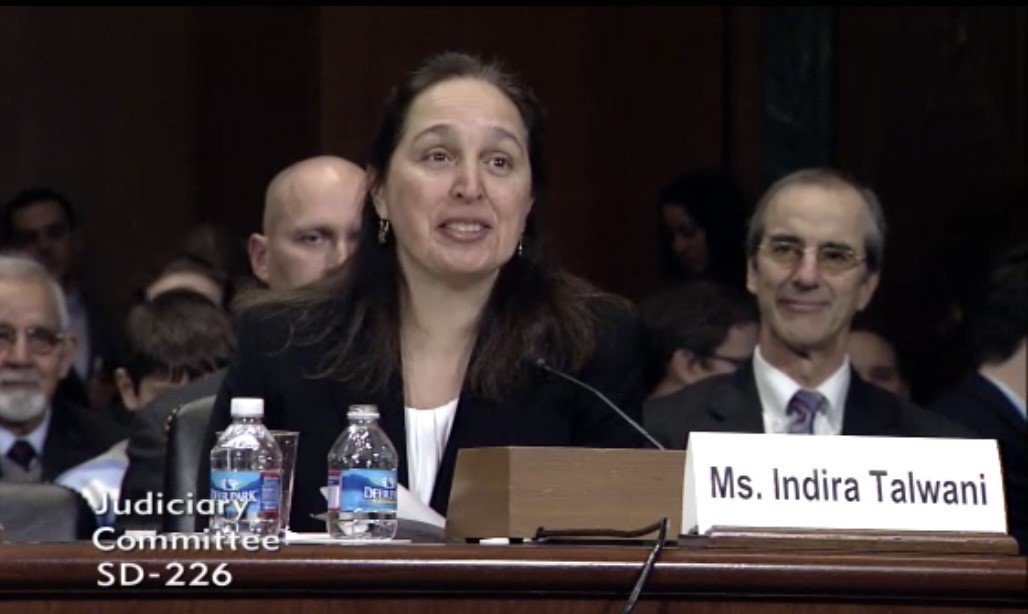
A federal judge in Massachusetts on Thursday blocked a U.S. Postal Service election integrity measure, reviving a legal battle that the Supreme Court had seemingly put on hold just days earlier. The temporary restraining order, issued by U.S. District Judge Indira Talwani, halts a USPS rule requiring states to provide basic voter data and to place unique barcodes on mail-in ballot envelopes.
The rule, finalized after an executive order from President Trump directing federal agencies to implement election integrity measures, was designed to begin securing vote-by-mail processes. But Talwani, an Obama appointee and former Democratic donor, issued a new injunction after the rule was formally published, arguing that the high court’s earlier intervention only concerned the timing of her review—not the merits of the policy itself.
A Quick Reversal From the Supreme Court
Just days before Talwani’s latest order, the Supreme Court had stayed her original injunction, which was issued before the USPS rule was even finalized. The justices signaled that federal courts should not review proposed rules, only final ones. With the rule now published, Talwani moved to block it again, insisting that the publication satisfied the procedural concern.

The Trump administration responded Friday by announcing it would appeal the new decision. The legal whiplash leaves election officials and mail-in voters in a state of uncertainty as the November 3, 2026, midterms approach.
What the USPS Rule Actually Requires
According to the court’s own description, the USPS final rule is relatively modest in scope. It does not require proof of citizenship or any eligibility verification. Instead, it requires states and local election officials to submit the name and address of each voter along with a unique intelligent mail barcode to be placed on ballot return envelopes. The Postal Service would not verify addresses or alter voter eligibility in any way.
Talwani, however, characterized the requirements as an unacceptable burden. In her order, she wrote that the rule would refuse to send mail ballots to eligible voters unless states complied with advance approval processes, regardless of impending election deadlines. She called compliance before the midterms “practically impossible” and said election officials would need to create accounts on a new electronic portal, certify approval of ballot designs, and upload each voter’s information.

The judge also dismissed the underlying rationale for the rule, stating that “the record continues to lack any evidence regarding fraudulent absentee or mail-in voting.” She added that the USPS’s interest in correcting an “unsubstantiated problem” through “likely unconstitutional means” was outweighed by the risk of widespread disenfranchisement.
Supporters of the rule, however, point to the well-documented vulnerabilities of mail-in voting, including instances of multiple ballots being sent to the same address, ballots mailed to incorrect recipients, and even ballots sent out of state. They argue that the barcode requirement is a simple, commonsense step toward ensuring that mail ballots are tied to actual, eligible voters.
What Happens Next
The temporary restraining order is set to last 14 days, during which the USPS cannot enforce the data and barcode requirements. According to SCOTUS Wire, Talwani is scheduled to consider a longer injunction on September 3.
Legal experts say the case could be headed back to the Supreme Court, which may now have to rule on the merits of the final rule—something it previously avoided. The high court’s earlier stay was procedural, not a judgment on whether the USPS rule is lawful.
The litigation began after the Trump administration issued an executive order aimed at tightening election integrity measures across federal agencies. Democratic-led states and organizations such as the League of Women Voters filed suit in federal court to block the measures, arguing they impose unnecessary burdens on voters and election officials.
For now, the immediate effect is that states and local election officials will not be required to comply with the USPS barcode and data rules for the upcoming midterm election—unless the Supreme Court steps in again.
The Trump administration has indicated it will fight the new injunction, and the case is likely to move quickly given the proximity of the election. The legal back-and-forth underscores the intense partisan battle over election administration in the United States, with judges now playing a central role in determining how—and how securely—mail-in ballots are handled.
Source: thefederalist.com — https://thefederalist.com/2026/08/28/federal-judge-blocks-usps-election-integrity-measure-again-days-after-scotus-stayed-her-injunction/