
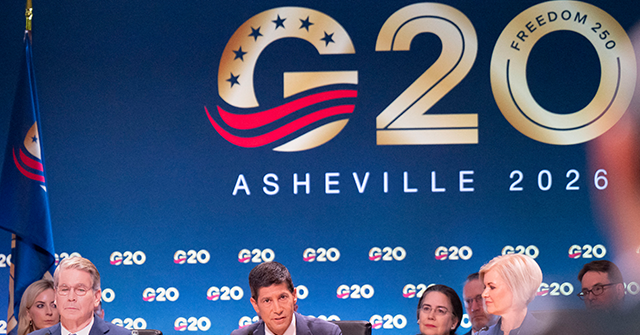
Kevin Warsh, chairman of the Federal Reserve, has a simple message for policymakers, economists, and investors: the old rules no longer apply. Speaking at the Jackson Hole Economic Symposium on August 28 and again at the G20 finance ministers’ meeting in Asheville, North Carolina, on August 31, Warsh argued that the global economy has reached a “hinge point in history,” a moment when the assumptions that guided policy for the past two decades have become obsolete.
The phrase is borrowed from George Shultz, the late Reagan-era statesman and Warsh’s mentor. In his 2020 book A Hinge of History, Shultz described a world at an inflection point comparable to the years after World War II, where rapid technological change, shifting demographics, and outdated institutions demand a new approach. “The near future is not going to be like the near past,” Shultz said. Warsh clearly agrees.
From Scarcity of Demand to Scarcity of Labor
For most of the post-financial-crisis era, the dominant fear among policymakers was a shortage of demand. Economists worried about secular stagnation, a global glut of savings, and too few worthwhile investment opportunities. Central banks responded with near-zero interest rates and massive bond purchases, while governments leaned on deficit spending to stimulate growth. The threat was a stalled economy, not an overheating one.
Warsh’s message is that this worldview is now reversed. The economy he describes is one of abundant opportunity but scarce labor. Investment in artificial intelligence, data centers, energy, and infrastructure is surging. Business capital spending is growing at an annual rate of about nine percent, he notes—the fastest pace since 2021, and this time it’s not a recovery from a shutdown. That kind of investment, sustained deep into an economic expansion, is historically unusual. But Warsh suggests it may be the “new new normal.”
Labor-force growth, meanwhile, has slowed dramatically. In this environment, the old habit of measuring success by the number of jobs created becomes almost meaningless. Warsh gave a concrete example: if one policy creates a million jobs by requiring a million workers to produce the same output, while another produces the same additional output through better machinery, software, and AI with hardly any new workers, the latter is clearly superior. Yet the political discourse still treats payroll growth as the ultimate metric.
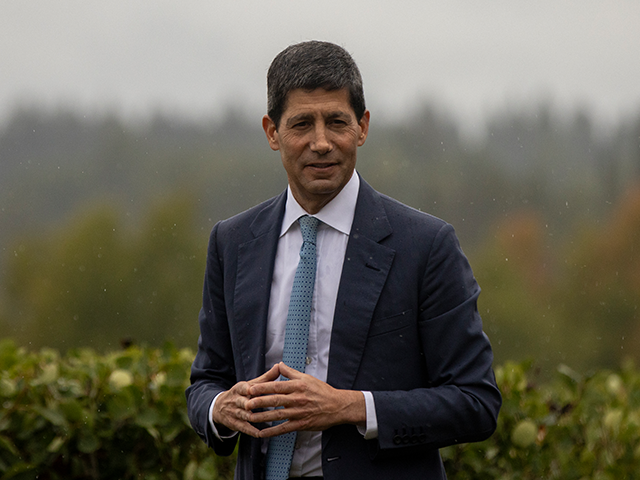
Warsh argues we need to shift focus from job creation to productivity: output per worker, real wages, capital investment, and the amount of scarce labor required to produce economic growth. This means rethinking policy across the board, from immigration to education to fiscal and monetary policy.
Policy Implications: Immigration, Education, Energy
On immigration, Warsh suggests the approach should be restrictive enough—and visa fees high enough—that employers cannot simply substitute an endless supply of cheap labor for investment in technology and worker training. The goal is to force companies to invest in productivity-enhancing capital rather than relying on a low-wage workforce.
Education policy, too, would need a reset. Warsh criticizes the bipartisan obsession with maximizing college enrollment, calling it a substitute for genuine productivity gains. He argues for an increased emphasis on apprenticeships and vocational training, and suggests that the federal student loan program could be wound down, along with the use of student visas and post-graduation work programs as a backdoor for expanding the supply of college-educated labor.
Energy and infrastructure also take center stage. Warsh argues for policies that secure abundant energy, critical minerals, transportation, and power infrastructure, and for a domestic capacity to manufacture the technologies the new economy depends on. Permitting, taxation, and regulation should be judged by whether they encourage investment and expand productive capacity, not by whether they conform to old templates.
Fiscal and Monetary Policy: A New Trade-off
Perhaps most significantly, Warsh’s worldview implies a major reassessment of fiscal and monetary policy. In a demand-scarce world, deficit spending and ultra-low interest rates could be defended as ways to put idle capital to work. But in a world where investment opportunities are abundant and labor is scarce, government borrowing simply competes with private investment for capital. Cheap money, meanwhile, risks stoking inflation.
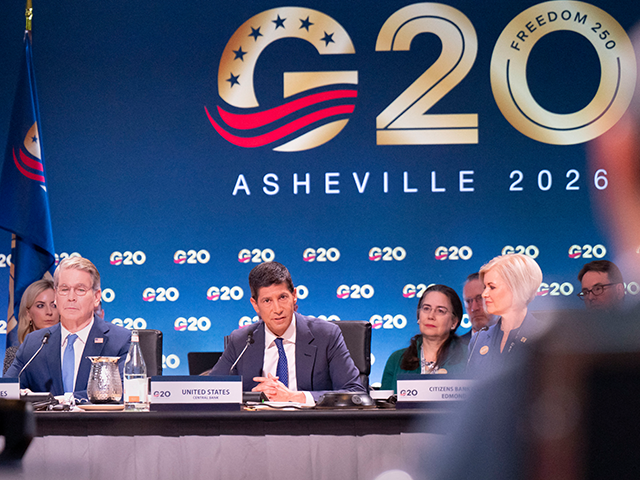
Warsh appears to endorse the Trump administration’s efforts to shrink government payrolls, arguing that this frees up labor for more productive work in the private sector. The message is that government spending is no longer a free lunch in terms of demand stimulus—it can crowd out the very investment needed to boost productivity.
This has direct implications. If the Fed’s estimate of the economy’s long-term real growth potential—around two percent—is based on an outdated view, then policy may need to be more tolerant of higher growth and possibly higher rates to keep inflation in check. Warsh’s second principle for monetary policy underscores the difficulty: we can observe economic activity, but we cannot directly observe aggregate supply. We have to infer it, and our measures are rooted in the Depression-era focus on demand shortfalls.
What Could Go Right—and What Could Go Wrong
Warsh is optimistic about what a successful pivot could mean. If productivity accelerates, fewer workers can support a growing number of retirees without punitive tax hikes, which would ease the coming Social Security crisis. Higher wages and better job security for younger workers might encourage earlier family formation, echoing the post-war Baby Boom. And a tight labor market could lift incomes and reduce inequality, potentially pulling young people away from the socialist politics Warsh sees in places like New York.
But the hinge point is not destiny. As Shultz wrote, a historical hinge is a moment where choices matter more, because the old arrangements are breaking down and the new ones have not yet hardened. Technology, demographics, and capital flows may push us toward a new economic era, but they do not determine its shape. Policy, institutions, and national character still matter.
The question now is whether policymakers, investors, and the public can adapt to this new framework—or whether they will cling to the old playbook, squandering the opportunity by forcing the new economy into outdated boxes. Warsh has laid out his vision. The next few years will show whether the rest of the world is listening.
Source: www.breitbart.com — https://www.breitbart.com/politics/2026/08/31/breitbart-business-digest-what-the-warsh-hinge-point-means-for-economic-policy/