
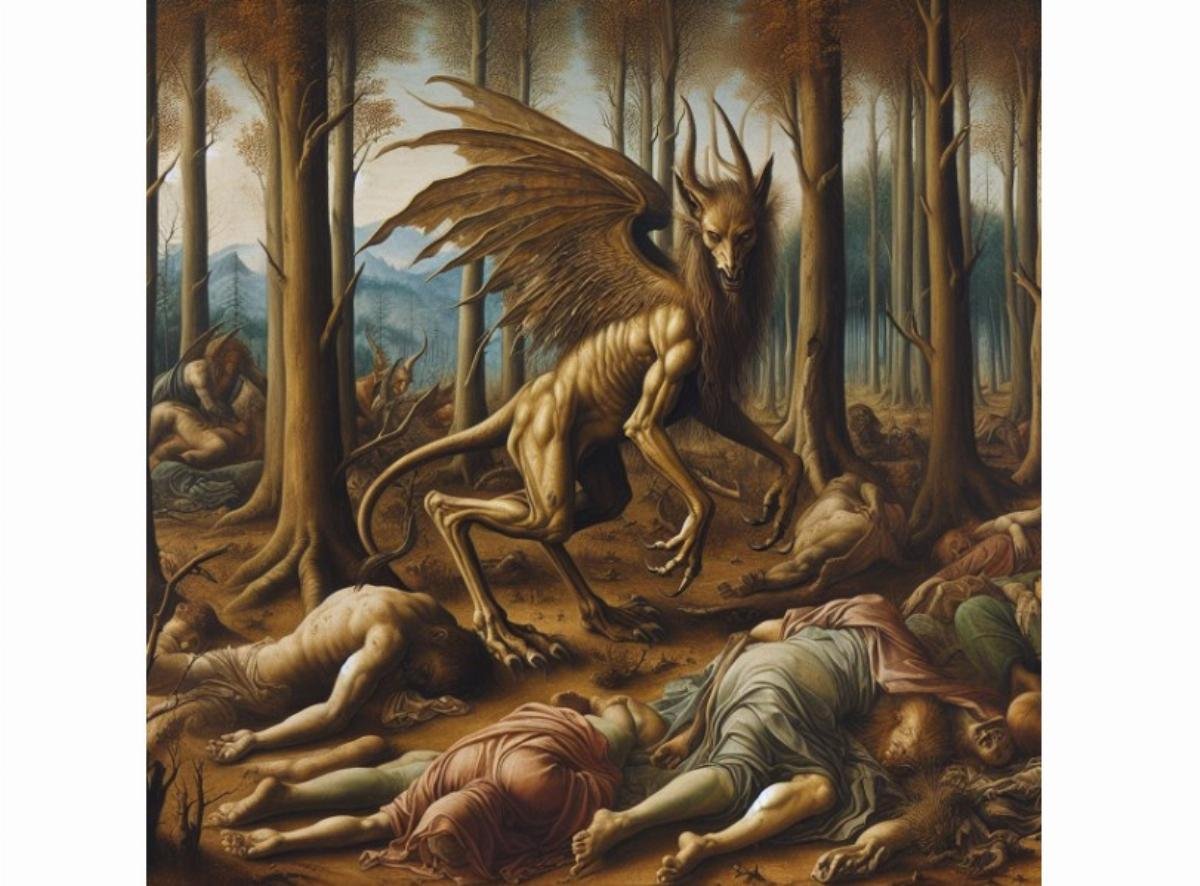
Is the world descending into madness, or has evil simply become easier to see? In a provocative new essay for American Thinker, columnist Alicia Colon makes the case that the recent spate of mothers killing their children is not just a mental health crisis, but evidence of a cosmic battle between good and evil.
Writing on September 2, 2026, Colon opens with a blunt question: “Am I the only one who thinks that mothers shouldn’t be killing their young children?” She recounts the 2001 case of Andrea Yates, who drowned her five children in a bathtub and was acquitted by reason of insanity, and contrasts it with the ongoing trial of Lindsay Clancy, accused of strangling her three children in 2026. Both women, Colon argues, have been “excused of their sins” by blaming postpartum syndromes and temporary insanity.
Colon reserves particular scorn for “amoral morons” who champion such parents as victims. She acknowledges that postpartum syndrome is real—she says she experienced a temporary version herself after one of her six pregnancies—but insists that the methods chosen by Yates and Clancy—drowning and strangulation—make their acts “pure evil.”

A Bronx Case and a Growing Pattern
Just days before Colon’s essay, a judge found Dimone Fleming not guilty by reason of insanity for the 2022 deaths of her sons, 3-year-old Daishawn and 11-month-old Octavius, who were found with multiple stab wounds in a bathtub at a Bronx family shelter. To Colon, this is further proof that the justice system is too quick to excuse the inexcusable.
The columnist admits her own postpartum struggles were mild: sitting on a hospital bed, her mood lifted after saying the Our Father and three Hail Marys. She contrasts that with the impulse to kill, noting that her own difficult days only made her want to run away—and she did, a few times, she says. She never once considered harming her children.
The Devil in the Details
Colon points to the 2019 film Nefarious as a clear-eyed explanation of “what is happening in the world today.” The film, in her telling, features a demon explaining how the Devil seduces humans into evil by offering what they desire. Demons, the film’s logic goes, hate humans because God loves us. Colon recommends the movie highly, though she notes it was never recognized by Hollywood—an industry she accuses of “grooming innocent children and listening to the seductive voices in their heads.”
She sees daily news as evidence of diabolical influence: innocent people pushed onto subway tracks, random stabbings, and a woman shot dead by the NYPD in Times Square after stabbing two strangers. The 21st century, she writes, has been “remarkable for its descent into insanity.” Even the absurdity of a duct-taped banana—Maurizio Cattelan’s Comedian, which sold for $6.2 million at Sotheby’s in 2024—becomes a symptom of moral collapse.
Signs of Hope Amid the Darkness
Yet Colon doesn’t end on a note of despair. She points to what she sees as countersignals: a resurgence in church attendance, archaeological discoveries confirming biblical events, ongoing scientific research on the Shroud of Turin, and the canonization of Carlo Acutis, a 15-year-old who used his computer skills to document eucharistic miracles. “Call me a cockeyed optimist but I’m betting on the Big Guy upstairs,” she writes.
The essay is a call to acknowledge evil in order to fight it. “Evil is out there,” Colon insists. “But so are the signs of good.”
As America debates mental health, criminal responsibility, and the role of religion in public life, Colon’s piece offers a stark, faith-based perspective on the darker headlines of recent decades. Whether her arguments persuade or provoke, they reflect a growing anxiety that the moral fabric of society is fraying—and that ignoring the spiritual dimension may be our greatest mistake.
Source: www.americanthinker.com — https://www.americanthinker.com/articles/2026/09/so-much-evil-still-don-t-believe-in-the-devil/