
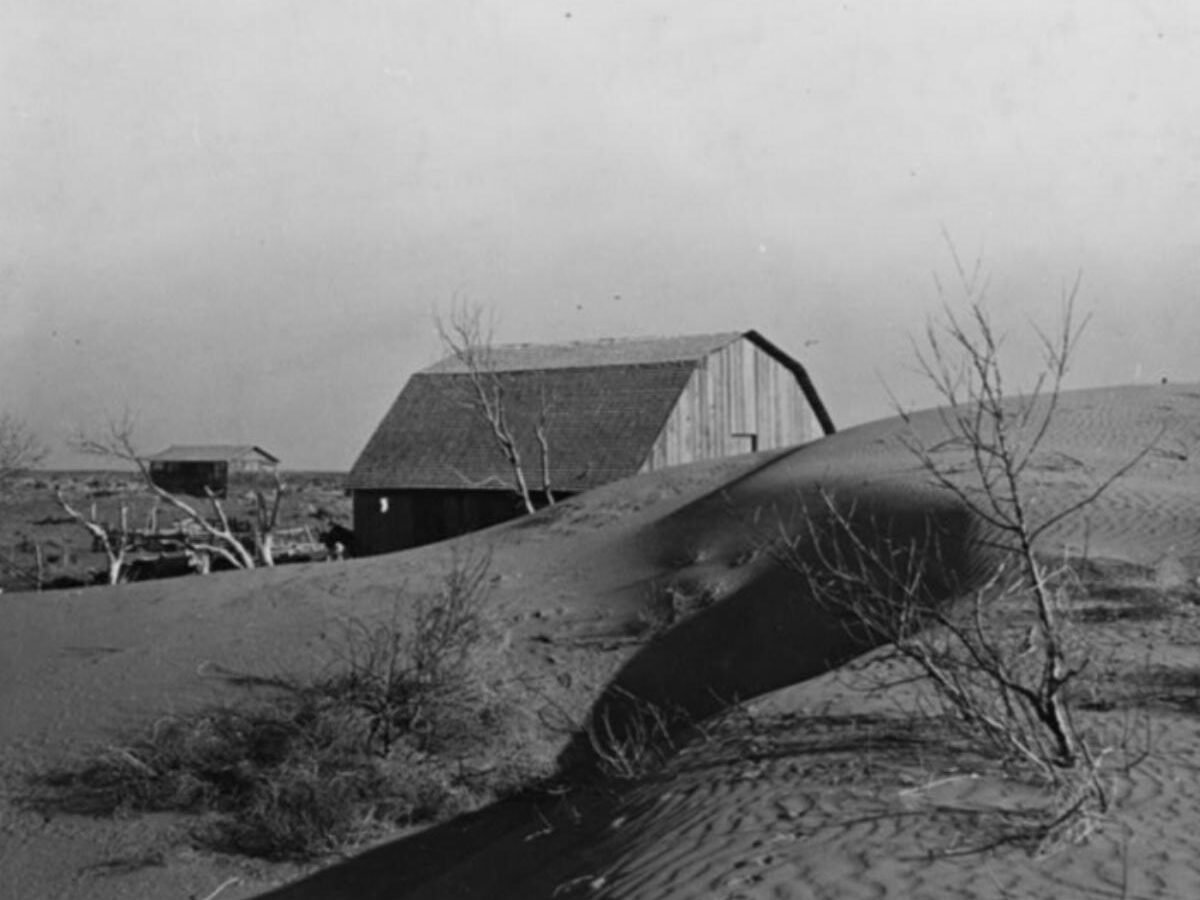
Heat waves come and go, but according to a recent analysis by William D. Balgord, a contributor to the Cornwall Alliance for the Stewardship of Creation, none has matched the scorching summer of 1936. Writing for American Thinker, Balgord reminds readers that the Dust Bowl-era heat wave remains the benchmark for extreme heat in the United States, and he uses it to challenge the prevailing narrative of catastrophic global warming.
Balgord points to the July 1936 heat wave that gripped the Midwest and other parts of the country. In La Crosse, Wisconsin, temperatures exceeded 100 degrees Fahrenheit for ten straight days — actual thermometer readings, not the “feels-like” variety. Wisconsin Dells hit a blistering 114 degrees on July 13, 1936, a state record that still stands today. Across the affected region, 14 states set their all-time high temperature records during that single month.
What gives Balgord pause is the longevity of those records. He notes that every one of the current all-time state records in the contiguous United States dates to before 1950. In the 75 years since, no state has established a new all-time maximum. That’s a striking fact, he argues, given the dire warnings of runaway warming that have been with us since at least the infamous 1988 Senate hearings.
The Death Valley benchmark
Balgord also cites the world’s hottest reliably measured temperature: 134°F at Furnace Creek, California, on July 10, 1913. He stresses that this is a single-day reading from a single site. Statistical analysis, he suggests, makes it almost certain that even higher temperatures have occurred in unrecorded places and times — perhaps in the Sahara, the Arabian Peninsula, or the interior deserts of Central Asia. But because those measurements were never made, the official record stands as the benchmark.
Comparing modern heat waves to those of the past is more complicated than simply lining up thermometer readings. Balgord notes that the urban heat-island effect — the tendency of cities to trap heat due to concrete, asphalt, and concentrated human activity — is often underappreciated in mainstream climate analysis. He highlights the work of Anthony Watts, a veteran Los Angeles meteorologist, who argues that urbanization and land-use changes are key factors frequently ignored in the climate models championed by outlets like the Associated Press.
Shifting stations and evolving methods
There’s another reason July 2026 can’t be directly compared with July 1936: the monitoring network itself has changed. Once numbering in the thousands, many U.S. weather stations have been shut down. The remaining stations are disproportionately urban or newer, which introduces an upward bias in recorded temperatures. Balgord argues that efforts to adjust or “homogenize” data from a network that no longer exists in its original form are of dubious value. Methods and protocols for measuring temperature have also evolved, making after-the-fact comparisons between decades-old and recent data a contentious exercise among climate experts.
Balgord turns to recent peer-reviewed research from John Christy, co-founder of the satellite temperature measurement system, to bolster his point. Christy’s paper reportedly finds a modest negative trend in extreme summer heat within the contiguous United States since 1899 — meaning the hottest days and the number of heatwave days have slightly declined. At the same time, extreme cold events have also become less frequent, especially since the 1990s.
A question of records
If burning fossil fuels were driving a continued rise in global temperatures, Balgord contends, it stands to reason that at least one state would have logged a new all-time high by 2026. But no state holds a record newer than 1950. That fact alone, in his view, undermines the alarmist narrative.
He also criticizes the media’s reliance on voices like Jeff Masters, the former head of the University of Michigan’s Weather Underground, whom Balgord describes as a leading climate-change alarmist. He accuses the AP and similar outlets of ignoring the urban heat-island effect while elevating daily and nighttime temperature readings in cities as evidence of warming.
Balgord’s conclusion is reassuring to those who doubt the imminence of a climate catastrophe: “We are in no real danger of a runaway climate either now or in the foreseeable future.” He points to billions of years of Earth’s geological history, during which no runaway greenhouse occurred, even when atmospheric carbon dioxide levels were far higher than today.
His parting shot — “The AP, the Weather Underground, and little Greta each need to take a time out” — is aimed squarely at those he believes are stoking unfounded fears.
Whether one agrees with Balgord’s interpretation or not, his reference to the 1936 heat wave and the persistence of pre-1950 state records raises questions about how we measure and communicate climate trends. As he notes, the difficulty of comparing historical and modern data sets is a matter of legitimate dispute among climate scientists. The records from 1936, and from 1913 at Death Valley, remain a stark reminder that extreme heat is not a new phenomenon — and that context matters when assessing the climate of the present.
Source: www.americanthinker.com — https://www.americanthinker.com/blog/2026/09/summer-is-the-time-for-heat-waves/