
The Pentagon’s widening hunt for the source of damaging leaks about U.S. weapons stockpiles has reached an extraordinary stage — dozens of America’s most senior military officials have been put through polygraph examinations. Yet a prominent conservative commentator argues that even this extraordinary step won’t stop the bleeding unless leakers face the ultimate consequence.
The investigation, first reported by The New York Times and detailed by CBS News, centers on leaks of highly classified information about the nation’s supplies of sophisticated weapons — including long-range missiles, Patriot interceptors, and other finite munitions — as the United States continues its military engagement with Iran. President Donald Trump was reportedly furious when sensitive details about America’s weapons inventories appeared in media reports.
According to CBS News, several dozen officials were questioned earlier this summer as part of the probe, including officials assigned to U.S. Central Command and other combatant commands. The scale of the polygraph operation was described as extraordinarily rare. The New York Times reported that investigators put roughly 50 members of the Joint Staff through polygraphs in August alone.
A history of high-level leaks
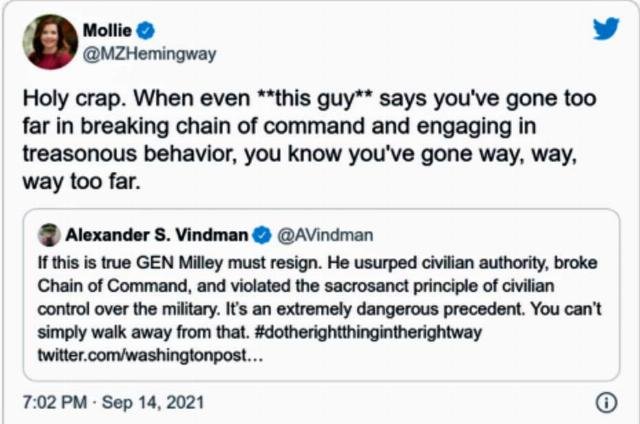
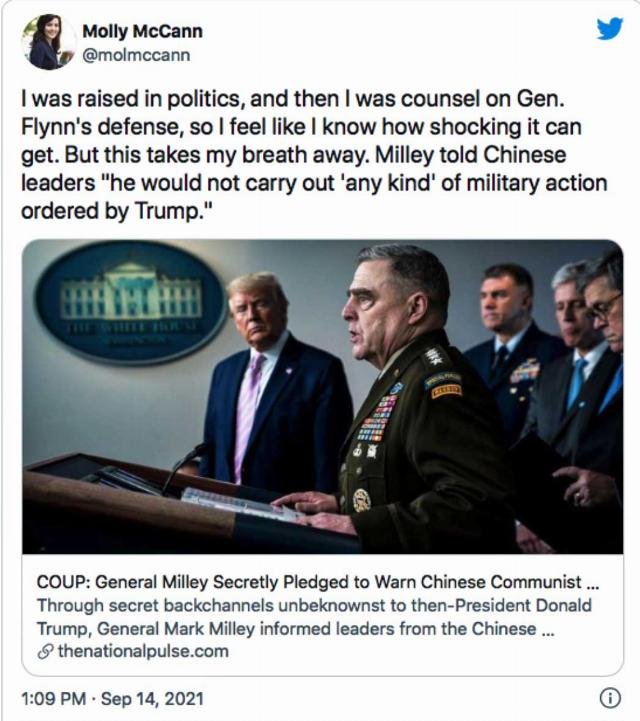
The current investigation echoes an earlier scandal involving retired Gen. Mark Milley, the former chairman of the Joint Chiefs of Staff. In the final months of the first Trump administration, Milley assured his Chinese military counterpart that he would inform them of any hostile action Trump might be planning against China — a communication that critics have characterized as treasonous. Trump, they note, had no such plans.
Milley’s conduct drew widespread condemnation, but he was pardoned by President Biden. In the second Trump term, however, he did not entirely escape consequences: Secretary of Defense Pete Hegseth pulled his security clearances and personal security detail, removed his portrait from the Pentagon, and ordered a review aimed at revoking a star in retirement. That review is reportedly still ongoing.
Yet the Milley example, as striking as it was, appears not to have deterred other high-ranking officials from leaking. And it is that reality that has prompted the current extraordinary investigative measures.
Hegseth’s task force
In July, Hegseth announced a joint Pentagon–Justice Department task force to identify and prosecute people suspected of leaking sensitive government information. He gave the Office of General Counsel broad authority to demand records and ordered personnel to respond within two days.
“When a leak of department information occurs today, it’s critical that we provide the Department of Justice and other partners in federal law enforcement — including the FBI — with actionable information as quickly as possible,” Hegseth said at the time.
Chief Pentagon spokesman Sean Parnell told CBS News that the Department “does not comment on internal personnel or investigative matters but takes all leaks of classified national security information extremely seriously and investigates accordingly.”
Why the leaks keep coming
The commentary, written by Mike McDaniel, a U.S. Air Force veteran and retired police officer, suggests that leakers may be motivated by “Trump Derangement Syndrome” or loyalty to a so-called “Deep State” that has supposedly infested the military and federal agencies, slow-rolling and sabotaging Trump administration orders and policies. Others, he speculates, may be upset about the nation’s weapons shortfalls and believe leaking to the press will somehow accelerate re-armament — a logic he dismisses as misguided given Democratic opposition to military funding.
Regardless of their motivations, McDaniel argues, leakers are committing treason. And he contends that “Normal Americans” will not be satisfied — and the leaks will not stop — until high-ranking officers and civilians who leak face the death penalty, unlike Milley, who was pardoned and, in McDaniel’s view, escaped true justice.
The stakes of the leaks
The leaks themselves are not merely embarrassing — they are strategically dangerous, McDaniel argues. Information about weapons procurement, manufacturing, and stockpiles is exactly the kind of intelligence that adversaries like Iran would want. Iran, he suggests, could use such reports to conclude it might be able to outlast the United States in a prolonged conflict, particularly given what he describes as a lack of foresight under the Biden administration that failed to adequately replenish ammunition supplies.
Leaks like these, he says, cost lives — including the lives of enemies who may be emboldened to fight on, and the civilians they use as human shields.
The debate over how to stop leaks is unlikely to subside. With Hegseth’s task force now operational and polygraphs administered at an unprecedented scale, the question is whether these measures — short of the death penalty McDaniel advocates — will finally end the flow of classified information to the press.
Source: www.americanthinker.com — https://www.americanthinker.com/blog/2026/09/pentagon-leaks-polygraphs-aren-t-enough/