
The Green Lantern’s power ring has been called many things — a weapon, a tool, a symbol of willpower. But sexist? That’s the claim from Vanessa Baden Kelly, a co-executive producer and writer on HBO’s upcoming series Lanterns, and it has thrown fuel on an already blazing culture war over the superhero genre’s direction.
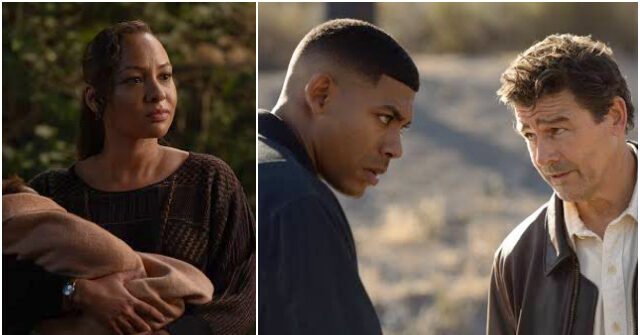
In a recent interview, Kelly suggested that the ring — which famously selects its wearer based on their ability to overcome great fear — passed over the most deserving candidate simply because of gender. “The thing that I would always say in the room is that if the ring wasn’t sexist, Bernadette would have been chosen, because she really is just the most fearless of everybody,” Kelly said, referring to the mother of the show’s young protagonist who ultimately becomes the latest Green Lantern.
The remark has drawn sharp criticism from conservative commentators and fans who see it as yet another instance of Hollywood grafted ideology onto a beloved male-centric franchise. Writing for Breitbart News, John Nolte characterized Kelly’s comment as evidence that someone who “hates a franchise aimed at males” has been put in charge, and argued that the show is part of a broader effort to “feminize” or destroy properties traditionally marketed to men and boys.
The ring and its lore
The Green Lantern power ring is one of the most iconic artifacts in DC Comics lore. According to fan outlet Geeks and Gamers, the ring “can travel across the universe, translate alien languages, create virtually anything its bearer imagines, and identify candidates capable of overcoming great fear.” It is the ring that chooses its wielder, seeking out individuals who demonstrate extraordinary courage in the face of fear.
Kelly’s assertion that the ring is sexist hinges on the idea that Bernadette, a character who has yet to appear in the comics as a Lantern, embodies this fearlessness more than her son. The claim is a creative interpretation, but it has landed amid an already fraught conversation about diversity and representation in superhero media — particularly in franchises with historically male fanbases.
A controversial scene
Kelly’s writing has also come under fire for a specific scene in Lanterns that critics say is heavy-handed and preachy. In the scene, a woman lectures a space alien about racism, a moment Nolte derides as “dreck” and “fake.” He argues that the scene breaks the storytelling spell because it is unbelievable — no one, he says, would respond to the presence of an alien by launching into a political monologue.
“There is nothing believable about that scene. There’s no subtlety, there’s no subtext, and we’re supposed to believe a woman would lecture a space alien about racism,” Nolte wrote. “No one talks like that. No one behaves like that. You have an alien sitting in front of you, and you go right to the talking points?”
The criticism is not that the show is political — plenty of acclaimed filmmakers like Oliver Stone and Spike Lee have made political art that resonates. The problem, Nolte argues, is that the message is delivered with all the subtlety of a hammer, sacrificing narrative immersion for a woke sermon.
“Anyone can write a piece of shit scene like that one in Lanterns. It takes zero skill to beat people over the head with a heavy-handed message,” he wrote. “A halfway decent writer would ‘show’ this rather than ‘tell’ it through a vomit-spew of exposition.”
Kelly, for her part, has a background that includes ten years as a community activist, having worked for civil rights attorney Ben Crump and Los Angeles Mayor Karen Bass. Her politics are no secret, but her critics argue that her approach to storytelling prioritizes ideology over craft.
The bigger battle over male franchises
The controversy is not occurring in a vacuum. It is part of a larger, increasingly heated debate over the direction of major entertainment properties — from Star Wars to Doctor Who to Marvel — where accusations of “wokeness” and “forced diversity” have become common refrains. Shows like HBO’s Lanterns, which is spearheaded by DC Studios co-head James Gunn, are often at the center of this storm.
Gunn, who has publicly embraced a more inclusive DC Universe, has yet to respond to Kelly’s comments. But the decision to bring in a writer like Kelly, who appears to view the property’s core mythology as inherently flawed, has some fans worried about the direction of the series.
“That tells me they are out to destroy this franchise. That’s the goal. The only goal,” Nolte wrote. “Men and boys will no longer be allowed to have anything of their own in our culture. It will either be feminized or beaten to death with woketard talking points.”
Whether that assessment is fair or hyperbolic, the debate over Lanterns highlights a growing rift between creators who want to reinterpret classic properties through a modern social lens and audiences who feel those same properties are being taken from them.
What comes next
As Lanterns moves toward its debut, the conversation around it is likely to intensify. The show is expected to be a major piece of James Gunn’s new DC slate, and the producer’s comments about the ring being sexist have already become a rallying point for critics who see the series as a symbol of everything wrong with contemporary franchise filmmaking.
For now, the question is whether the show can win over skeptics with its actual quality — or whether it will spend its entire run defending its politics. One thing is clear: the Green Lantern’s ring has never been more controversial, and it hasn’t even appeared on screen yet.
Source: www.breitbart.com — https://www.breitbart.com/entertainment/2026/09/03/nolte-lanterns-producer-claims-green-lanterns-ring-is-sexist/