
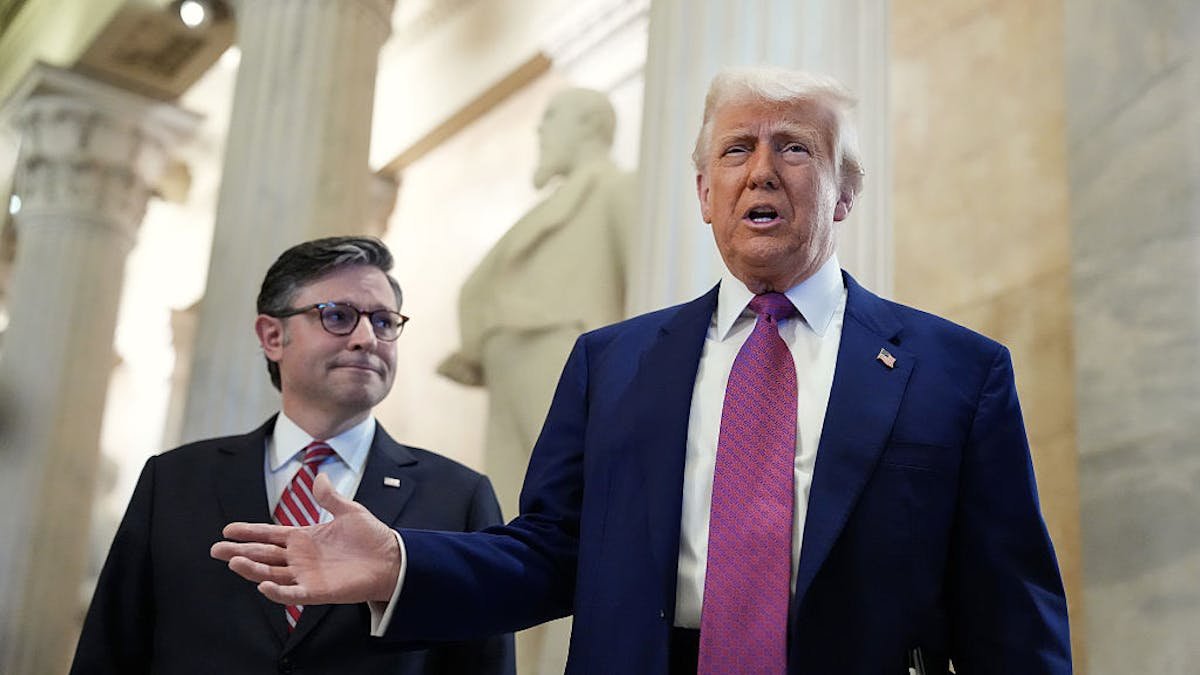
Republicans’ fight to retain control of Congress hit a major roadblock on Thursday after Missouri’s top court struck down the state’s GOP-friendly election map just weeks before Americans head to the polls. The decision, handed down less than a month before the November general election, could cost the party a seat in the closely divided House and drew immediate backlash from President Donald Trump, who called it a “dark day” for the state.
The Missouri Supreme Court ruled against the map passed by the state legislature last year, siding with a left-leaning group that argued the new boundaries needed voter approval via referendum before taking effect. The court found that the referendum petition was valid and that the secretary of state, Denny Hoskins, was wrong to reject it. As a result, the map will not be used in the upcoming election, and the state will instead operate under the congressional redistricting plan drawn in 2022.
Judge Ginger Gooch, writing for a unanimous court, stated: “The referendum petition was legal, sufficient, and timely, and the secretary incorrectly concluded otherwise. HB 1 did not go into effect and will not go into effect unless and until approved by the voters. The congressional redistricting the General Assembly established in 2022 remains in full force and effect for the November 2026 general election.”
The case centered on a lawsuit filed by Richard von Glahn, executive director of the liberal group “People Not Politicians,” who sued Hoskins after the secretary declined to certify a ballot referendum on the legislature-approved map. That map was expected to give Republicans a 7-1 advantage in Missouri’s eight-member U.S. House delegation, a significant boost in a state where the party dominates statewide elections.
With the older map back in place, analysts expect a likely 6-2 split in favor of Republicans. The shift is widely seen as sparing the Kansas City-area seat currently held by Democrat Emanuel Cleaver, a longtime incumbent who would have faced a much tougher race under the GOP-drawn lines. The reversal is a blow to national Republican efforts to expand their House majority, and it comes as both parties have struggled with legal challenges to redistricting across the country.
President Trump, who had publicly pushed Missouri to adopt the GOP-friendly map, denounced the ruling in a social media post on Truth Social. He wrote: “The Missouri Supreme Court just ridiculously ruled in favor of changing the maps back to what they were a long time ago. It’s called, Ancient History! The problem is, according to Legal Scholars, that not only was the ruling horrible, ridiculous, and unConstitutional, but there won’t be enough time to change the map back with the Election coming up in a very short period of time. Missouri must be able to use the map that was in effect just a couple of months ago, in the Primary. This is a Dark Day for ‘Justice’ in Missouri!”

The decision also triggered an aggressive response from Missouri Attorney General Catherine Hanaway, a Republican who said she would appeal to the U.S. Supreme Court. Hanaway argued the ruling was unprecedented and unlawfully disrupted an election that had already begun, noting that the state held its primary in August using the disputed map. In a statement, she said: “Never before in American history has a court overturned a congressional map after a primary and before a general election. This unprecedented decision clearly violates federal law and has thrust our state into a full‑fledged constitutional crisis. Our office will move immediately to seek relief from The Supreme Court of the United States. We are confident that the federal courts will not allow every Missouri voter to be disenfranchised — which is what today’s decision does.”
Legal experts note that the U.S. Supreme Court has historically been reluctant to intervene in disputes over state election laws so close to an election, citing the so-called Purcell principle, which discourages courts from changing rules in the immediate run-up to voting. That caution could make it difficult for Hanaway to obtain emergency relief before November, though the fast-moving litigation could still reach the high court in the coming days.
Background of the Battle
The fight over Missouri’s congressional map is part of a broader national pattern of redistricting wars that have erupted after the 2020 Census. Lawmakers in both parties have repeatedly turned to courts to challenge maps they view as unfairly gerrymandered, with several states seeing prolonged litigation over district lines. In Missouri, the legislature’s Republican supermajority passed a map that appeared to consolidate GOP voting strength, but opponents argued the process circumvented the state’s constitution, which requires certain ballot measures to go to voters.

The court’s ruling Thursday did not immediately declare the legislature’s map unconstitutional on its merits—it instead held that the state’s constitution required voter approval before the map could take effect. That procedural distinction may limit the impact of the decision beyond Missouri, but it nonetheless dealt a direct political setback to Republicans at a crucial moment, as national polls show control of the House up for grabs.
Judge and Process in the Crosshairs
The decision has also sparked scrutiny of Judge Ginger Gooch, who authored the opinion. In Missouri, the governor selects a judge from a list of three candidates provided by a self-described nonpartisan Appellate Judicial Commission, and the public then votes on whether to retain the judge after they have served at least one year. Gooch was originally appointed by GOP Governor Mike Parson and retained her seat in 2024 with over 60% of the vote. Despite that Republican pedigree, her ruling has prompted criticism from conservatives who see it as an overreach by the judiciary.
Department of Justice officials declined to comment on the pending litigation, but lawyers on both sides expect a rapid escalation. The Missouri Attorney General’s office said it would file an appeal with the U.S. Supreme Court immediately, while supporters of the court’s decision, including the group People Not Politicians, celebrated the ruling as a victory for democratic participation. Richard von Glahn, who brought the lawsuit, said in a statement that the court’s decision “upholds the right of Missourians to have a say in how their congressional districts are drawn, rather than allowing politicians to rig the system behind closed doors.”
The practical effect of the ruling is that the state will revert to the map used in the 2022 midterms, which had already produced a 6-2 Republican advantage. Under that map, Cleaver’s district, which includes urban Kansas City and portions of surrounding counties, was considered somewhat competitive but leaned Democratic. With the new Republican map, Cleaver’s seat would have been folded into a more conservative-leaning district, significantly reducing his chances of re-election.
Republicans in Washington have expressed frustration over the development, with several House members from neighboring states calling on the Missouri GOP to mount a swift legal challenge. However, with the election rapidly approaching, even a favorable ruling from the Supreme Court may not arrive in time to change the boundaries for this cycle. That reality has fueled speculation that the fight over Missouri’s map could extend well past November, potentially reshaping the state’s delegation for the remainder of the decade.
For now, election officials in Missouri are preparing to administer the November vote under the 2022 map, which they say is already incorporated in their systems. Voters will cast ballots for congressional candidates, and the outcome will determine whether the court’s decision becomes a turning point in the fight for the House majority. As the midterms loom, the Missouri ruling is likely to intensify pressure on both parties to lock down favorable maps elsewhere—and to underscore how a single state court decision can shift the national political landscape.
Source: www.dailywire.com — https://www.dailywire.com/news/red-state-supreme-court-deals-blow-to-house-republicans-ahead-of-midterms