
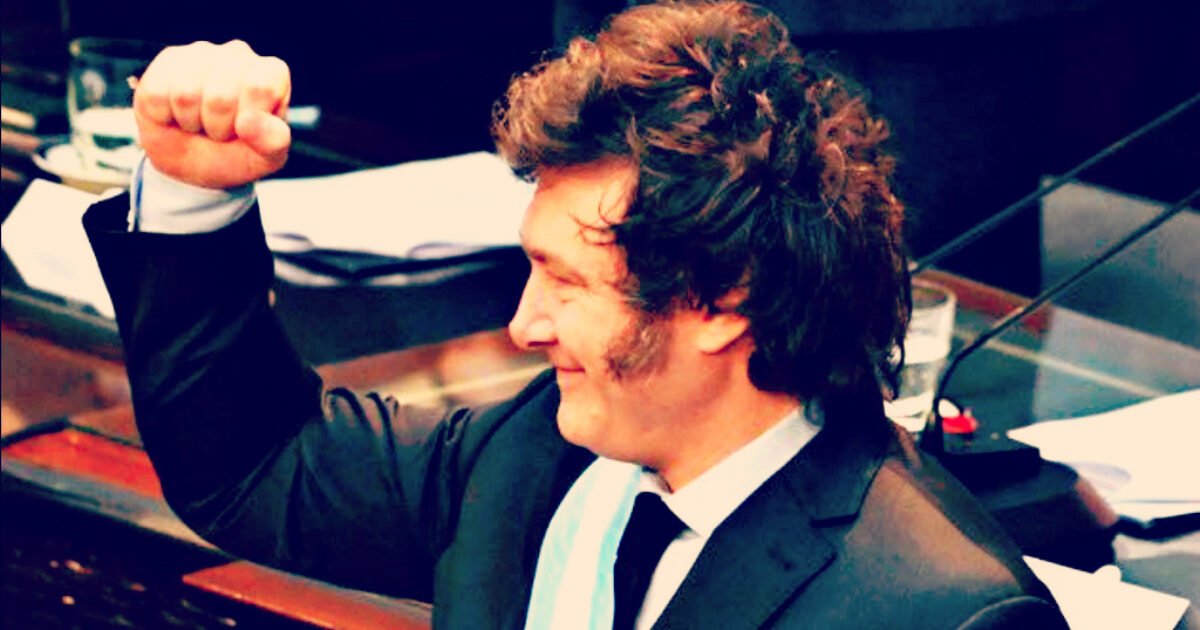
Argentine President Javier Milei has dramatically escalated the long-dormant dispute over the Falkland Islands, using a prime-time televised address to declare that Argentina will “prevail” over a Britain he cast as decadent and in decline — and announcing sanctions against companies drilling for oil in the waters surrounding the islands.
In a speech that drew immediate comparisons to the aggressive rhetoric of the 1982 war, Milei on September 4, 2026, framed the islands — which Argentina calls the Malvinas — as Argentine territory “by history and by right,” and said the winds of geopolitics were now blowing in Buenos Aires’s favor.
“In the world, the winds are blowing favorably for our claim right now,” Milei said, according to a translation from Argentina’s La Nacion. “Recently, President [Donald] Trump announced that the United States is re-evaluating its historic position regarding the Malvinas.”
Milei’s address came just one day after Trump hinted he would not help defend Britain if Argentina moved on the islands — a remark that has sent shockwaves through London and emboldened Argentine nationalists.
Sanctions and a New Military Base
The Argentine leader announced that his government would sanction companies involved in oil exploration off the Falklands, a direct challenge to the British-backed “Sea Lion” project in the North Falkland Basin. He also unveiled plans for a new military base in Tierra del Fuego, part of what he described as Argentina’s growing strategic alliance with Washington.
In his address, Milei painted a stark contrast between the two nations. Britain, he argued, is mired in migratory, demographic, and economic crises that are “difficult to solve.”
“It is clear that they are in decline. However, Argentina is flourishing, and it will prevail,” he said, according to the broadcast.
Milei’s framing of Argentina as a rising power was a key theme. “Argentina is a country with natural resources, in a position of geographic strategic relevance that is not affected by uncontrolled immigration, the violence this brings, and the problems of national security that today stalk Europe,” he said.
From Soccer Miracle to Sovereignty Push
According to La Nacion, Milei’s speech marked a striking return to the “classic line of Argentine diplomacy” on the Malvinas — a cause that had lain dormant until a Lionel Messi-led World Cup victory, which the paper described as “the last miracle” that reignited the national cause about six weeks earlier.
The Argentine paper noted that Milei’s position now brings him closer to the stance once championed by former President Cristina Kirchner, a political rival. But it added that Milei holds a card Kirchner never had: the possibility of U.S. support.

“Milei’s strategic commitment to the alliance with Donald Trump yields a very clear fruit,” La Nacion reported. “In the government’s view, Trump’s nods about a possible change in the US position on the Malvinas are the reflection of a greater change at the geopolitical level: a revaluation of the South Atlantic and Argentina’s role as a reliable ally in the face of a conflict on a global scale.”
UK Politics Rocked
The fallout in London was immediate. The British opposition seized on Milei’s remarks to accuse the Labour government of Prime Minister Andy Burnham of projecting weakness, pointing to the recent handover of the Chagos Islands to Mauritius as a precedent that may have encouraged Buenos Aires.
“The national broadcast in which President Javier Milei said that there are ‘winds of change’ favorable to Argentina’s claim to the Falkland Islands not only revived the dispute with the United Kingdom,” reported La Nacion. “It also unleashed a strong political internal in London and once again put under the magnifying glass a precedent that Argentina has been closely following for years.”
The Chagos transfer, agreed by the UK government despite strong objections from some Conservatives, has been cited by Argentine officials as evidence that Britain’s resolve over its remaining overseas territories may be weakening. The opposition now argues that Burnham’s decision emboldened Milei to act.
A Changed Geopolitical Landscape
Milei’s gambit is being watched closely by military analysts. Sky News aired analysis from military expert Sean Bell, who noted that Britain’s ability to retake the islands in 1982 was a matter of distance, logistics, and will — all of which may be tested again if tensions continue to rise.
But the key question, according to La Nacion, is whether the current discord between Washington and London is a permanent rift or a temporary spat. “The question is whether today’s discord will not end in a sudden reconciliation, as often happens when Trump is involved,” the paper noted.
Trump’s own remarks have been pointed. At an event this week, the former president reminded Britain that it had “abandoned America during the Iran War” — a reference to a conflict that has strained transatlantic ties — and suggested the U.S. might not rush to Britain’s defense in the South Atlantic.
For Milei, who has staked his presidency on a close alignment with Trump, the timing is convenient. His speech was calculated to project strength at home and abroad, casting himself as the leader who will restore Argentine pride and reclaim what he calls a stolen territory.
“If we allow it, we create incentive for the British govt to DEEPEN its occupation,” Milei said in a post on social media, referring to the Sea Lion oil project.
Historians may indeed look back on September 4, 2026, as the day the Second Falkland War began — or the day Argentina made its boldest move yet without firing a shot. For now, the world watches to see whether Trump’s hints become policy, and whether London’s crisis management can prevent a confrontation that many thought was consigned to history.
Source: www.thegatewaypundit.com — https://www.thegatewaypundit.com/2026/09/heading-war-javier-milei-makes-his-play-falklands/