
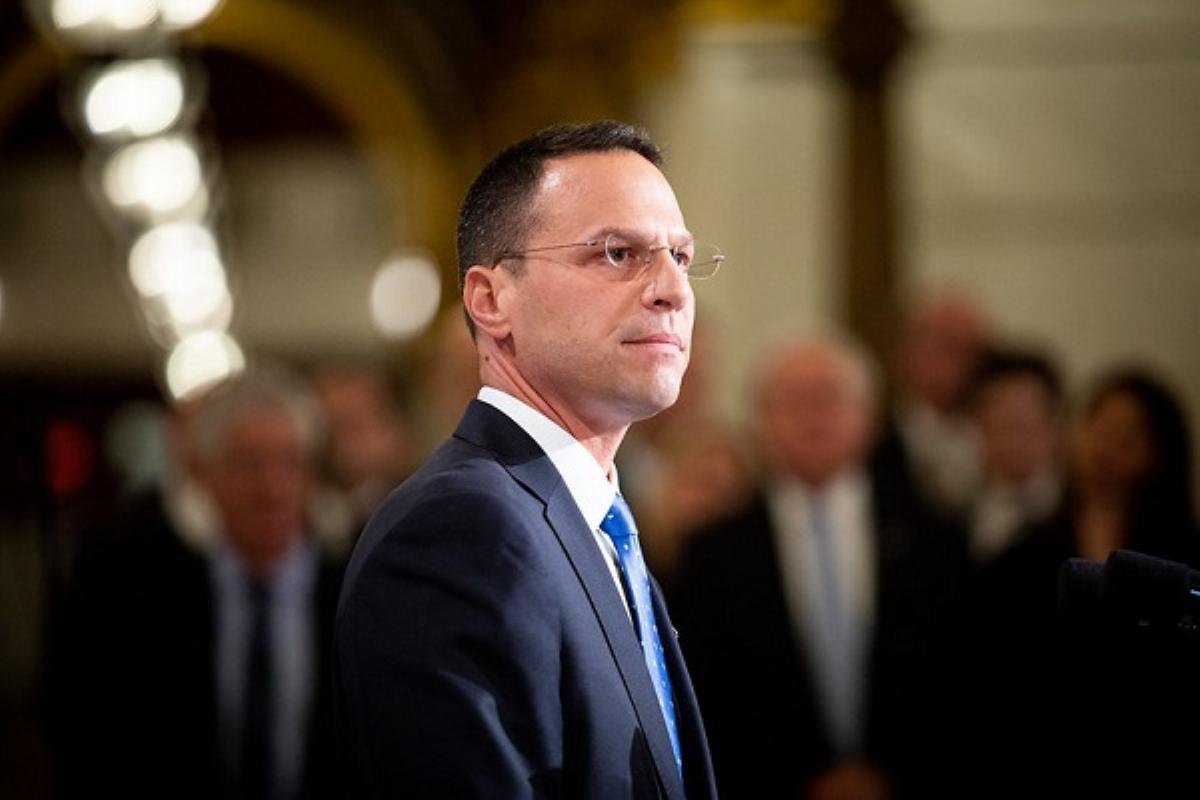
When Pennsylvania Gov. Josh Shapiro’s team announced this month that the state had attracted nearly $43 billion in private investment and almost 29,000 new jobs, it fit neatly into the governor’s well-worn brand slogan: “Get Stuff Done.”
But according to a critical analysis from the conservative outlet American Thinker, those headline numbers may be more about political image than tangible economic reality — a gap that carries weight as Shapiro is frequently floated as a possible Democratic presidential candidate for 2028.
The piece, written by Dave Ball, argues that Shapiro’s impressive-sounding cumulative totals conflate actual accomplishments with future promises, speculative projects, and announcements that may never materialize. Ball, who previously dubbed Shapiro the “Hologram Candidate,” contends that nothing in the governor’s record since has proved the image has become substance.
What the numbers actually include
Ball’s central critique is that the administration’s job and investment figures mix several very different categories: genuine completed projects, developments under active construction, credible but future commitments, “paper projects” lacking financing or permits, and even projects that were later canceled or downsized.
The discrepancy between announcement and reality is stark when the timeline is examined. Earlier this year, Shapiro’s team claimed roughly $35 billion in investment and 18,000 jobs. By July, that had grown to $41 billion and 24,000 jobs. Then, after a $1.2 billion Chobani announcement on September 1, the job total neared 27,000. Two days later, a Burlington Stores announcement pushed it to nearly 29,000.
But as Ball notes, Pennsylvania didn’t suddenly put thousands of people to work in a matter of days. Chobani’s 900 jobs and Burlington’s 2,000 are projected to be created over five years. They don’t exist yet — only the statistic does.
“The jobs do not yet exist. Only the statistic does,” Ball writes.
The column argues that once promised investment and jobs are added to Shapiro’s totals, they are never subtracted when a project shrinks or vanishes entirely. A voter hearing “$43 billion invested” would reasonably assume that money has already flowed into the state and that nearly 29,000 Pennsylvanians have started new jobs — not that the figures include corporate commitments stretching years into the future and projects awaiting approval.
The Amazon data center flip-flop
Ball points to Pennsylvania’s rush into artificial intelligence data centers as a particularly revealing test of the pattern.

In June 2025, Shapiro announced he had “secured” Amazon’s planned $20 billion data center investment in Pennsylvania — a single future commitment representing nearly half of all the private investment Shapiro now claims credit for attracting.
But then data centers became politically troublesome. In August, according to the column, Shapiro removed AI data centers from his Fast Track permitting program and imposed new restrictions. He warned that of more than 100 proposals being discussed, most were “completely speculative” and many would never be built — some lacking financing, electricity, or even a technology company committed to use the facility.
Shapiro also acknowledged at the time that no AI data centers were then operating in Pennsylvania, and only five had obtained permits for their first phase.
Ball’s critique: when data centers were politically attractive, their future investment was used to demonstrate that Shapiro “Gets Stuff Done.” Now he “Gets Stuff Done” by protecting communities from speculative data center development — yet the investment remains on the résumé either way.
“You cannot count the promise as an accomplishment on Monday and warn about its undesirable consequences on Tuesday,” Ball writes.
Credit where it’s due — and where it isn’t
Notably, the column doesn’t dismiss Shapiro’s record wholesale. It acknowledges genuine accomplishments, most prominently the rapid reopening of Interstate 95 after its 2023 collapse.
Ball credits Shapiro for declaring an emergency and demanding rapid action on the project. But he also notes the actual work was performed by PennDOT, engineers, contractors, and construction crews — often after normal bidding, permitting, and bureaucratic procedures were waived or accelerated. The lesson of I-95, Ball argues, is how quickly Pennsylvania can get things done when government gets out of the way, Shapiro included.
The column also suggests the same tendency to treat inputs as accomplishments appears in his approach to government spending. Spending is routinely described as “investment,” increased education appropriations become an “education accomplishment,” and grant announcements are framed as economic development. But, Ball asks, the real question is whether students actually become better educated or whether a grant recipient ultimately operates, employs people, and produces something.
Poll numbers and the hologram
Shapiro’s persistent popularity in polls might seem to undermine the “hologram” critique — if voters believed the record was hollow, wouldn’t his approval ratings suffer?
Ball argues the opposite: the polling may actually demonstrate how successfully the image has been constructed and maintained.
“A poll can accurately measure an inaccurately informed electorate,” he writes.
If Pennsylvania voters have repeatedly been told that Shapiro attracted tens of billions in investment and created tens of thousands of jobs, and if those totals include money not yet invested, jobs not yet created, and projects that may never be built, then respondents may be evaluating the record as presented to them rather than the record that exists.
That, Ball says, is not evidence the hologram has disappeared — it may simply show how well the image has been engineered.
Maintaining that image requires considerable resources. Shapiro has amassed an enormous political treasury funding consultants, digital media, travel, and political infrastructure. His administration also maintains a substantial taxpayer-funded communications operation. While government communications isn’t a campaign expenditure, Ball argues its political value can be enormous: taxpayers fund the announcement, the administration packages the accomplishment, the media distribute it, and the political operation inherits the image.
Bottom line for voters
For a governor widely believed to harbor presidential ambitions, the political value of such announcements is immediate — but the economic value may be years away, or may never arrive.
“Pennsylvanians cannot spend an investment that has not been made. They cannot work at jobs that have not been created. Communities cannot collect taxes from facilities that have not been built,” Ball writes. “And taxpayers receive little benefit from subsidizing projects that exist primarily as announcements of what might happen years from now.”
The column is, of course, a conservative critique of a Democratic governor — and Shapiro’s defenders would likely counter that touting future investments is standard practice in economic development, that every state counts announced projects this way, and that the cumulative figures reflect genuine momentum in Pennsylvania’s economy.
But the core question Ball raises is a fair one for voters in any state, and especially for a governor with presidential ambitions: at what point does an announcement become an accomplishment?
Source: www.americanthinker.com — https://www.americanthinker.com/blog/2026/09/is-josh-shapiro-really-presidential-material/