
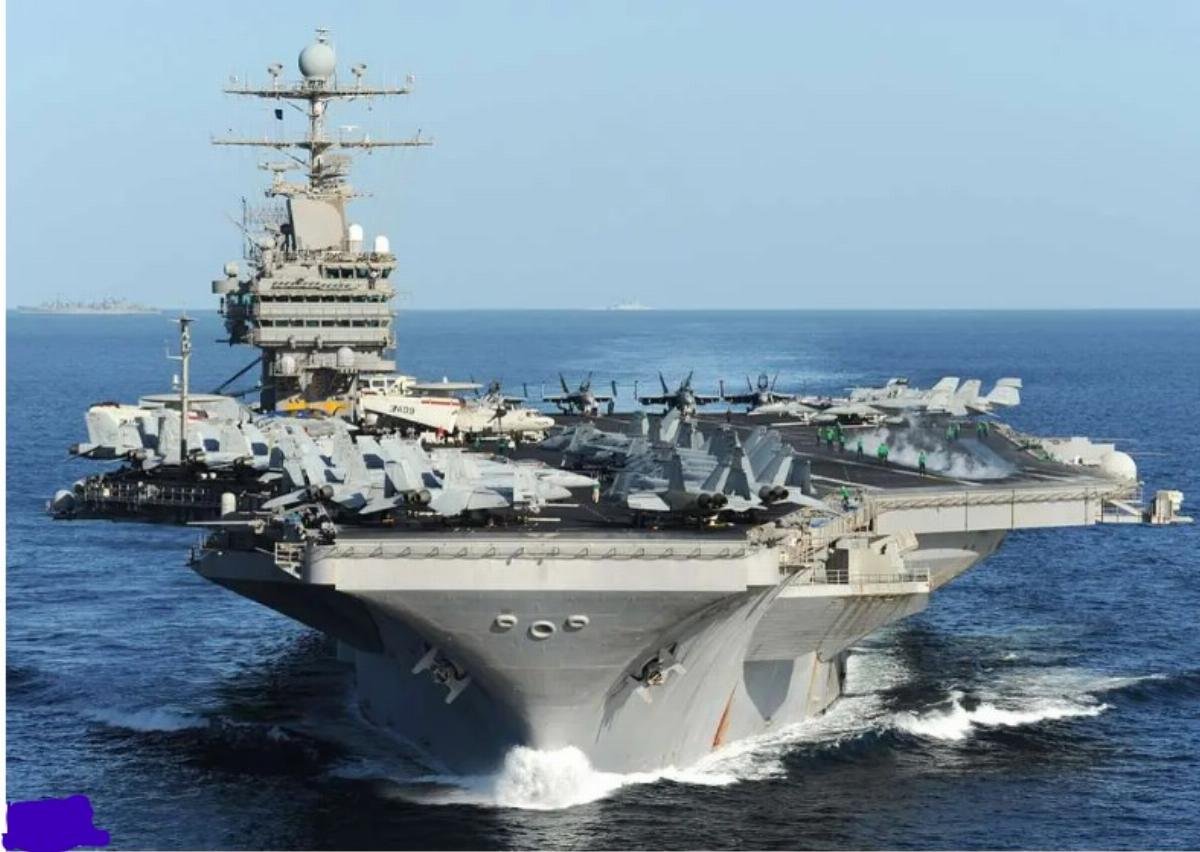
The USS Abraham Lincoln is heading home after one of the most demanding and successful combat deployments in recent U.S. naval history, according to a report from American Thinker. The aircraft carrier and its strike group spent 264 consecutive days at sea in harm’s way, conducting strikes into Iranian territory after hostilities began on Feb. 28, 2026.
Carrier Air Wing 9, embarked on the Lincoln, flew more than 10,000 total sorties during the mission and dropped approximately 1.5 million pounds of weapons on military targets. The strike group also intercepted and shot down more than 200 Iranian drones, while ships and aircraft enforced a large naval blockade in the Arabian Sea and Strait of Hormuz that forced the redirection of over 120 commercial vessels to ensure compliance with U.S. sanctions and wartime restrictions.
Remarkably, the Navy reported no ship was hit and no aircraft was lost, despite Iran’s continued ability to launch missiles and drones in defensive combat even after its navy was sunk and U.S. air forces achieved what the report describes as “feet dry air dominance.” The author, Ed Timperlake—a former Naval aviator and Marine F-4 pilot—compares Iran’s residual capability to a wounded poisonous snake that can still strike.
A 21st-century chapter in naval history
The ship, often called “Abe” or “Lincoln,” carries the motto “Shall Not Perish,” a nod to President Abraham Lincoln. Timperlake writes that the sailors and Marines aboard have “written a new 21st-century historic combat engagement chapter in the long lineage of America’s fighting Navy,” and he predicts the operation will be studied for generations by sea service warriors.
The strike group’s success was not limited to air power. The report highlights the role of the Silent Service, noting that the U.S. Naval Institute identified the attack submarine USS Charlotte (SSN-766) as the vessel that sank the IEIS Dena, an Iranian Moudge-class frigate commissioned in 2021.
Homecoming honors and ship locations
The Lincoln will soon make port at Naval Air Station North Island in San Diego, California. Several other ships of the Carrier Strike Group are also leaving station to return to their home ports, according to the report. The USS Frank E. Peterson (DDG-121) and USS Michael Murphy (DDG-121) are home-ported at Pearl Harbor, while the USS Spruance (DDG-111) is heading to San Diego. The cruiser USS Robert Smalls (CG-62) is heading to Yokosuka, Japan.
Timperlake, who served in Vietnam and later flew F-4s with Task Force Delta, expresses special pride in the Marine F-35C squadron nicknamed “The Black Knights,” which traces its lineage to the F-4 Phantom era and was once commanded by Frank E. Peterson. Peterson was the first Black pilot in the U.S. Marine Corps (1952) and the first Black general in the Marine Corps (1979), and he flew over 350 combat missions across the Korean and Vietnam Wars. The destroyer named in his honor bears the crest motto “Into the Tiger’s Jaw,” a phrase Peterson often used.
The author urges Americans to thank sailors and Marines when they make port—”and much more than just words, buy them a beer.”
The deployment, half a world away, underscores the Navy’s ability to project power and sustain operations far from home, according to the report.
Source: www.americanthinker.com — https://www.americanthinker.com/blog/2026/09/the-u-s-s-abraham-lincoln-returns-from-sea-and-has-done-the-u-s-proud/