
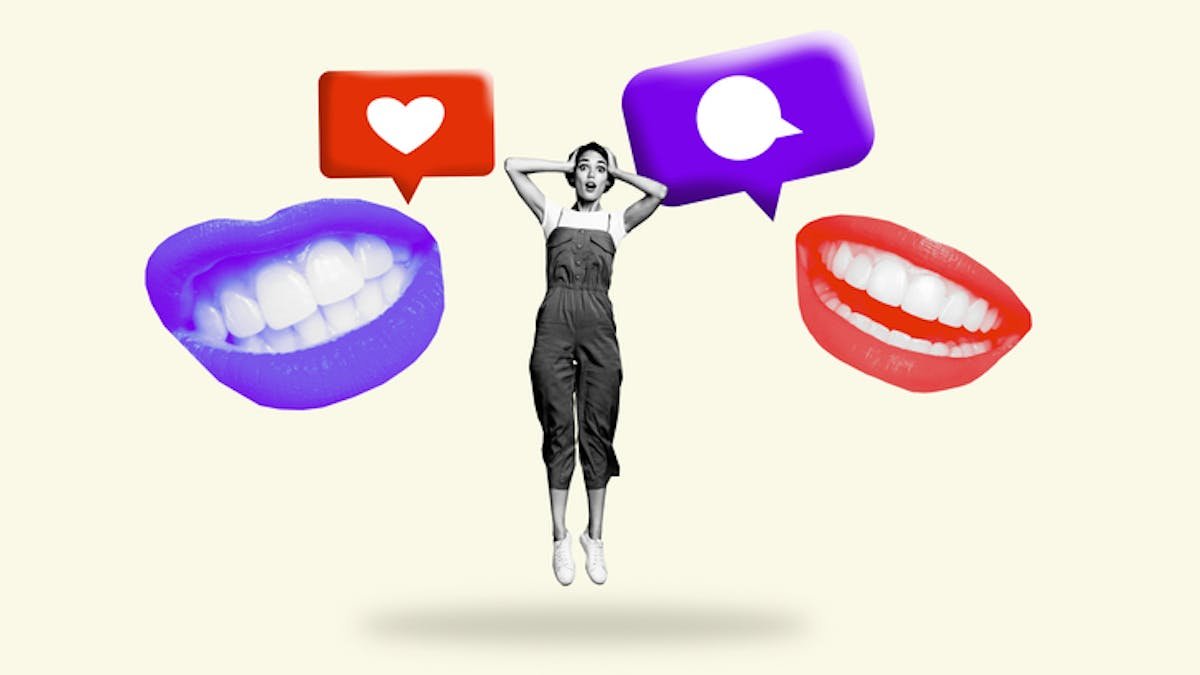
For decades, science fiction writers have sketched out the future—sometimes with uncanny accuracy, sometimes missing the mark entirely. But one theme that keeps recurring is the idea that technology, rather than liberating humanity, might actually be diminishing it. That’s the argument at the heart of a new essay published on The Daily Wire, which contends that the rise of asynchronous communication—texts, DMs, emails—is costing us something fundamental: the art of conversation.
Rich Cromwell, a writer based in Northwest Arkansas, makes the case in “This Could Have Been A Text: The De-Evolution Of Conversation” that our collective slide toward fewer spoken words is not something to celebrate or accept as inevitable. While the change is still relatively subtle—Americans now speak roughly 300 fewer words per day, about 3 minutes’ worth—the trend is most pronounced among Gen Z, suggesting it could accelerate as older generations age out of the workforce and public life.
Cromwell draws a parallel to Kurt Vonnegut’s 1951 short story “The Euphio Question,” in which an inventor discovers a device that broadcasts cosmic signals capable of inducing pure bliss—turning listeners into passive, blissed-out lumps who barely eat, speak, or interact. The story, Cromwell notes, is a cautionary tale about a device that should have been destroyed but instead gets monetized, creating a world of happiness without connection. Smartphones, he argues, are not so different—they keep us entertained, informed, and constantly stimulated, but they may be quietly eroding our capacity for meaningful human exchange.
The effects are visible across multiple fronts: dating has been transformed by swipe-based interfaces, social media has reinforced echo chambers rather than exposing people to differing viewpoints, and office work has become a 24/7 obligation where a workday never truly ends. But the most insidious change, Cromwell suggests, is the reduction in the sheer number of words we speak to one another.

Digital Natives, Analog Angst
Gen Z—the generation that grew up with smartphones in hand and social media as a default—has been hit hardest. They are the cohort that remembers little of the pre-digital world, where a Friday night could mean heading out without any way to be reached instantly. They also bore the brunt of COVID-era policies, spending critical formative years isolated in their rooms, attending classes via Zoom rather than in person.
That isolation, compounded by the ubiquity of earbuds, means many young people are perpetually tuned out from their surroundings. Cromwell, acknowledging his own generational distance, describes himself as “an old man yelling at the clouds,” but he insists the concern is real. His own children have implored him not to strike up conversations with acquaintances in the grocery store—a request he finds telling.
“The smartphone—which replaced the dumb phone, which replaced the landline, which replaced letters and telegraphs—brought us full circle from an invention that allowed us to talk to people in real time into one that allows us to write digital letters.”
Indeed, the evolution of communication technology has traced an arc from synchronous voice—letters and telegrams were asynchronous, but the telephone made real-time conversation possible—back to asynchronous written messages. We now have apps that simulate even older forms, complete with digital pigeons and lost mail, tapping into a nostalgia for a slower, more deliberate pace. But Cromwell warns that this return to written messages is not without its costs.

When ‘OK’ Isn’t Okay
One of the key concerns the essay raises is the inherent inadequacy of the written word. Spoken language carries a wealth of nuance: vocal inflections, body language, facial expressions—the “tells” that signal whether a statement is serious or a joke, whether a speaker is confident or unsure. These cues are lost on a screen.
Cromwell offers a simple example: a teacher asks if a student understands a concept. A typed “yes” conveys certainty. But a verbal “yes?” with an uptick in pitch may actually mean “no, not really.” That kind of subtle signal is essential to effective teaching and learning—and it was lost en masse during remote learning, when students could hide behind mute buttons and chat boxes.
Additionally, written communication invites conflict. With no vocal tone or body language, readers tend to project their own interpretations onto messages. A simple “ok” can be read as dismissive or curt, prompting the rise of “kk” as a softer alternative, and then “okok” among Gen Z as an even more emphatic reassurance. The writer points to a Key & Peele sketch as a comedic illustration of how texting can spiral into hostility—even between friends who are trying to make plans.
The inefficiency of making plans over text is a legitimate gripe. Besides, as Cromwell notes, at least the characters in that sketch were planning to hang out in person—something that itself is becoming rarer.

Less Talk, Less Community
The decline in conversational speech is matched by a decline in shared time. People aren’t talking to their neighbors as much, not spending unstructured hours together, and often their interactions are mediated by screens even when they do gather. Technology is often used “at the wrong time,” Cromwell argues—when it shouldn’t be, and for purposes that don’t enhance human connection.
Ironically, there is a widely shared sentiment that many meetings could have been emails, which suggests that some forms of communication do not warrant spoken words. But the essay distinguishes between pointless meetings and meaningful dialogue. It quotes humorist Dave Barry’s famous line that the word ‘meetings’ explains why the human race will never achieve its full potential—the bloviating and stakeholder-impact-speak is precisely where fewer words would be ideal.
The real danger, Cromwell says, is in losing the habit of true conversation—the kind that conveys every angle and nuance as intended, the kind where people can see and hear each other, where misunderstandings are corrected in real time. That kind of communication builds community and mutual understanding, and it doesn’t happen through screens.
Not All Doom and Gloom
There is a small silver lining: speaking less and reading more could be a corrective, especially for a generation that isn’t scoring well on reading proficiency. But even that may be moot given the rise of voice-to-text and text-to-voice technologies, which enable people to speak without actually speaking, and to ‘write’ without typing—with a robotic intermediary turning one form of communication into another. It’s an odd state of affairs, with people communicating by voice, but through a digital middleman.
Ultimately, the essay concludes that while three fewer minutes of daily talking may not seem catastrophic, it is part of a broader shift. As the world grows older and smaller, technology alone will not keep civilization afloat—citizens must. And that requires genuine communication, of the kind that reveals uncertainty, conveys nuance, and builds trust.
“Gen Z, we’re counting on you here,” Cromwell writes. “You can keep staring, but eventually, the abyss is going to stare back.”
The piece is a meditation on the de-evolution of conversation—a slow drift that may be reshaping the way humans relate to one another, one text at a time.
Source: www.dailywire.com — https://www.dailywire.com/news/this-could-have-been-a-text-the-de-evolution-of-conversation