
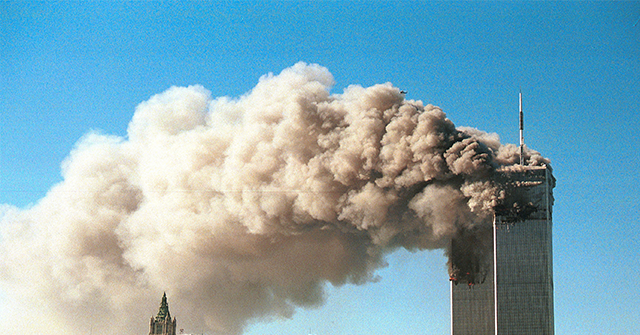
A quarter-century after hijackers turned commercial airliners into missiles, a senior Pentagon counterintelligence official is warning that the same cognitive blind spot the 9/11 Commission famously diagnosed remains the nation’s most dangerous vulnerability — and that America’s adversaries are already exploiting it in ways most officials still refuse to imagine.
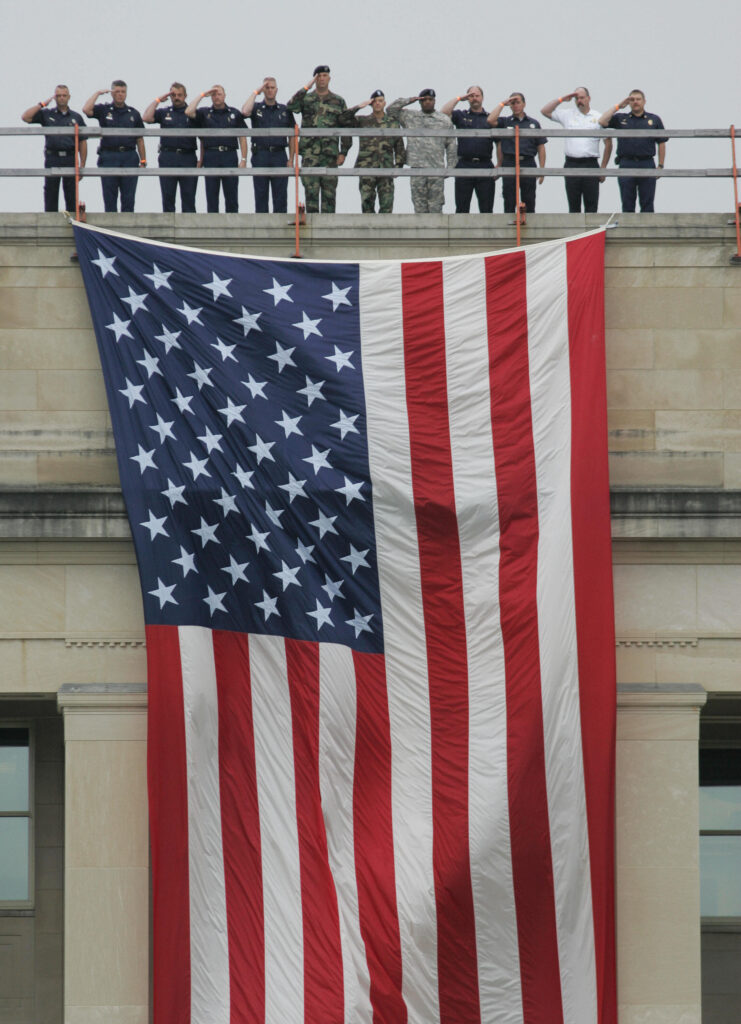
Michael Dulak, the Director of Counterintelligence and Identity Intelligence in the Office of the Under Secretary of War for Intelligence and Security, made the argument in an exclusive essay for Breitbart News published on the 25th anniversary of the September 11 attacks, as he joined fellow service members, civilians and senior leaders at a Pentagon Center Courtyard observance ceremony. In the piece, Dulak calls for adding an eleventh commandment to the counterintelligence profession’s foundational doctrine: never underestimate the audacity of the enemy.
The ‘Failure of Imagination’ as Doctrine
Dulak points back to the 9/11 Commission’s central conclusion — that the country’s greatest weakness was not a lack of raw intelligence but a profound failure of imagination — and argues it should be read today as a standing warning rather than a historical footnote. The attacks, he writes, showed how enemies operate comfortably within “the sanctuary of the unthinkable,” moving through spaces that conventional thinking leaves unguarded.
His framework builds on the “Ten Commandments of Counterintelligence” laid out by former CIA Chief of Counterintelligence James Olson in his book To Catch a Spy. Dulak describes Olson’s directives — including “Be Offensive,” “Know Your History” and “Never Give Up” — as irrefutable doctrine forged from both victories and devastating losses. But in Dulak’s telling, the modern threat environment demands something more: a willingness to anticipate that adversaries will cross lines American planners assume are too brazen, too costly or too far-fetched to attempt.
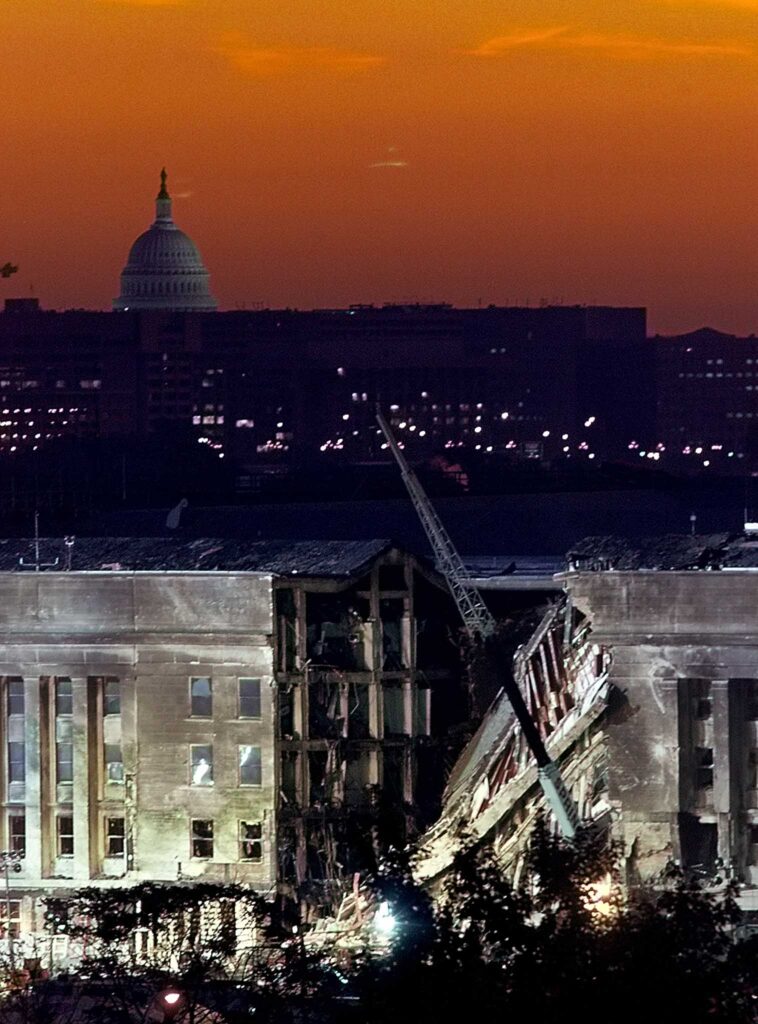
That blind spot, he argues, is not a data problem. It is a failure of will and perception. “We simply cannot believe the enemy would go that far,” he writes, describing how trained professionals who follow strict verification standards are nonetheless repeatedly blindsided because they cannot conceive of unprecedented threats.
Lessons From Pearl Harbor to Hanssen
Dulak traces the pattern across decades of American intelligence history. In 1941, U.S. officials failed to detect Japanese consulate-based espionage operations in Honolulu that fed valuable intelligence into the planning of the Pearl Harbor attack. During the Manhattan Project, counterintelligence focused on Axis infiltrators and failed to anticipate that a wartime ally would recruit atomic spies — allowing ideologically motivated physicists like Klaus Fuchs and Theodore Hall to bypass security frameworks undetected.
Then, in February 2001, the U.S. counterintelligence community learned that FBI Special Agent Robert Hanssen had spent two decades exploiting fundamental flaws in the Bureau’s security architecture. The FBI’s internal trust system, Dulak notes, rested on an assumption that proved catastrophic: that one of its own counterintelligence officers would never betray the country to Russia and the former Soviet Union for pure financial greed. Seven months later came the September 11 attacks, which the Commission report attributed in part to a collective failure of imagination and a breakdown in interagency communication.
In each case, Dulak writes, the problem was not that warning signs were absent. It was that officials could not envision a threat that ran counter to their assumptions about how the world worked.
Mirror-Imaging and the ‘Sanctuary of the Unthinkable’
The core vulnerability, Dulak argues, is “mirror-imaging” — the assumption that an adversary’s risk calculus mirrors our own. American planners implicitly rely on Western norms to constrain their thinking, asking whether an operation would be too resource-intensive or too difficult. Adversaries, he says, do not play by those rules. By assuming they will behave “reasonably,” the United States creates the very sanctuary in which the enemy operates, exploiting the gaps where American logic dictates an action is too risky or brazen to try.
Chief among those gaps, in Dulak’s assessment, are the legal and civic frameworks of an open society. He points to the strategic weaponization of U.S. military naturalization. Under Executive Order 13269, non-citizens serving in the armed forces during designated conflicts are eligible for expedited naturalization — a policy that rightly rewards honorable service for those with no ill intent but, in Dulak’s view, presents a glaring vulnerability. He asks counterintelligence professionals to imagine a foreign intelligence service deliberately dispatching a trained operative to enlist, rapidly acquire citizenship, secure a security clearance and manufacture a well-placed spy or saboteur.
Even more chilling, he writes, is the prospect of a generational sleeper agent. Dulak notes that the Supreme Court recently reaffirmed that children born in the United States to parents temporarily or unlawfully present are citizens at birth under the Fourteenth Amendment. For foreign intelligence services, he argues, that is a constitutionally protected charter for long-term infiltration. He sketches a scenario in which a pregnant proxy of a foreign intelligence service arrives to give birth on U.S. soil; the child, a U.S. citizen, is immediately relocated abroad to be raised and indoctrinated; two decades later, holding an unassailable U.S. passport and no derogatory database footprint, the person returns to attend a U.S. university, earn a STEM degree and enter the defense industrial base or the intelligence community. It is, Dulak writes, the logical extension of a committed adversary willing to patiently weaponize the Constitution over decades.
Elevating the ‘Improbable’ to Actionable Threat
To counter that asymmetry, Dulak calls on counterintelligence professionals to treat “improbable” scenarios as actionable hypotheses. If an operation seems too complex or too long-term for an enemy to execute, he writes, it must immediately be elevated as a viable threat vector.
Complacency and hubris, in his view, are the ultimate allies of audacity. When a nation believes its perimeters are impenetrable and its laws immune to weaponization, it stops looking for the unconventional threat. The frontline, Dulak adds, is no longer only a battlefield overseas — it runs through the Pentagon, every U.S. military installation, and the direct messages and social media feeds of every service member, civilian and contractor, where foreign adversaries use sophisticated online targeting and social engineering to extract data, feed media leaks and spark unauthorized disclosures.
The essay carries a standard disclaimer noting that the views expressed are solely those of the author and do not reflect the official policy or position of any government agency. Dulak, who has more than four decades of counterintelligence experience, frames the piece less as a policy proposal than as a warning: remembrance on this anniversary must be coupled with renewed vigilance, and the nation must actively imagine the worst-case scenario, because its adversaries are already busy planning it.
Source: www.breitbart.com — https://www.breitbart.com/politics/2026/09/11/exclusive-michael-dulak-reframing-the-9-11-failure-of-imagination-25-years-later/
Source: www.breitbart.com
Related coverage
- French Novelist Michel Houellebecq Under Investigation for Alleged Hate Speech Over Islam Comments
- Indonesia Quake Kills 38, Collapses Buildings as Tsunami Warning Lifted
- Young Apprentice Jockey Izzy Neale Dies After Tragic Mid-Race Fall in Australia
- Raskin: Impeaching Trump Again ‘Not a Taboo’ If Democrats Retake House