
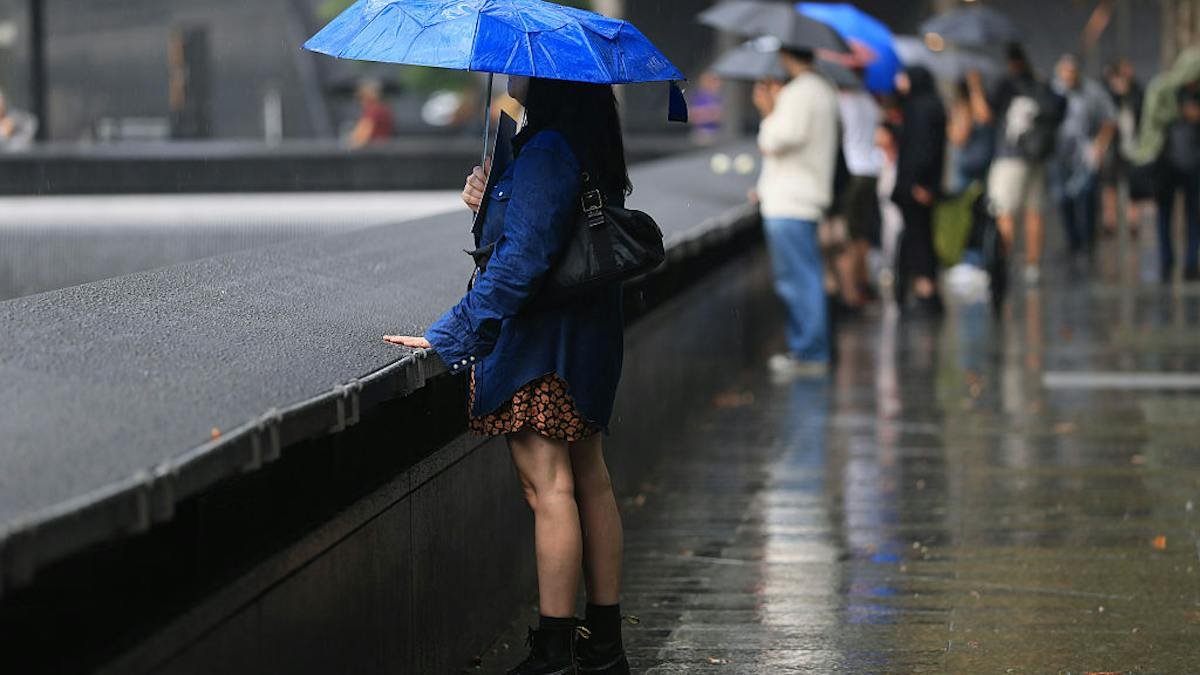
As the 25th anniversary of the September 11 attacks approaches, roughly 100 million Americans were not yet born when the Twin Towers fell. One of them, a writer for The Daily Wire, is publicly wrestling with what the phrase “Never Forget” can possibly mean for a generation with no firsthand memory of that day.
In a first-person essay published by the outlet, the writer — who covered an event in downtown New York this past Tuesday — describes arriving early and deciding to visit Ground Zero for the first time in his life. The walk north from the subway unfolded on a hot, clear September Tuesday, conditions he notes mirror the weather 25 years ago. He passed children playing basketball in a park, taking in the last of summer before school resumed, the new World Trade Center visible in the distance.
Then, he writes, the skyline broke — an irregular open space where the towers once stood. He put his blazer back on before approaching, describing a feeling of dread and reverence. A tree with a wreath stood in front, surrounded by a low fence covered in notes from families and visitors bearing the same promise: “Never forget.” Another wreath lay at the base of the tower, flanked by posters of fallen officers.
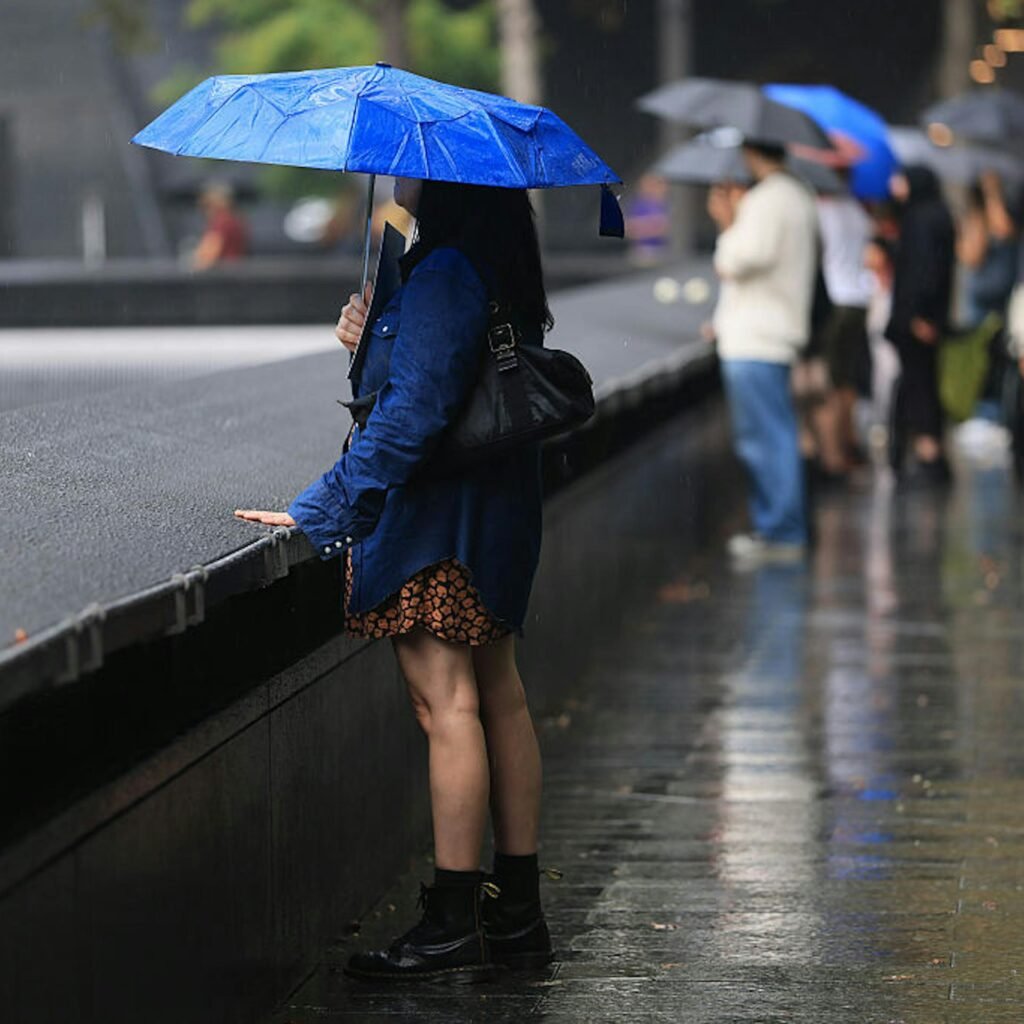
It was there, amid the memorial’s solemnity, that the writer noticed “an entirely different crowd” — visitors taking selfies. That juxtaposition, he writes, led him to what he considers an answer to the question his generation keeps asking.
A Family Connection to the Day
The essay grounds its reflection in personal history. The writer’s father worked in an office in downtown Manhattan, a few blocks from the Twin Towers. Only recently did the son ask his father to recount that morning.
According to the essay, the father was beginning his commute when the first plane struck the North Tower. Like many others, he initially assumed it was a freak accident — a small plane making a low pass before heading to the airport. He decided to stop at the office in midtown instead, expecting the downtown subway to be a mess. By the time he exited the train in midtown, the second plane had hit, and it was clear the nation was under attack.

After the towers fell, the father walked back to the family’s apartment, retrieved his camcorder, and filmed people along Riverside Drive, sitting in the sunlight, watching in horror as ambulance after ambulance rushed downtown while smoke rose against a blue sky.
His office building would later be the last structure torn down in the wake of the attack. The only items recovered, the writer says, were a small ceramic heart bearing his sister’s footprints and a cookie jar she and his brother had decorated for Father’s Day.
Monuments and the Question of Inheritance
The heart of the essay turns on a question the writer poses to his peers: Can something that happened to your fellow Americans be understood as something that happened to your parents — and are you part of the same story?
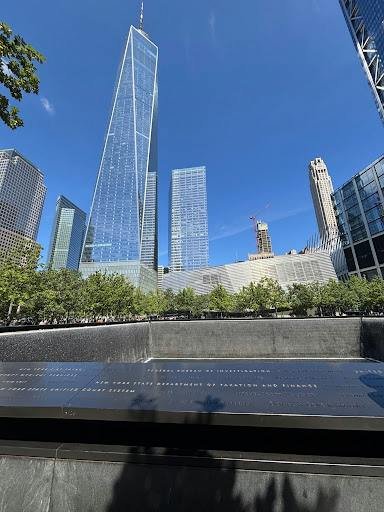
He argues that monuments and memorials exist to transmit meaning and inspire reflection in later generations, not to serve as backdrops for frivolity. His generation, he writes, has the agency to choose whether to be “a selfie taker or someone who links themselves with the broader story.”
To illustrate, the writer reaches for two traditions. He points to the Jewish practice, maintained for thousands of years, in which each generation commemorates the Exodus with the injunction to view themselves as though they personally left Egypt. He also cites the American Founding, noting that Benjamin Franklin proposed an image of Moses extending his hands over the Red Sea with Pharaoh drowning — paired with the motto “Rebellion to Tyrants is Obedience to God” — for the official Great Seal of the United States.
The essay invokes the biblical account in Joshua, in which the Israelites erect a stone monument after crossing the Jordan so that future children will ask, “What is the meaning of those stones?” and be told the story of their deliverance. For the writer, that model — memory transmitted through the questions of the young and the answers of their elders — offers a way to remember events one never experienced.
Leaving the memorial, he writes that he took a symbolic step backward before walking away, a gesture he associates with the reverence Orthodox Jews show when departing the Temple Mount. “Today there are some 100 million Americans who were not alive to see the Towers fall,” he writes. “I am one of them; but for me, at least, I have come to learn what it means to ‘Never Forget.'”
The piece arrives as the country marks a quarter-century since the attacks, a milestone that has sharpened broader conversations about how national memory is carried forward once direct witnesses grow fewer. The writer’s challenge to his own cohort — to engage more meaningfully with memorials than a quick photo — reflects a debate playing out at commemorative sites across the country, where solemnity and tourism have long coexisted uneasily.
Source: www.dailywire.com — https://www.dailywire.com/news/never-forget-for-the-generation-born-after-9-11