
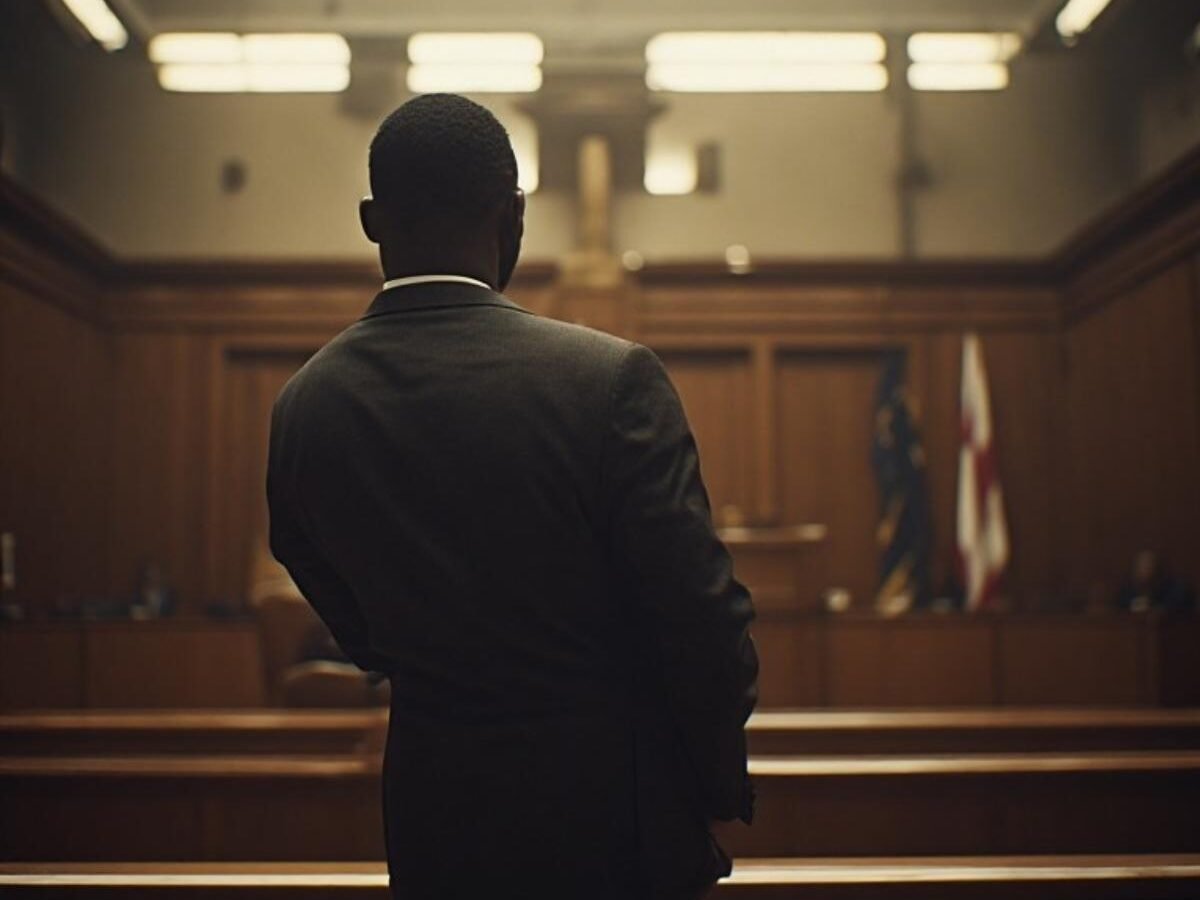
The lone holdout juror in the Lindsay Clancy trial sat down with Gayle King on CBS Mornings, and in an exchange that American Thinker’s J.R. Dunn calls one of the most extraordinary he’s ever seen, King methodically extracted a detail that the surrounding media ecosystem had apparently not anticipated: the juror was Black.
King, according to Dunn’s account, asked whether the juror was a “person of color,” then whether he was a man, and then — in halting fashion — whether he was, in effect, the man the audience assumed. When the juror answered yes, King reportedly stared, then said in a subdued tone that she would have to sit with that for a moment.
For Dunn, the significance lies less in King’s reaction than in what it reveals about how the case had been framed. The working assumption across much of the left-leaning press, he writes, was that the holdout was a white man — “a throwback, some kind of Christian, maybe even MAGA.” Dunn notes pointedly that the three jurors interviewed by NBC made no reference at all to the holdout’s race, a silence that in his view helped the stereotype survive longer than it otherwise might have.
The Juror’s Decision to Stay Quiet
The holdout has since chosen to keep a low profile. Dunn doesn’t blame him. “The left may not be as lethal as the old KKK,” he writes, “but they are certainly as vicious.” That assessment frames his broader argument: that the juror’s reward for independent judgment has been an attempt to dig through his personal life in public.
That attempt, per Dunn, came from NBC Boston, which he says published an “investigative report” that, without naming the juror, surfaced a dismissed 2021 assault case, a divorce, and a restraining order obtained by a nephew. Dunn contends the lack of detail makes it impossible to hear both sides or for the juror to mount any defense — turning what NBC calls an investigation into what he calls doxxing.
It is worth being clear about what this piece is and isn’t. Dunn is writing an opinion column, and his characterizations — of the left, of legacy media, of the juror’s motives — are his own. The underlying facts he cites are what was aired on CBS Mornings and what NBC Boston broadcast; readers who want the full record on those segments should go to those broadcasts directly. What Dunn offers is an argument about how those facts have been received.
What the Moment Means for the Left’s Long Game
The argument is not narrow. Dunn casts the episode as part of a larger failure by the left, one he says will torpedo a long-running project aimed at making Black Americans a dependable bloc of left-wing voters. His phrasing is blunt, and some readers will find it uncomfortable: for generations, he writes, one of the few luxuries Black Americans possessed was to think their own thoughts and do as they pleased — and that is precisely what the female leftist jurors witnessed in their colleague and could not process.
Whether one accepts that framing or not, the dynamic Dunn describes is real enough to have surfaced in the trial’s immediate aftermath: a juror whose conduct could not be slotted into the expected categories, and a media apparatus that had built its coverage around those categories. Dunn’s point is that the mismatch has been destabilizing for the people who expected the opposite outcome.

He also flags a less discussed wrinkle: that Lindsay Clancy’s attorney, Kevin Reddington, “actually got up on his hind legs” and asked the judge to take legal action against the holdout juror. Dunn treats that request as notable in its own right — a defense team effectively seeking consequences for a juror’s vote.
A Midterm Opening, If Anyone Takes It
Dunn’s column lands during what he describes as a hard-fought midterm campaign, and he makes a direct political ask: that the GOP reach out to Black voters. The question he poses — “Is that too much to ask?” — carries a note of resignation. He is not optimistic that the party, which he calls “moribund,” will act on the opportunity he sees.
Still, he predicts the episode is one in a series of self-inflicted wounds by the left, and that more are coming. Eventually, he argues, the accumulated effect will matter — even if the Republican Party as currently constituted is not positioned to capitalize on it.
The column closes on that theme, with Dunn returning to what he treats as the fundamental issue: the ability to speak one’s mind. It is, in his framing, not a partisan slogan but a condition of self-government — and the Clancy holdout, whatever else he is, has become an unexpected test case for it.
For readers who want the primary account of King’s interview, the CBS Mornings segment remains available. For the trial’s legal mechanics and the NBC Boston reporting Dunn criticizes, those sources speak for themselves. What Dunn supplies is the argument about what the reaction to the juror says — about the media, about the left, and, in his view, about the voters both have been counting on.
Source: www.americanthinker.com — https://www.americanthinker.com/blog/2026/09/the-lone-juror-even-braver-than-we-thought/