
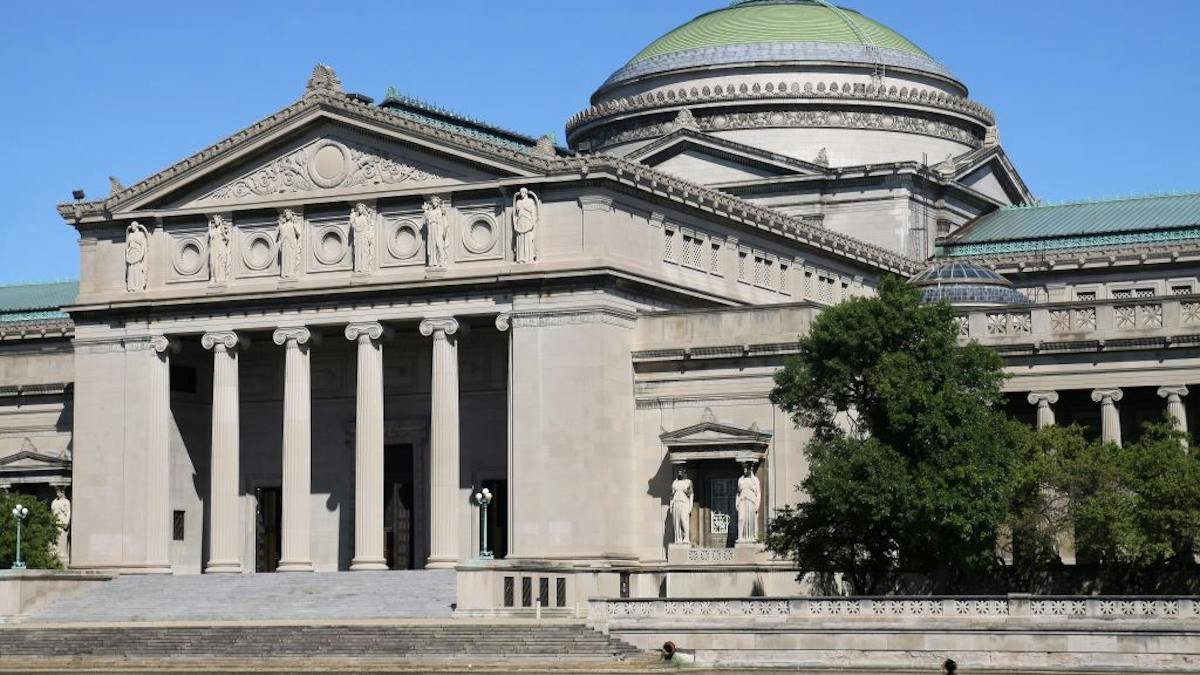
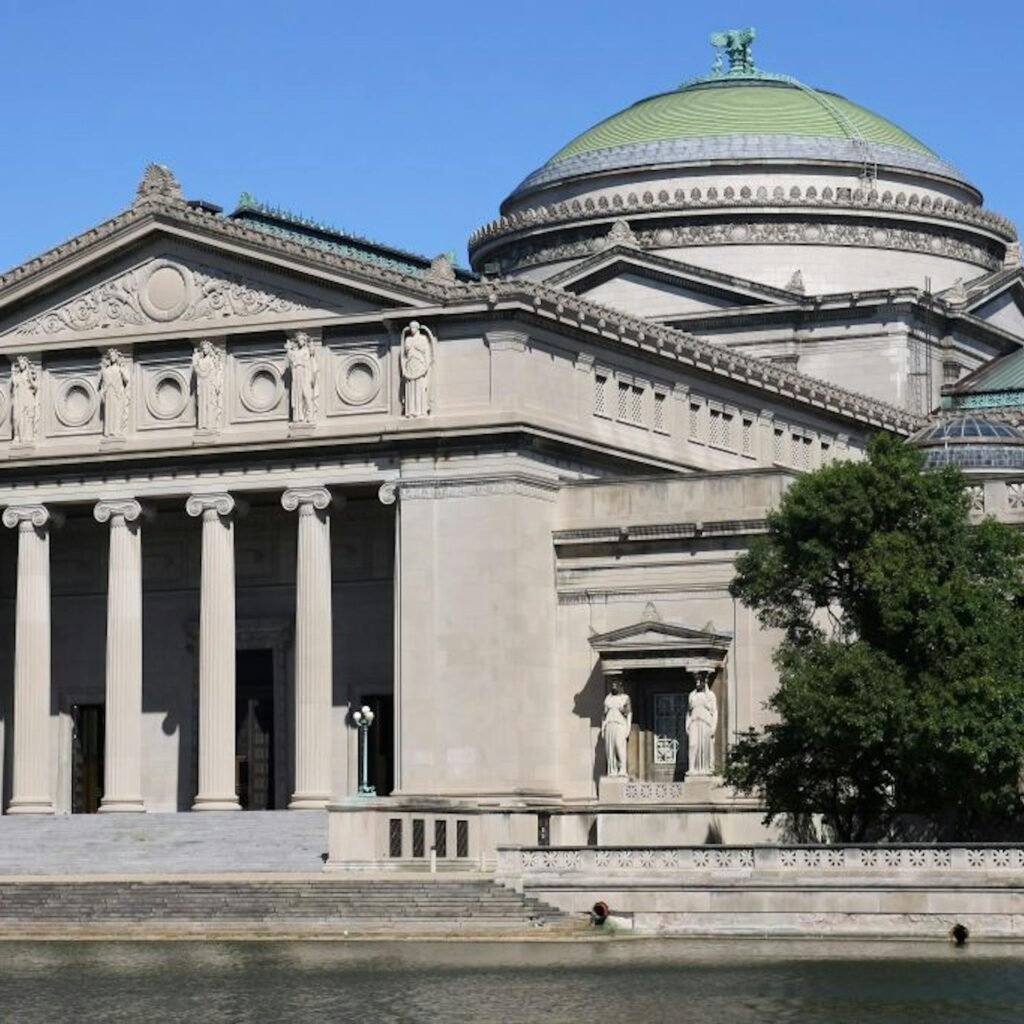
The Museum of Science and Industry in Chicago’s Hyde Park neighborhood has long served as a landmark for the city, greeting drivers entering from Downtown with its sweeping Ionic columns and Roman temple architecture. Designed by Charles Atwood for the 1893 World’s Columbian Exposition, the building has anchored the South Side for more than a century. This past week, the Kenneth C. Griffin Museum of Science and Industry — renamed in 2024 after the billionaire’s acquisition — unveiled a $22 million renovation that critics argue will permanently alter the museum’s historic character, according to reporting by The Daily Wire.
The project includes a new welcome hall, a futuristic-looking lawn, and a glass pavilion that, in the eyes of some longtime residents, appears starkly at odds with the building’s neoclassical design. The Chicago Department of Planning and Development says the redesign will “preserve historic architectural details,” a claim that has not quieted skepticism among those who grew up visiting the museum.

The Access vs. Aesthetics Debate
According to Dr. Chevy Humphrey, the museum’s president and CEO, the renovations are about “accessibility.” Plans call for a café open to non-ticket holders and a long-awaited wheelchair-accessible entrance. The changes, the museum says, build on its goal to create more opportunities for the public to experience the museum for free or at reduced cost.

Critics, however, argue that accessibility and beauty need not be mutually exclusive. The Met in New York, for instance, has added wheelchair ramps that harmonize with its neoclassical architecture. Others suggest the $22 million could have been spent lowering ticket prices rather than reshaping the building’s exterior. As one critic put it, the cultural obsession with “accessibility” has come at the expense of preserving beautiful things.
The renovations have unsettled parts of the Hyde Park community, where the museum — known for its U-505 submarine, captured from Nazi Germany in 1944, and its Fairy Castle — holds deep personal significance. For many, the building is not just a scientific institution but a symbol of shared history and civic pride. The Obama Presidential Center, which opened in Hyde Park earlier this year, drew similar complaints from residents who felt its design clashed with the neighborhood’s architectural heritage.
A Pattern of Demolition?
The dispute reflects a broader tension in American cities: how to modernize beloved institutions without erasing the past. The Daily Wire piece frames the MSI renovation as part of a “space race to destroy the old with an atrocious contemporary structure,” arguing that society has a duty to uphold the artifacts of the past. While the museum maintains that its updates serve a practical purpose, the controversy shows no sign of fading.
For now, the project moves forward, with the Landmarks Commission’s Permit Review Committee having approved the new welcome hall. Whether the glass pavilion will be seen as a thoughtful addition or a scar on a historic facade remains a matter of fierce local debate.
Source: www.dailywire.com — https://www.dailywire.com/news/why-cant-we-leave-beautiful-things-alone