
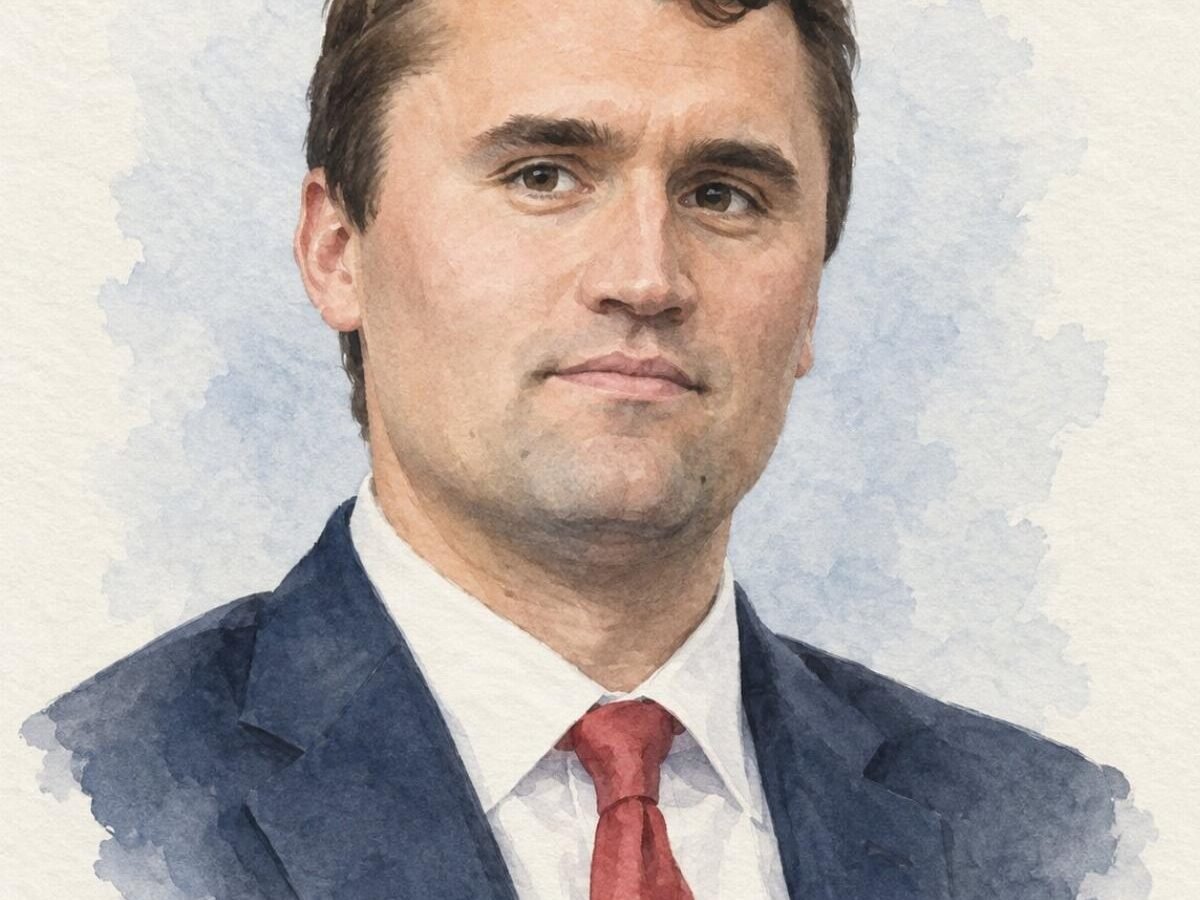
Just over a year after Charlie Kirk was shot and killed at Utah Valley University, the conservative writer Arthur Schaper admits he still can’t quite process it. In an essay for American Thinker marking the anniversary, Schaper recalls dismissing the news of the TPUSA founder’s death as a “fever dream” — a reaction that, he writes, turned out to be a nightmare made real.
Schaper’s piece is part tribute, part lament, and part warning. He isn’t just grieving Kirk. He’s grieving a country that he believes has moved on too easily, and a conservative movement he worries no longer has anyone capable of doing what Kirk did.
Grief, and Its Limits
Schaper notes that his hometown of Torrance, California, flew flags at half-mast in Kirk’s honor — a gesture he credits to the city council and its staff. Still, he bristles at one council member who took the occasion to call Kirk’s comments “controversial.” Even in mourning, he suggests, the political fight never quite stops.
He also points to uglier expressions of that division: people he describes as “demented, perverted” celebrating the killing, including drag performers costumed as Kirk with fake neck wounds. For Schaper, these displays aren’t an outlier — they’re a symptom of a country split so deeply that recrimination once unthinkable among members of either party is now routine.
His diagnosis is partisan and unsparing. Angry Democrats, bitter socialists, and violent communists, he writes, don’t care how many lives are lost or how many cities are destroyed. He claims most Democrats now hold a dim view of the country — and, he adds, a dimmer view still of those who love it.
Why Kirk Mattered to Him
Schaper argues that Kirk was more than a provocateur. He calls him “counter-revolutionary,” a figure who worked to undermine what Schaper describes as a long march through institutions that has poisoned two generations of Americans. Kirk, in this telling, was turning the tide — and the left, he writes, could not abide that.

The essay describes Kirk’s assassination as tragic, evil, and preventable. It also frames Kirk’s enemies as exploiting the shooting to mock his staunch support for the Second Amendment, arguing that his death only proves why law-abiding citizens need firearms even in settings presumed to be safe.
On the motives of the accused shooter, Tyler Robinson, Schaper offers his own interpretation, describing Robinson as a sexually confused man infatuated with another confused man who identified as a woman and an animal. In Schaper’s account, Kirk’s opposition to what he calls sexual degeneracy and his appeal to moral order is what offended him.
Against that backdrop, Schaper paints Kirk as the antidote: married young, father to two small children, expecting a third. After his death, warm videos resurfaced showing what Schaper calls the fatherly character of a godly man. Kirk, he writes, focused on rebuilding the man, the family, and the country — and the left and its followers, in his view, oppose all of it militantly.
What Schaper admires most is Kirk’s approach to argument. He says Kirk spoke to individuals rather than treating them as identities, debated in good faith, tried to understand his opponents before correcting them, and engaged college students and professors with skill. When Kirk spoke, Schaper writes, he was making a case and making a difference — not just filling airtime.
A Movement Short on Successors
That, to Schaper, is precisely what’s missing now. A year on, he complains that commentators and podcasters are less interested in telling the truth than in generating a reaction — harvesting likes, shares, and outrage to crown themselves king of the social media “Dung” Hill. He invokes Jerry Springer, joking that even Springer would have been appalled, though only because he hadn’t figured out how to exploit social media this way himself.
Schaper’s roster of possible heirs is long but qualified. Ben Shapiro, certainly — he notes that right after Kirk’s murder, Shapiro looked into the camera and cursed out those celebrating the killing. Glenn Beck, Steve Crowder, and even Steve Deace could carry the mantle, in his view. But Shapiro is his best bet, citing a long record of sticking to principles and arguing cogently with people who disagree. He credits Crowder, Beck, and Deace with integrity too, but says Shapiro’s appeal to younger audiences could bridge gaps.

Still, Schaper raises practical problems. Shapiro’s growing family is a blessing, he writes, but one that will limit his time reaching the masses. And Shapiro is a commentator, not an organizer — not the way Kirk was.
That distinction matters to Schaper. He credits Kirk’s TPUSA with assembling an unprecedented ground game, working with party leaders and conservative activists, and connecting citizens with technology to walk precincts and make the case for Trump. That combination of organizational muscle and intellectual firepower, he argues, is unmatched. He floats John Doyle as another contender — younger, but lacking name recognition and the trial by fire of large audiences — and asks whether anyone can organize voters, activists, and pundits toward a shared cause, such as electing an improvement on Trump in 2028.
Kirk’s particular gift, Schaper writes, was drawing together disparate interests — not just across left and center but especially within a right divided over immigration, Israel, Islam, government intervention in the economy, and the limits of using force to shape culture. Kirk wrestled with those issues, but never lost the main focus: making America great again and, more importantly, godly again.
A Legacy Under Attack
The spiritual dimension, Schaper insists, cannot be ignored. He cites John Adams’s warning that the Constitution was written for a moral people, and argues that moral center is fracturing while podcast successors revel in the confusion rather than clearing it.
His sharpest criticism is aimed inward at the right. He accuses a bevy of supposed successors of obscuring or dirtying Kirk’s legacy by disparaging his work, misrepresenting his statements, or trying to seize his leadership. Candace Owens, he writes, is the most egregious offender — lying about the circumstances of the assassination, unfairly implicating Erika Kirk, and suggesting she profits from her husband’s death. Schaper calls this evil, echoing commentator Jeremy Boreing.
By contrast, he praises TPUSA as stronger than ever under Erika Kirk, crediting her with grace under fire and leadership that vile opponents had hoped to destroy. A grieving widow, he writes, could have shut the operation down and turned inward. Instead, she serves through her suffering and deserves thanks and praise.
Schaper ends on a note that is less eulogy than alarm: now more than ever, he writes, the ability to speak our minds is crucial to the republic. A year after Kirk’s death, the question of who inherits that voice — and whether anyone can wield it the way he did — remains open.
Source: www.americanthinker.com — https://www.americanthinker.com/articles/2026/09/charlie-kirk-rest-in-peace/