
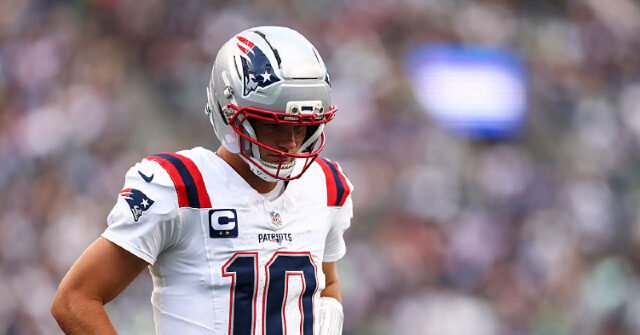
The NFL’s decision to launch its 2026 season on a Wednesday night with a Super Bowl rematch between the Los Angeles Rams and New England Patriots delivered a ratings headache for both the league and NBC, according to figures reported by Breitbart and Front Office Sports.
The kickoff game averaged 25.1 million viewers, an 11 percent decline from the prior year’s opener and the smallest audience for an NFL season opener since 2022. The matchup, which received extensive promotional backing from the league, failed to generate the broad viewership that typically accompanies the NFL’s first game of the year.
What makes the decline particularly striking is the comparison point. Last year’s NFL Kickoff special, a Thursday night game between the Dallas Cowboys and Philadelphia Eagles, had to contend with a 65-minute rain delay — yet still outperformed this year’s Wednesday contest. The weather disruption would normally be expected to suppress viewership, making the year-over-year drop harder for league officials to explain.
Silver Linings in Key Demographics
Despite the overall decline, the game performed well in several metrics that the league and its broadcast partners closely monitor. Among viewers aged 18-49 — the demographic advertisers pay a premium to reach — the Rams-Patriots game drew the largest audience for an NFL season opener since 2021, according to Front Office Sports.
The NFL also reached a milestone that had eluded it for over a decade: the league has now achieved its first four-year run of kickoff games averaging more than 25 million viewers since the 2013-16 stretch, FOS reported.
Regional viewership patterns offered additional context. The home markets of the two participating teams led the way, with Providence, Rhode Island, and Boston ranking first and second. Seattle-Tacoma placed third, while Buffalo — a market that consistently punches above its weight in sports television ratings — came in fourth.
A Scheduling Experiment With More Data to Come
The NFL’s decision to move the opener to Wednesday night represented a departure from the league’s longstanding tradition of staging the season’s first game on Thursday. The Wednesday slot was part of a broader scheduling strategy that has seen the league increasingly spread its games across more nights of the week in an effort to capture additional prime-time audiences.
Whether the softer ratings will discourage the league from continuing that experiment remains an open question. The NFL will get another data point in November, when the Rams are scheduled to face the Green Bay Packers on Thanksgiving Eve — another Wednesday night contest that will test whether the midweek slot can draw audiences comparable to the traditional Thursday opener.
The league has not publicly commented on the ratings figures, and it is unclear whether the Wednesday scheduling decision factored into the decline or whether other variables — including the specific teams involved, the competitiveness of the matchup, or broader shifts in television viewing habits — played a more significant role.
Broadcast Landscape Adds Pressure
The ratings decline arrives at a moment when the NFL and its television partners are navigating a rapidly evolving media environment. Streaming platforms and alternative entertainment options have steadily eroded the audiences of live sporting events across the board, though the NFL has generally proven more resilient than most properties. A double-digit drop for a marquee season-opening event, even with strong demographic performance, is likely to draw scrutiny from network executives and advertisers alike.
NBC, which broadcast the game, invested heavily in promoting the kickoff as a premier television event. The network’s promotional push, combined with the league’s marketing apparatus, typically produces some of the highest-rated programming of the year. That the game still fell short of the previous year’s rain-delayed contest suggests the Wednesday slot may have imposed a ceiling on viewership that promotional spending could not overcome.
The NFL has long been the most dominant force in American television, with its games accounting for a disproportionate share of the most-watched broadcasts each year. Any sign of vulnerability in that position tends to generate significant attention from league owners, network executives, and media analysts who track the sports television economy.
For now, the 25.1 million average for the Rams-Patriots game represents both a warning sign and a puzzle for the league. The demographic strength among younger viewers offers some reassurance that the product remains attractive to the audiences advertisers value most. But the overall decline — and the fact that it came against a comparison point that faced a weather delay — leaves the league with questions to answer as it evaluates whether Wednesday night football has a permanent place on its calendar.
The November Thanksgiving Eve game between the Rams and Packers will provide the next piece of evidence. If that contest also underperforms relative to traditional Thursday openers, the league may face pressure to reconsider its scheduling approach. If it performs strongly, the 2026 kickoff decline could be chalked up to matchup-specific factors rather than a structural problem with midweek football.
Either way, the early returns from the 2026 season have injected an unexpected note of uncertainty into what is typically a celebratory moment for the NFL — the annual kickoff that signals the return of the country’s most popular sport and the beginning of a new television season.
Source: www.breitbart.com — https://www.breitbart.com/sports/2026/09/14/nfl-kickoff-ratings-crash-by-double-digits-lowest-since-2022/