
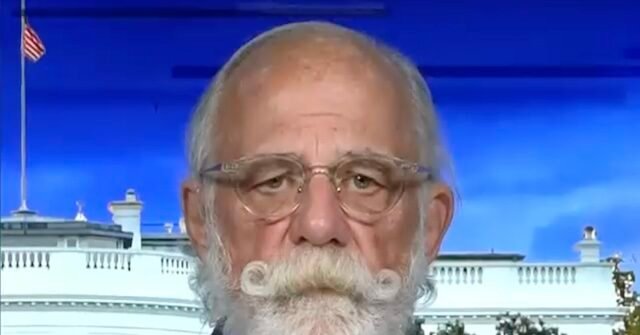
Former White House lawyer Ty Cobb said Monday that the Supreme Court’s decision to reject the Trump administration’s efforts to restrict mail-in voting ahead of the November 3 election shows the justices recognize President Donald Trump as an “existential threat to democracy.”
Appearing on CNN’s “OutFront,” Cobb told host Erin Burnett that the ruling was not a difficult constitutional question. “I do think that this was not a close call,” he said, according to Breitbart News. “Constitutionally, there is no role for the president in the administration of the elections. You know, he has tried to assume authority over balloting, and that the court clearly has rejected that, which I think is important. And I don’t think it was close constitutionally.”
Burnett pressed Cobb on whether the moment warranted celebration, asking if Americans should take heart that the Supreme Court had found a more unified voice than it has shown in recent months. “I think that’s the case,” Cobb replied.
He went on to list a series of recent rulings that he said formed a pattern of judicial pushback against the administration, citing decisions on tariffs, birthright citizenship, and the firing of Lisa Cook at the Federal Reserve. Cobb also pointed to a recent dissent from Chief Justice John Roberts on jurisdictional grounds.
“I think the evidence that Trump is an existential threat to democracy is, you know, clear to most Americans,” Cobb said. “And I think it’s becoming increasingly clear to the Supreme Court. And I think that the action today helps us move forward and hopefully avoid some of the serious issues that the president is trying to impose upon us.”
A Pattern of Setbacks
Cobb’s remarks came just hours after the high court refused to let the administration enforce limits on mail-in voting before the November 3 contest. The decision marked the latest in a string of legal losses for the White House on issues ranging from immigration to economic policy.
The former Trump White House lawyer, who briefly represented the president during the Russia investigation before falling out with him, has become a frequent critic of his onetime client. His appearance on CNN is the latest in a series of media interviews in which he has warned that the president’s conduct poses a fundamental danger to democratic institutions.
Whether the Supreme Court shares that assessment is a matter of interpretation. The court’s emergency docket has long been a venue for narrow, procedural rulings that resolve immediate disputes without settling broader constitutional questions. Cobb’s claim that the justices are beginning to see Trump as a threat relies on reading a broader pattern into a set of decisions that the court itself has not framed that way.
Still, the timing of the mail-in voting ruling and the string of other losses Cobb cited has fueled speculation that the court’s conservative majority may be signaling a willingness to check the executive branch in ways it has not in the past. That prospect has energized critics of the administration, who see the courts as a critical backstop against policies they argue undermine democratic norms.
A Contentious Legal Landscape
The administration’s push to limit mail-in voting had been underway for months, with the president repeatedly claiming without evidence that expanded absentee balloting would lead to widespread fraud. Courts across the country had already blocked several of those efforts before the Supreme Court weighed in, finding that the executive branch had overstepped its authority.
Cobb’s comments reflect a broader debate among legal observers about the role of the judiciary in an era of heightened political polarization. Some argue that the courts are the last line of defense against executive overreach; others contend that judicial intervention in election administration invites its own set of problems.
For now, the Supreme Court’s decision has at least temporarily settled the question of whether the president can unilaterally reshape how Americans cast their ballots. Whether it signals a lasting shift in how the justices view the administration remains to be seen.
Burnett’s question — whether Americans should celebrate the court’s unified voice — touches on a deeper unease among many voters. A court that is seen as increasingly political may find its legitimacy questioned no matter which way it rules. Cobb’s answer suggests he believes the court is at least moving in the right direction.
“I think the action today helps us move forward,” he said, “and hopefully avoid some of the serious issues that the president is trying to impose upon us.”
For the administration, the ruling represents another setback in a series of legal battles that have defined much of the president’s time in office. For Cobb, it is evidence that the institutions he once served are beginning to push back.
Source: www.breitbart.com — https://www.breitbart.com/clips/2026/09/14/ty-cobb-scotus-realizing-trump-is-an-existential-threat-to-democracy/