
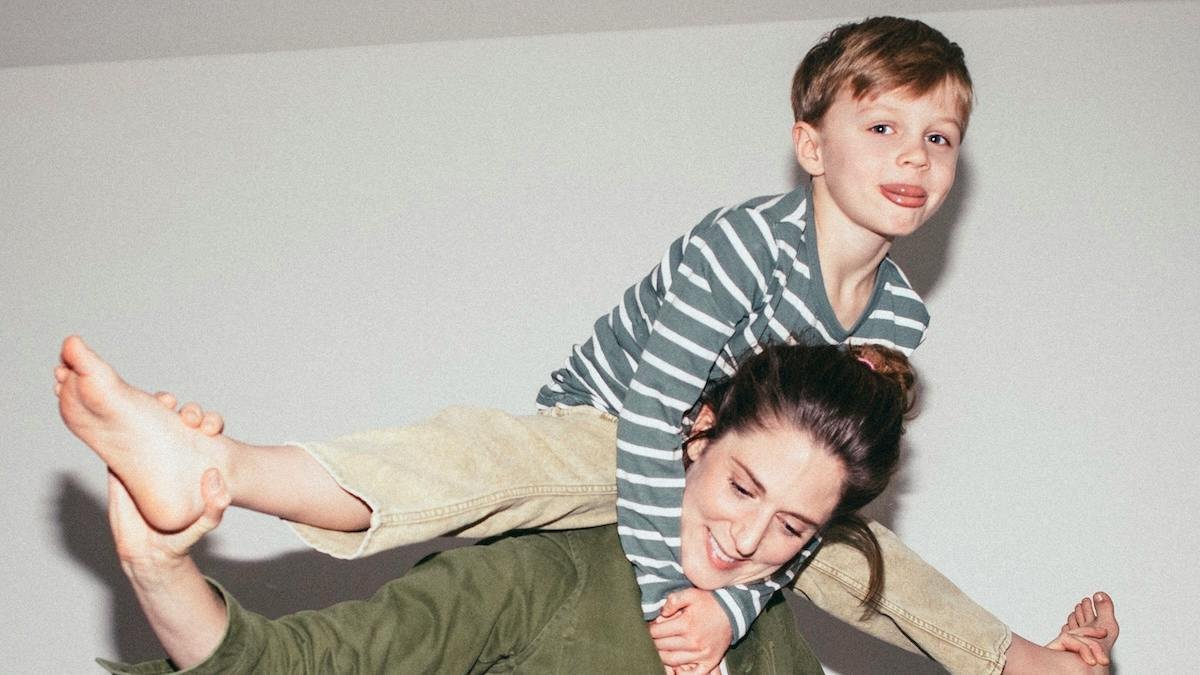
A new essay published by The Daily Wire is making the case that the most-discussed chapter of parenthood — the baby years — may not actually be the best one. Elizabeth Grace Matthew, a writer who covers books, education, and culture, argues in the piece that the bulk of the parenting experience, both its labor and its rewards, happens long after the diapers and nap schedules are gone.
Matthew writes from personal experience. She is the mother of four sons and describes herself as nearing the likely end of her family’s baby years, with her youngest about to turn three while her oldest approaches twelve. The occasion for the reflection: her third son started kindergarten, leaving her without a big brother waiting downstairs when she put the toddler down for a nap for the first time since his birth.
The essay takes aim at what Matthew characterizes as a cultural preoccupation with babyhood. She notes that today’s discussions of maternity, whether celebratory or complaining, tend to revolve around infants and toddlers — the fleeting sweetness of baby smiles, the sleep deprivation, the endless gear, the crying. That focus makes a certain amount of sense, she concedes, since babyhood is intense and sits closest to the broader cultural question of whether to have children at all.
But she contends that this framing crowds out attention to the stage that follows. “There isn’t actually a binary between ‘I want to be forever drowning in babies’ and ‘liberate me from this maternal hell,'” Matthew writes, describing what she calls a liminal space of “active maternity, but not matrescence.” She also suggests that moms who declare themselves “just so glad to be done” with the little-kid years can make other parents reluctant to admit that a household with everyone out of diapers carries its own blessings.
The grief and joy of a family in motion
Matthew’s essay dwells on the emotional complexity of watching children grow. She describes parenting as a constant braid of grieving what is being lost, savoring what is happening, and anticipating what comes next. With multiple children, she writes, those feelings arrive in overdrive.
She points to small domestic markers: the toddler bed that will soon be replaced by a bunk bed the family is awaiting, the nap era that will end entirely within months, the contact naps that are probably not finished but soon will be. She describes resuming a school-year breakfast read-aloud routine, begun in 2021, and finding that her two-year-old, who used to babble at top volume during the ritual, now listens quietly to “Stuart Little” instead of competing for her attention. The joy of that moment, she writes, arrived alongside the thought that her oldest will be off to high school in a few years.

In her telling, each child grows up faster than the one before, which means the years of four attentive listeners around the breakfast table are fleeting indeed.
Practical advice from the in-between years
The essay also offers what Matthew frames as advice for parents navigating the transition out of the baby stage.
Her first recommendation is to sweat the big things early but not the small ones. She argues that readiness milestones such as shoe-tying or drinking from a normal cup arrive on their own timetable and rarely matter in the long run. Behavior, by contrast, is worth pushing on. Matthew calls for being a kind of “tiger mom for behavior,” arguing that mannerly big kids are far more enjoyable than ill-behaved ones, and that establishing early habits around potty training, reading, socializing, and swimming sets a child up for independence — which, however bittersweet for a mother, is what is genuinely good for the child.

Second, she urges parents to cheerlead rather than over-manage. Much of the tedium of parenting older kids, in her view, comes from applying the scaffolding appropriate to much younger children — chore charts and academic hand-holding suited to seven-year-olds, or behavioral interventions suited to three-year-olds. When high standards are set early, she writes, parents can often simply watch. She cites a run of recent wins in her own household: her oldest son’s school “pi” contest victory, a rec league baseball championship for her older two, and her third-born’s first cross-country race.
Third, she suggests introducing children to the things you already love. Her one rule for breakfast read-alouds, she writes, is that the book has to be one she likes, which has meant sharing favorites from “Little Women” to the American Girl series with her sons. The same principle extends to movies, hobbies, and travel. Her eleven-year-old, she notes, is now a genuine Scrabble competitor, and she and her husband have enjoyed rewatching their favorite films through their children’s eyes.
Finally, she advises telling children the truth. Older kids can handle real conversations, she argues, without sugar-coating the news or a parent’s view of it — ideally after instilling a sense of tact. Bringing children into the intellectual and moral trust shared within a marriage, she writes, helps build a family culture of reason and integrity in a wider world that lacks both.
The piece is published as part of Upstream, The Daily Wire’s home for culture and lifestyle coverage, which the outlet describes as featuring real human insight and human stories from its featured writers. Matthew writes about books, education, and culture, including on Substack.
Source: www.dailywire.com — https://www.dailywire.com/news/the-motherhood-stage-nobody-talks-about-might-be-the-best-one