
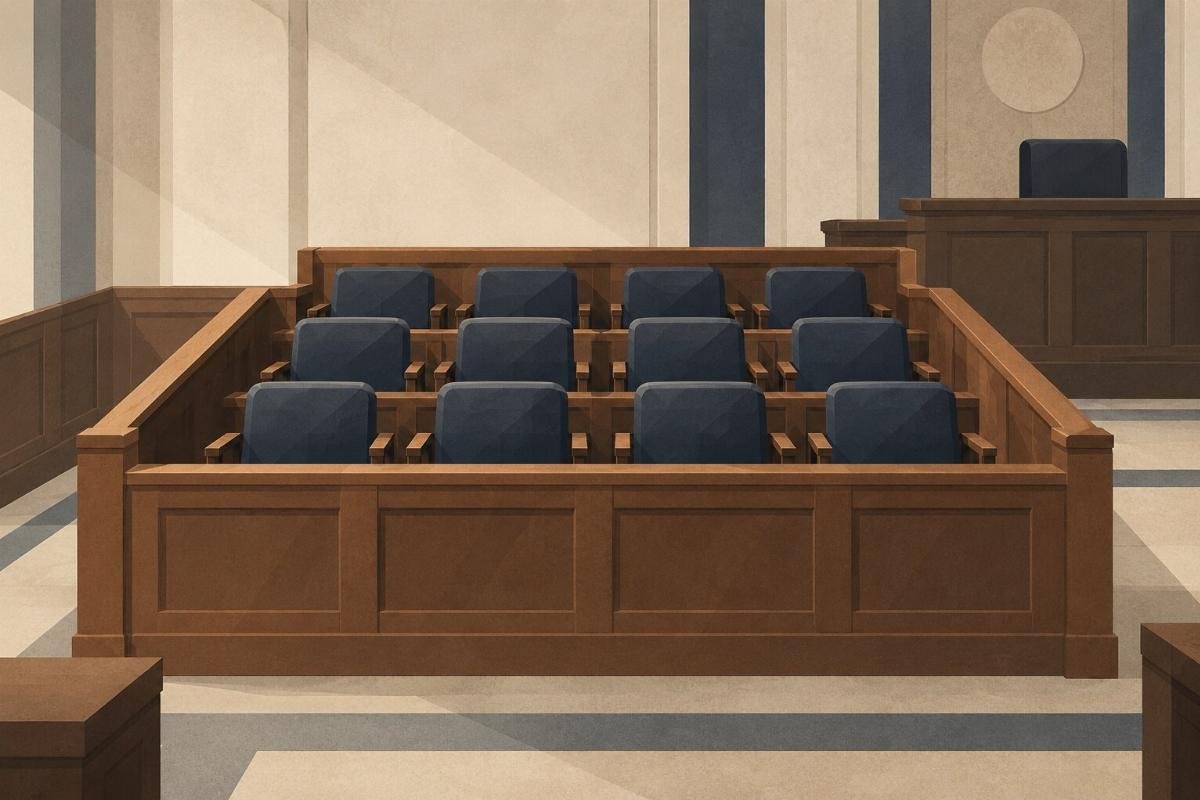
The hung jury in the Lindsay Clancy case is being treated in some quarters as a once-in-a-generation civic rupture. It isn’t. Deadlocks happen, mistrials get declared, and juries fail to reach unanimity more often than the loudest voices on either side care to admit. But the aftermath of this particular trial has drawn a sharp complaint from a writer at American Thinker, who argues that the uproar reveals something more troubling than the outcome itself: a growing willingness to judge the jury system by whether it delivers the verdict we wanted.
When Jurors Bring an Agenda to the Room
Writing in American Thinker, John Watson notes that the reaction to the Clancy mistrial might have looked very different — and come from very different people — had the panel been deadlocked 11-1 in favor of conviction rather than the other way around. That asymmetry is the heart of his argument. According to his account, at least one woman on the jury acknowledged after the fact that she had an agenda to reach a verdict that would help women, and said it was obvious from the start that the prosecutor was biased.
Watson’s response to that complaint is blunt: of course the prosecutor was biased. That was the job. So was the defense attorney’s bias toward his client. A criminal trial is an adversarial proceeding by design, and hearing only one side of a dispute is a poor way to arrive at the truth of it. From his telling, the jurors who were furious at the lone holdout were angry precisely because he would not bend to the outcome they had already decided on — he stood by his finding that three children had been killed, and Watson suggests he may have been the better juror for it.
The System He Describes
To make his case, Watson walks through how a jury trial is supposed to work. The jury is the trier of fact; only jurors determine the facts under the rules of evidence. A judge rules on evidentiary questions, but the jury keeps its fact-finding duty. Once evidence closes, the judge holds a charge conference with both attorneys and decides which instructions to give — collectively the court’s charge to the jury, which tells jurors what the law is, directs them to apply it to the facts, and reminds them of their oaths.
The selection process matters just as much, in his telling. A panel of prospective jurors — often around two dozen for a twelve-person jury — is sworn to answer questions truthfully. The court and both attorneys question them about their work, their families, whether they or relatives have been involved in similar proceedings, and their life experiences, so each side can gauge whether a given juror would be acceptable. Attorneys may ask the court to remove a juror for cause, and each side is permitted to strike a set number of jurors, one at a time. The twelve who remain become the jury.
After the rest of the panel is dismissed, the jurors take an oath to well and truly try the case before them. Watson zeroes in on the word "well," generally read to mean without bias to either side. That, he writes, is the load-bearing beam of the whole structure. If jurors substitute personal agendas for that oath, the system fails — and the trial becomes little more than a political lynching or acquittal by a totalitarian government. He contends that version of justice is already visible in parts of the country where the local political mood effectively guarantees conviction or acquittal depending on where a defendant stands relative to the prevailing agenda, and he warns that the trend could wreck the judicial system if it goes unchecked.
What May Have Gone Wrong in This Case
Turning back to the Clancy trial, Watson asks what failures — proven or possible — may have occurred. The juror who spoke about an agenda to benefit women may have violated her oath to try the case well and truly. The same standard, he writes, applies to the lone holdout: if his position rested on a personal agenda rather than the facts and the charge, that too would be a violation. Any breach of a juror’s oath, in his view, should be prosecuted accordingly.
He is more careful about the speculation that the holdout juror may not have answered his juror questionnaire fully honestly — a question, he notes, that applies to every juror. An omission might or might not have gotten someone struck from the panel, and it does not by itself prove bias or an agenda. Those questionnaires should have been destroyed after the jury was seated, he writes, which means the allegation is unprovable speculation if proper procedures were followed.
Juror identities are often shielded in cases like this, and Watson treats the Clancy case as a prime example of why. He describes the backlash from left-leaning women and others as severe enough that the holdout juror’s safety and well-being are now in jeopardy. He cites reporting that NBC has even doxxed him, calling that improper and dangerous, and predicts the juror may end up owning a substantial stake in NBC’s assets. He also raises a procedural question: how was his name obtained in the first place? After voir dire and the striking of a jury, the court collects the attorneys’ jury-panel information sheets, which should be destroyed and unavailable. Was that done? If not, who leaked the information — or did another juror release his name? Watson expects all of it to surface in a civil suit, if one is filed.
The Case for the Holdout
If the holdout juror anchored his position in the facts as he found them and the court’s charge, Watson writes, then he is the hero of that trial — a live example of the system working exactly as intended. Criminal verdicts require unanimity, and a single juror’s power to prevent what he sees as a possible injustice, conviction or acquittal alike, is one of the system’s quiet strengths. He asks whether anyone doubts that those now calling for the holdout’s destruction would instead be celebrating him had he been the one standing against a conviction of Ms. Clancy.
His conclusion is less about this defendant than about the machinery around her: the system, not any particular verdict, is what deserves preservation, and it deserves protection from the agendas that would bend it. The ability to speak our minds freely, he adds, matters now more than ever to the republic we cherish.
Source: www.americanthinker.com — https://www.americanthinker.com/blog/2026/09/it-is-the-system-that-must-be-preserved-not-a-particular-verdict/