
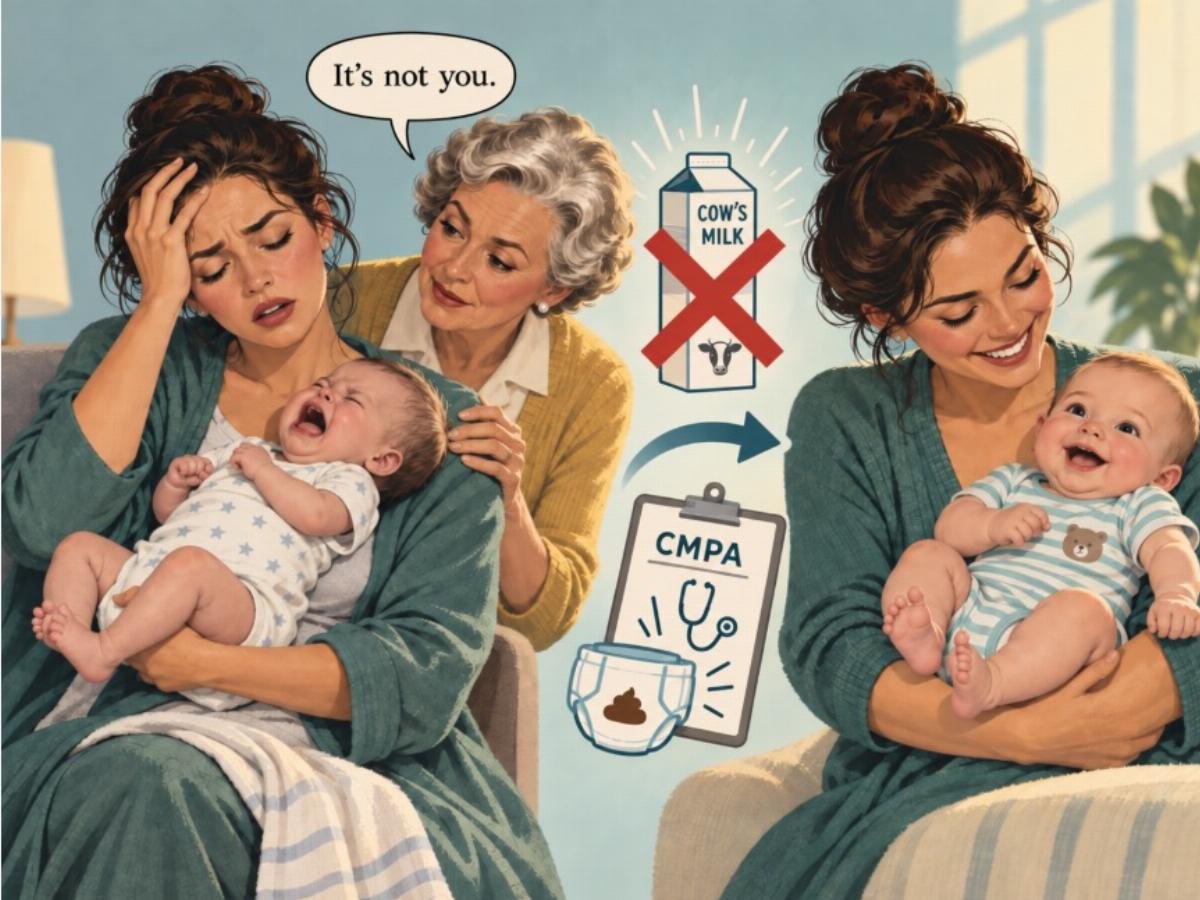
There’s a version of the first months of parenthood that gets passed around like folklore: a baby who cries and cries, nothing soothes, and every well-meaning visitor offers the same shrug — it’s colic, it’s a phase, it’ll pass. In a personal essay published in American Thinker, Andrea Widburg pushes back on that script, arguing that an inconsolable infant combined with trouble nursing may not be a mysterious phase at all but a diagnosable allergy that has a surprisingly simple fix.
Widburg’s interest is not theoretical. She opens by explaining that she disappeared from readers for a stretch to travel halfway around the world as what she calls a “grandmother to the rescue,” there to give her exhausted daughter a chance to sleep and to see whether she could figure out what was wrong with a baby who would not stop crying. The answer, she writes, was not a trick or a technique — it was a trip to the doctor. Her advice to the first-time mother was blunt: this isn’t you, something is wrong with a baby that cries nonstop and fights nursing.
What a Doctor Looks For
That conversation led Widburg to Cow’s Milk Protein Allergy, or CMPA, a condition she says she’d never once heard mentioned by the older mothers she has spoken with, and which she describes as a common diagnosis in pediatric offices today. The clinical picture she lays out is fairly specific. In severe cases, she writes, the clue is unmistakable — visible blood in a diaper. In milder cases, the giveaway is subtler: a stringy, clear mucus in the stool, which she compares to what you’d see in your nose during an allergy. That finding, combined with a baby’s behavior, can point toward what she terms a non-IgE-mediated cow’s-milk allergy.
Widburg is careful to distinguish that from the better-known allergy category. IgE-mediated reactions, she notes, are the familiar ones — hives, facial swelling, wheezing, vomiting, and in the worst case anaphylaxis — and they can typically be investigated through blood tests or skin-prick tests alongside the patient’s history. A non-IgE-mediated allergy doesn’t show up that way, she explains. It is identified empirically: you remove the suspected allergen and watch whether the symptoms resolve, reintroducing it later if confirmation is needed.
What makes CMPA so punishing, in her account, is where it strikes. It can inflame and irritate a baby’s digestive tract, meaning each feeding causes pain rather than comfort. For a three- or four-month-old, she writes, that means a chronic stomachache experienced by someone with no way to describe it — and the source of contentment, mother’s milk, becomes an enemy.
The Fix, and the 36-Hour Turnaround
If the diagnosis is CMPA, the remedy is straightforward, though not effortless. The breastfeeding mother must eliminate all dairy from her own diet, and Widburg warns that means reading labels closely, down to casein and caseinate, which she says appear as additives in plenty of products that don’t advertise themselves as dairy. Her list of culprits includes non-dairy creamers, deli meats, bakery items, cheese products, cream-based soups, candy, and even some canned tuna, where such proteins help bind and emulsify the food.
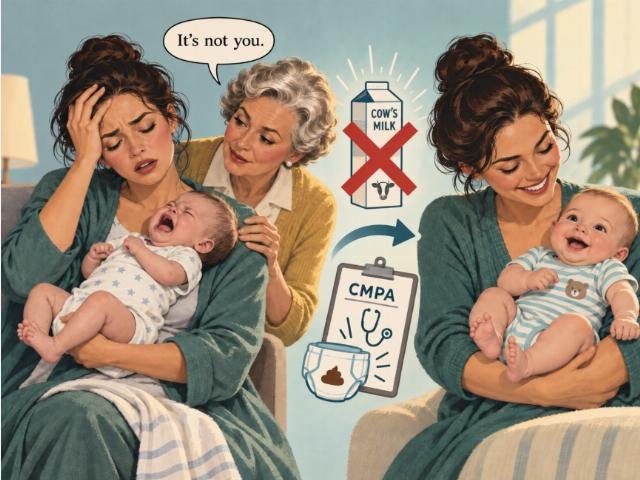
The payoff, she reports, was dramatic. Within 36 hours of the dietary change, her grandchild was, in her words, a completely normal baby — willing to nurse, content on a playmat, able to ride in a stroller and take naps. She describes it as getting a brand-new baby.
Widburg doesn’t present this as a new scientific discovery so much as a rediscovered one. She notes that in a pre-modern era, it was widely understood that cow’s milk was no substitute when a mother couldn’t nurse — though she attributes part of that caution to concerns about tainted milk. By the 1960s, she writes, doctors were beginning to realize that some babies had a problem with something fundamental in cow’s milk as it passed through breast milk. Still, the older mothers she has questioned — women who raised children in the twentieth century — say no pediatrician or fellow mother ever mentioned it to them. Today, she says, it comes up constantly; in her informal conversations, many young mothers tell her their own babies had it or that they know someone whose baby did.
Her practical takeaway is aimed at anyone in a crying baby’s orbit. If an infant is inconsolable and either nursing or on a dairy-based formula, she urges parents to ask a doctor about CMPA — because, in her telling, it may be the answer that ends months of misery.
Framing It as More Than Baby Advice
Widburg is upfront that the subject isn’t political in itself, but she makes it so deliberately. She reasons that happy mothers tend to lean conservative — that people with a stake in the future, and parents of thriving children, are more likely to think that way — and that unhappy people drift left. So she frames sharing the information as a small contribution to happier parents, whom she hopes will set aside what she calls leftist college shibboleths and focus instead on building a better world for their children.
The essay closes with a familiar appeal from the outlet, asking readers who find its work worthwhile to support it with a donation of any size to help cover staff and keep its ideas in circulation.
Source: www.americanthinker.com — https://www.americanthinker.com/blog/2026/09/a-cool-little-trick-that-may-help-calm-a-chronically-crying-baby/