
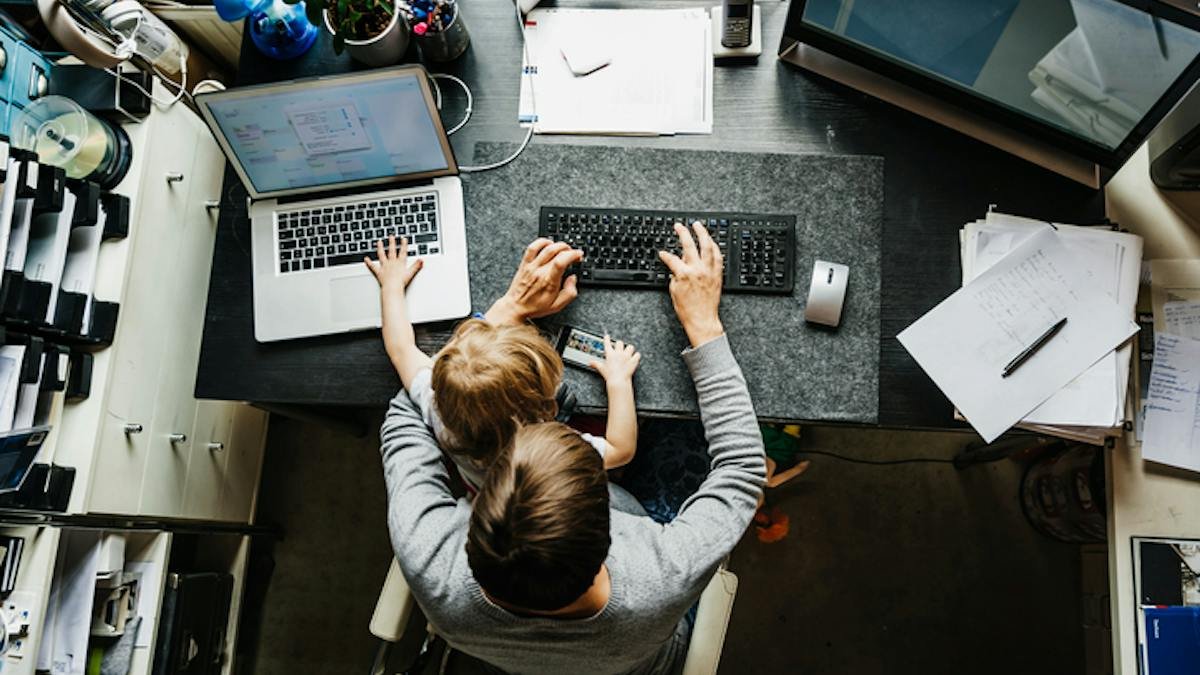
For most of human history, the place where a family lived and the place where it earned its keep were the same place. That arrangement only came apart in the last few centuries, and two public policy professionals argue it is now being put back together.
Taylor Barkley, director of federal government affairs and a policy advisor at the Abundance Institute, and Rachel Barkley, director of Able Americans, make that case in an essay for The Daily Wire, drawing on both historical argument and their own household. The pair, who are parents to three children, write that digital technology has already loosened the link between economic output and a physical office — and that artificial intelligence is widening the opening further.
The Long Separation of Home and Work
As the Barkleys tell it, the household was the original economic unit. Families sourced and prepared food, made clothing, practiced trades, taught their children, and cared for elderly relatives as part of a shared domestic economy. The Agrarian era brought larger settlements and more elaborate divisions of labor, but home remained a site of production.
The Industrial Revolution changed that. Higher-wage work migrated into factories and then offices, children departed for schools, and caregiving, education, and social welfare were increasingly specialized or assumed by the state rather than handled by families and local communities.
The authors are careful not to romanticize what came before. Industrialization, they acknowledge, made societies richer, healthier, and better educated. Still, they argue it atomized family life: in the countries that benefited most, it became routine for parents and children to scatter each morning, spend nearly every waking hour apart, and regroup for an evening meal before starting the cycle again.
What followed was a built environment organized around that rhythm — suburbs designed for commuters, schools and daycares scheduled for parents who are out of the house from nine to five. The best incomes, education, and resources a family wanted were located outside the home, and family members had to leave to obtain them.
Technology Widens the Opening
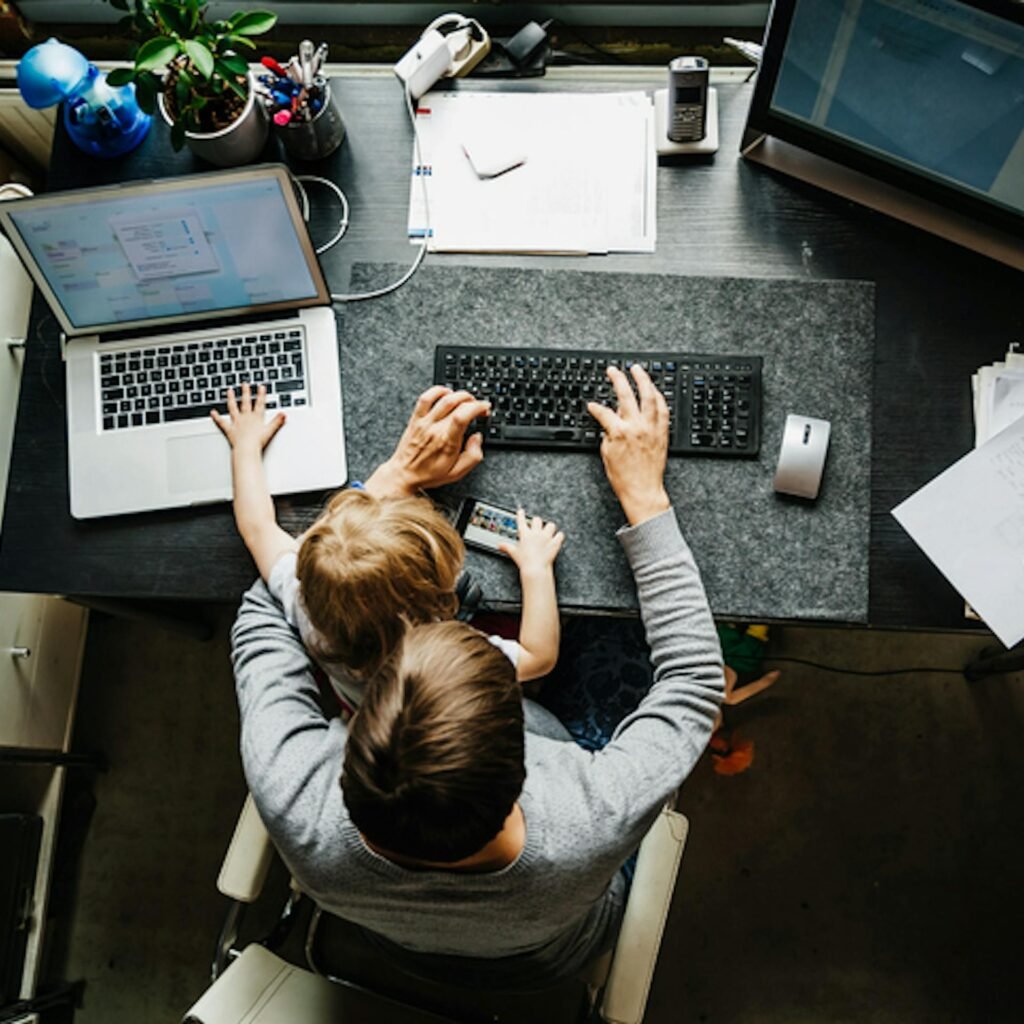
The Barkleys argue that digital technology has altered that physical fact for millions of people. A growing share of economic activity can now happen anywhere with a computer and a reliable internet connection, producing what they describe as a modern household economy — one that keeps the prosperity and specialization of industrial society while giving families more say over where their lives take place.
AI, in their telling, does more than relocate existing office work to a dining-room table. It reduces work that once required a building full of specialists and puts new capability directly into the household. It drafts, summarizes, captions, and organizes; it converts speech to text and turns a pile of documents into something a person can act on. For parents, they write, it absorbs part of the mental load.

The authors point to a piece in The Cut profiling Jesse Genet, a mother who uses a team of AI agents to help with the daily work of homeschooling a family of seven. They also note the growing presence on Instagram of accounts run by two working parents who homeschool multiple children during the day.
They offer their own examples, describing using AI to get an early read on the risks after one of their sons had a tick behind his ear while they waited for the pediatrician, to plan a Cub Scout hike, and to generate practice problems when a child was struggling with a question. They stress that this does not replace a doctor, a scout leader, or a parent. Rather, they write, it means a household does not have to wait on an institution for every next step, and it multiplies the family’s capacity.
A Personal Calculus
The shift carries particular weight for the Barkleys. A few weeks after their first child was born, Rachel was diagnosed with a rare spinal cord tumor. The tumor and the surgery to remove it left her a quadriplegic. Ordinary parts of life suddenly required far more planning; even a trip across town could involve arranging accessible transportation, building entrances, elevators, and bathrooms, with the ever-present possibility that one of them would fail.
Working from home, the couple writes, allows Rachel to lead organizations, write, speak, build coalitions, and take part in national policy debates without first completing what they call an accessibility obstacle course — and allows Taylor to pursue his own career while staying present for the unpredictable demands of family life.

Both work in public policy. While they travel, attend in-person meetings, and spend time in offices, they say they do not need to be outside the home every day from nine to five.
What Employers Do Next
The Barkleys frame the current moment as one of experimentation. The Industrial Revolution organized family schedules and geography around centralized production, they write; digital technology gives employers and workers more room to try other arrangements. Some companies, they concede, will conclude they operate better in person, others will go fully distributed, and most will probably land somewhere in between. Those decisions, they predict, will shift as technologies, jobs, and individual circumstances change.
They also argue the shift has demographic stakes. The United States reached its lowest fertility rate on record this year — just under 1.6 births per woman, below population-replacement levels and below what many women report as their desired number of children. For many women, the authors write, having children can feel like an impossible tradeoff between economic security and stepping away from the workforce, even temporarily. They imagine a future in which culture and public policy embrace the flexibility technology makes possible, so that mothers and fathers no longer have to choose between meaningful work and meaningful time at home.
The authors are explicit that they are not seeking to recreate a preindustrial household. That world, they write, included grinding poverty, limited opportunity, and rigid social roles. Their aim is narrower: to keep the abundance of modern life while recovering some of what industrialization weakened — the household as an active center of work, care, education, and community.
Their conclusion is less a policy demand than a proposition. For a long time, earning a living meant leaving home. Digital technology, with AI layered on top, means fewer families have to accept that separation as the price of economic participation. As they put it, the economy is coming home — and families, in their view, should be free to decide what to do with it.
Source: www.dailywire.com — https://www.dailywire.com/news/how-the-digital-revolution-is-reclaiming-the-household-economy