
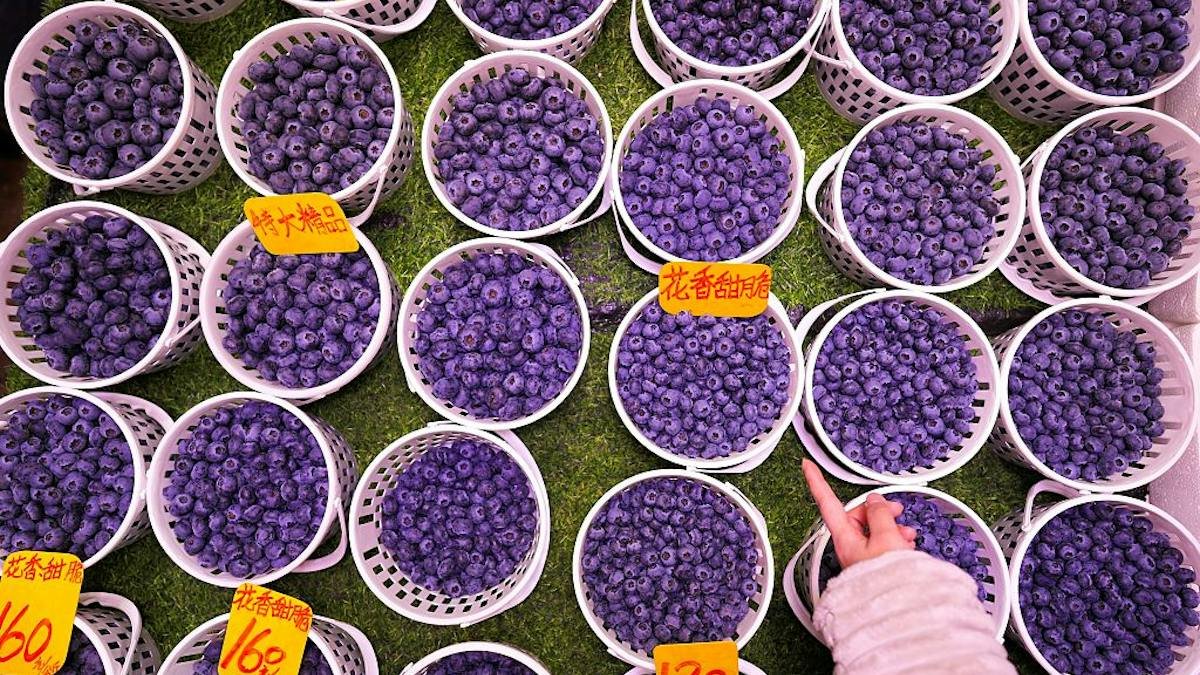
Driscoll’s arrived in China nearly 15 years ago with a bet that blueberries could become the country’s next mass-market fruit. That bet paid off. Then the market it created turned against it.
According to court records and industry sources reported by The Wall Street Journal, Chinese competitors copied the California-based company’s growing techniques, illicitly propagated blueberry varieties that were legally protected, and flooded the market with fruit. The result is exactly what a flood produces: prices in free fall, and an American company fighting to defend the business it spent years building.
A Market Built From Scratch
Driscoll’s, the largest berry company in the United States, entered Yunnan province because conventional farming there was a poor fit for premium fruit. The company invested in greenhouse production, sophisticated irrigation systems, and other techniques meant to grow high-quality berries in conditions that weren’t naturally suited to them. The approach worked. Chinese consumers took to blueberries, and Driscoll’s expanded alongside local growers.
The trouble started on the intellectual property side. In 2014, Australian breeder Mountain Blue Orchards exclusively licensed its blueberry varieties to Driscoll’s for production in China, and those varieties received Plant Breeders’ Rights protection under Chinese law. But Mountain Blue later found evidence that Chinese nurseries were propagating its varieties without authorization — evidence the company says it began turning up around 2018 and 2019. Eventually it took one nursery to court.
In December 2024, the Kunming Intermediate People’s Court ruled in Mountain Blue’s favor in a case involving the unauthorized reproduction, propagation, and sale of its Ridley 1602 variety, also known as Eureka Sunrise. The International Blueberry Organization described the decision as the first successful Chinese court case brought by a non-Chinese company over illegal blueberry propagation.
The Glut
Genetics told only part of the story. The Journal reported that Chinese competitors also copied elements of Driscoll’s production methods, including greenhouse designs and irrigation techniques. As more growers piled in, output surged. China became the world’s largest blueberry producer by 2021, with more than 77,000 hectares planted, according to the International Blueberry Organization. By 2025, industry estimates placed Chinese acreage above 105,000 hectares, with production of roughly 810,000 metric tons — more than U.S. output.

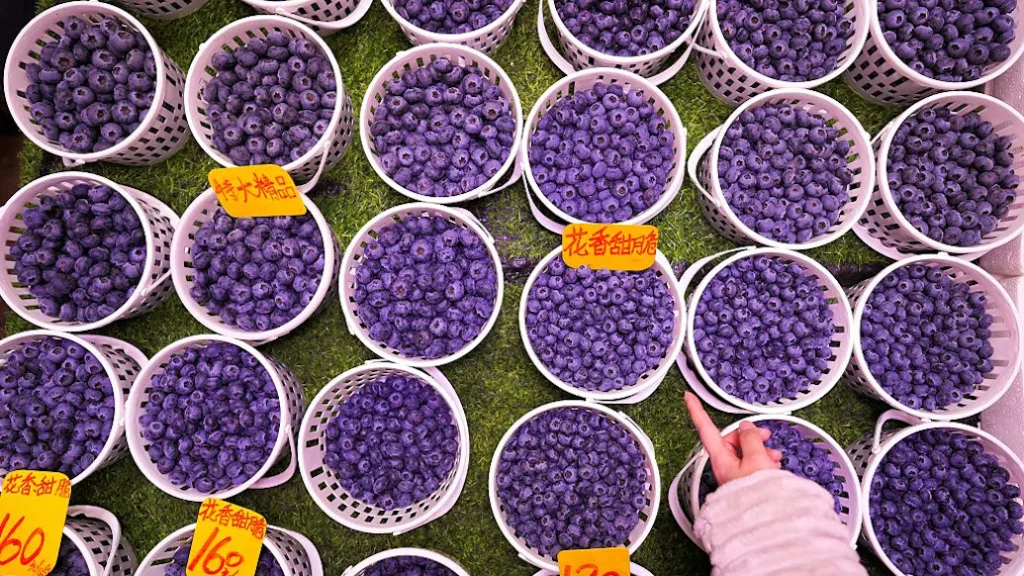
Prices followed supply downward. In one documented example, 250-gram packages in Shenzhen dropped from nearly 30 yuan, or about $4.36, to 19.9 yuan, roughly $2.89, as volumes climbed.
Industry publications have tracked repeated rounds of oversupply and falling prices as production spreads across provinces including Yunnan and Sichuan. The pattern has become pronounced enough that Chinese agricultural observers have a name for it: “involution,” a term describing companies and farmers who keep expanding and competing aggressively even as returns deteriorate.
The dynamic isn’t unique to berries. It illustrates a broader risk for American and other Western companies that bring specialized technology, genetics, and production expertise into China — the same assets that make a venture valuable can become the blueprint for competitors who operate outside the rules.

Staying, and Pushing Back
Driscoll’s has not walked away. It continues to operate in China and maintain relationships with Chinese growers while pressing for stronger intellectual property protection. Mountain Blue has also stayed, in some cases shifting from litigation toward licensing arrangements with growers.
There are some signs Chinese authorities and industry groups are treating the issue with more seriousness. The China Blueberry Committee was established under the China Chamber of Commerce, with Driscoll’s Asia executive Jae Moon Chun serving as vice chairman. Industry members have committed to avoiding the unauthorized production, reproduction, and sale of licensed breeding material.
Whether those commitments change the math for growers is an open question. Oversupply in the blueberry market is already a structural problem, not a temporary one, and the genetics at the center of the dispute have already spread widely enough to sustain production far beyond what Driscoll’s planted.
The company went to China with technology and expertise that helped establish a lucrative new market. That market is now far larger than the one Driscoll’s found on arrival — and so is the unauthorized competition supplying it. Driscoll’s helped teach China how to grow blueberries. China now has more of them than it quite knows what to do with.
Source: www.dailywire.com — https://www.dailywire.com/news/a-major-american-farm-company-went-to-china-and-it-didnt-end-well